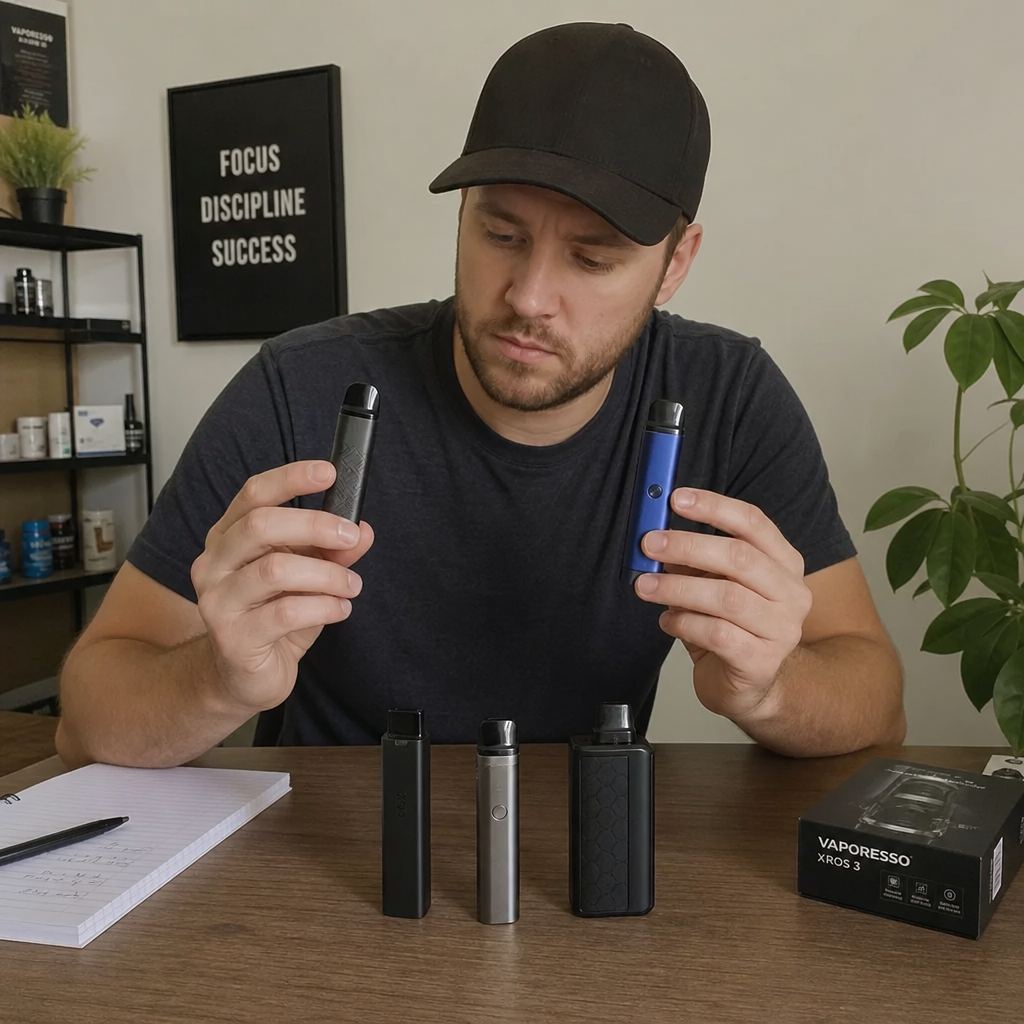

You can take vapes on a plane. That sentence is simple, and almost everything after it is a minefield of small print. The cabin-only battery rule is universal. The liquid rules change at security. And the moment you land, your home country and your destination stop agreeing with each other.
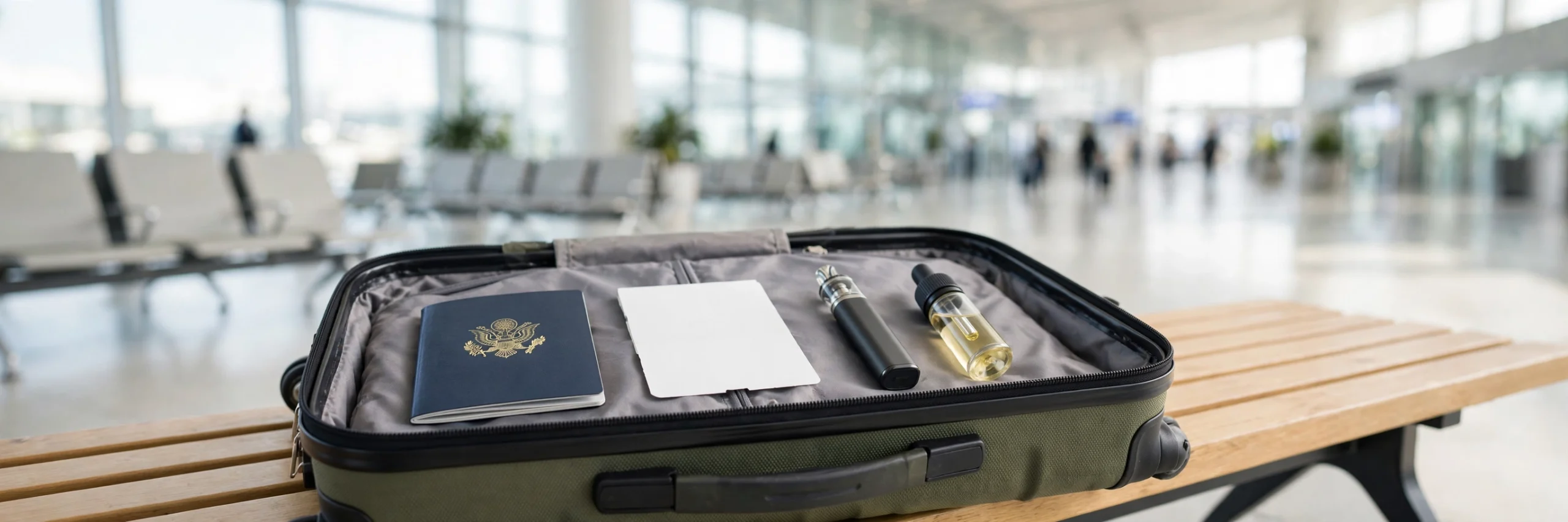
The biggest trap in 2026 is new, and almost no travel guide mentions it yet. Since 1 October 2026, travellers arriving in Great Britain get a personal allowance of just 50ml of vaping liquid before duty and tax kick in, and anything above that is taxed on the full amount you are carrying, not just the excess. The traveller who packed "the big bottles in the hold bag" has been following advice that expired this month.
This guide walks you through the whole journey, gate to gate: packing, security, the flight, and both ends of the trip.
The cabin rule that overrides everything
Every other rule in this guide is conditional. This one is not. Vapes and e-cigarettes go in your cabin bag or on your person, never in checked luggage. No exceptions.
The reason is physics, not policy. Vape devices contain lithium batteries, and a battery that overheats or shorts in the cargo hold starts a fire nobody can reach mid-flight. In the cabin, crew can deal with it. That is why the rule exists, and it is why airlines and regulators treat it as non-negotiable.
What this means in practice:
- Devices go in your carry-on or your jacket pocket.
- Spare batteries go in the cabin too, with terminals protected from shorting. A battery case costs pennies and prevents a bad day.
- If you are asked to gate-check your carry-on because the overhead bins are full, take the vape and any spare batteries out first. Your bag can go to the hold. Your vape cannot.
- Power the device off and make sure it cannot fire accidentally. Removing the pod or using a travel case is cheap insurance.
Gate to gate: how to handle your kit
Packing at home
Sort your kit the night before, not at the security tray. Devices, chargers and battery cases go in the cabin bag. Bottled e-liquid goes through the standard liquids rule: containers of 100ml or less, inside a single clear resealable bag. Most UK airports still operate the 100ml rule, so plan around it and check your airport before you fly.
A word on quantities. The number of disposables you can carry is limited by common sense and by what security and customs consider personal use, not by a single global number. For a week-long trip, a couple of devices plus one spare is a normal travel kit. Turning up with forty disposables in shrink wrap looks like a commercial import, and it will be treated as one.
Pick travel-friendly hardware if you are buying anyway. Sealed, leak-resistant disposables with a hard body survive bag searches and pressure changes better than fragile tanks, and a high-capacity option means fewer devices to keep track of. If you want a shortlist, our roundup of the best disposable vapes covers what is worth taking.
At security
You will pass through security with two things: the device and the liquids bag. The liquids bag with your bottled e-liquid goes in the tray like any other liquid. The device itself travels through the X-ray like a phone. Disposable vapes look like featureless plastic on a scanner, but they contain a battery and metal parts, so expect the occasional secondary check. It is routine and it takes a minute.
Do not try to hide the device. It is legal to carry, and honesty is faster.
On the plane
Vaping on planes is banned everywhere. Not frowned upon, not airline-dependent, banned. Using a vape in the lavatory is a federal smoking offence on US flights, and aircraft smoke detectors will catch you long before you finish exhaling. Do not charge your device from the seat power either; recharging e-cigarettes on board is prohibited under the same safety logic that bans them from the hold.
Nicotine pouches are a common workaround for long flights, and they are generally tolerated for discreet use, but follow crew instructions and local rules at your destination. For longer journeys, a little planning beats a lot of discomfort. Consider how much e-liquid prices vary by country before you decide whether to stock up before departure.
The UK and US rules side by side
The airport rules overlap, but the arrival rules do not. Here is the comparison that actually matters for planning.
| Rule | UK | US |
|---|---|---|
| Devices in cabin, never checked | Yes, CAA guidance | Yes, TSA rules |
| Vaping on the plane | Banned | Banned |
| Charging on board | Banned | Banned |
| Bottled e-liquid through security | 100ml containers in a clear bag | 3.4oz (100ml) containers in a quart-size bag |
| Personal duty-free allowance on arrival | 50ml of vaping liquid (Great Britain) | No vape-specific allowance; normal duty-free goods rules apply |
| What happens above the allowance | Declare and pay duty plus VAT on the whole amount | Declare dutiable goods per standard rules |
| Minimum age for the allowance | 17; under-17s get no allowance | Varies by state law; federal purchase age 21 |
The 50ml trap at the UK border
This is the part most guides are still missing, because it only started on 1 October 2026, alongside the UK's new Vaping Products Duty.
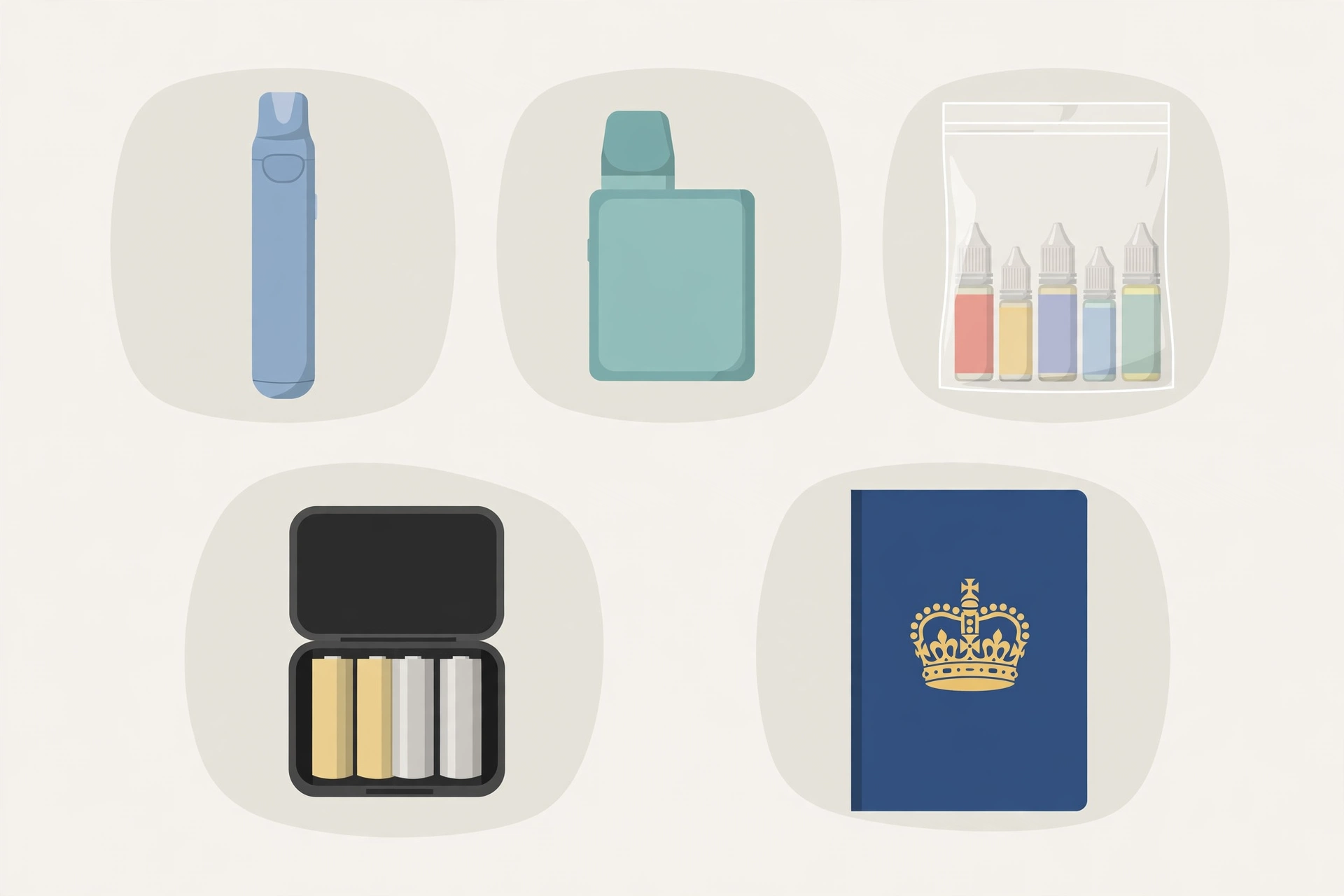
Travellers arriving in Great Britain can bring up to 50ml of vaping liquid for personal use without paying duty or tax. That is five standard 10ml bottles, and the clock is strict. Go even slightly over 50ml and you must declare, paying duty at £2.20 per 10ml and VAT on the entire amount you are carrying, not just the excess. Walking through the green channel undeclared with more than the allowance risks seizure of everything in that category.
Three details people get wrong:
- The allowance counts liquid inside devices. E-liquid sealed inside prefilled vapes and pods counts toward the 50ml. Two 12ml prefilled disposables plus one 30ml bottle is 54ml, and you are over.
- The hold bag does not protect you. The allowance applies to what you bring into the country, whichever bag it sits in. Stuffing big bottles in checked luggage no longer works.
- Under-17s get nothing. Travellers under 17 have no personal allowance at all.
If you want the full breakdown of how the duty works and what it adds to prices, read our UK vape tax explainer before you shop abroad.
The destination problem
Your airline rules get you to the destination. They do not get your vape through its border. Vaping is banned outright in several countries, with penalties ranging from confiscation to fines to, in the strictest places, criminal charges. Parts of Asia, including countries like Thailand and Singapore, are the classic examples, but the list changes, so check your specific destination before every trip.
When a country bans vapes, the airport is the enforcement point. Travellers have devices confiscated on arrival, and in some places fines follow. "I brought it through fine last time" is not a defence when the law changed since. If your destination bans vaping, leave the kit at home. No device is worth an airport detention.
Even where vaping is legal, nicotine strengths and product types vary. A disposable that is perfectly legal in the US may exceed EU or UK nicotine limits. Using a product that breaks local rules while you are there is your problem, not the airline's.
The 90-second packing routine
Run through this before you zip the bag.
- Devices powered off, in the cabin bag or your pocket, never the hold
- Spare batteries in a case with protected terminals, in the cabin bag
- E-liquid in 100ml-or-smaller bottles inside one clear resealable bag
- Total e-liquid for the UK return at or under 50ml, devices included
- Charger packed, but plan to charge only at the hotel, never on the plane
- Destination checked: vaping legal where you are landing
- If over the UK allowance, plan to use the red channel and declare
Quick answers
Can you bring a vape on a plane in 2026? Yes. TSA, the CAA, and virtually all airlines allow vapes and e-cigarettes in carry-on baggage only. They are banned from checked luggage because of lithium battery fire risk.
How many vapes can you take on a plane? There is no single number. Personal-use quantities are fine; commercial-looking quantities invite questions. Match what you carry to the length of your trip.
Can you take e-liquid through security? Yes, under the standard liquids rule: 100ml containers or less, in one clear resealable bag. Bottled e-liquid and pods both count as liquid.
Can you vape in the airport? Usually only in designated outdoor smoking areas. Indoors, vaping follows local smoking rules, and some airports abroad prohibit it anywhere on airport property. Follow the signs.
Do you have to declare vapes at UK customs? Only if you exceed the 50ml personal allowance or are carrying for commercial purposes. Declare through the red channel; slipping through green with an excess risks seizure.
What happens if a vape goes in checked luggage? It can be removed and confiscated during screening, and the bag may be flagged for extra checks. Worse, a damaged battery in the hold is a genuine fire risk. Take it out before your bag goes anywhere near the hold.
The one-sentence version
Devices in the cabin, liquids in the bag, nothing used or charged on the plane, 50ml max coming back into the UK, and always check the destination law before you fly. Everything else is detail. Now pack accordingly.