
Nicotine Free Vape: The Complete UK 0mg Guide
Nicotine-free vaping is the quiet giant of the UK vape market. Thousands of people search for it every month, but almost none of them are the same kind of buyer. Some are ex-smokers who have tapered their nicotine down to zero and want to keep the ritual. Some never touched nicotine and just want the flavours. Some are avoiding nicotine for health reasons, pregnancy, or a personal line in the sand. And some are quitting vaping itself, using 0mg as the exit ramp.
Every guide on the first page of Google treats them all the same: here are six products, buy one. This one does not. It decodes why people go nicotine-free, maps the three real routes to 0mg, names the brands and bottles worth your money, does the running-cost maths, lays out a taper plan that actually works, and answers the safety and legal questions honestly. If you came here from a search for one specific thing, use the structure to jump to your section. Everything else is here for the journey.
The 0mg era: why nicotine-free vaping is booming
Three things happened in Britain that pushed nicotine-free vaping from a niche to a movement.
First, the single-use vape ban of 1 June 2025 removed disposables from shelves, including the nicotine-free ones. That forced the 0mg market to grow up: from grab-and-go disposables into prefilled pod kits, 0mg shortfills, and dedicated no-nicotine brands with real product lines.
Second, the October 2026 vape duty of £2.20 per 10ml of e-liquid landed on all e-liquid, nicotine or not. That made the cheapest 0mg route (bottled shortfills in your own refillable kit) dramatically cheaper than the convenient ones, and turned the cost maths into the deciding factor for thousands of vapers.
Third, the taper generation grew up. The UK’s smokers-switching-to-vapes story is a decade old now, and a large cohort has spent years stepping nicotine down. For them, 0mg is not a product category. It is the finish line.
The result: the most-searched questions in the space are no longer “does it exist” but “which one is for me”. This guide answers that.
The motivation decoder: which 0mg vaper are you
Before buying anything, work out which buyer you are. The right product is completely different for each one.
The taperer. You vaped nicotine, you stepped down (20mg to 10mg to 3mg, or whatever your path was), and now you want zero without losing the ritual. You are the biggest group in the cluster, and your priority is continuity: the same device style, the same flavour family, just without the stimulant. For you, the answer is 0mg versions of the products you already use, or 0mg shortfills in the kit you own. Our guide on how long nicotine stays in your blood covers the physiology of the step you just took.
The ritualist. You never used nicotine, or you stopped caring about it long ago. You vape for the flavour, the hand-to-mouth ritual, the social shape of it. Your priority is flavour variety and product quality, not matching a “before” experience. For you, the whole 0mg market is open, and the non-vape aroma diffusers at the end of this guide might be the most interesting section.
The health-conscious avoider. You are avoiding nicotine for a specific reason: pregnancy, a medical condition, an athletic goal, or a personal boundary. Your priority is verification over price. A mislabeled product is not a disappointment for you, it defeats the entire point. For you, the label-truth section below matters more than the brand picks, and dedicated 0mg brands with published testing beat generic disposables every time.
The quitter. You are using 0mg as the exit ramp from vaping itself. Your priority is a planned, finite experience: something that lets the habit fade rather than replacing one dependence with a permanent ritual. For you, the taper plan section is the core of this guide.
Knowing which one you are changes everything that follows. A taperer should shop differently from a ritualist, and a quitter should buy less than either of them.
What “nicotine-free” actually means (and the label-truth problem)
“Nicotine-free”, “zero nicotine”, “0mg” and “0%” all describe the same thing: an e-liquid made without nicotine added to the formula. That is the definition, and for reputable brands it is exactly what you get.
But a label is a claim, not a lab test. Most retail 0mg products rely on the manufacturer’s own formulation rather than independent verification, and there have been documented cases of nicotine-free disposables testing positive for trace nicotine, usually from manufacturing cross-contamination: the same production line that makes the nicotine version runs the 0mg batch without a full clean-down between runs.
Two practical consequences. First, the brand matters more here than in any other vape category. Established brands with consistent manufacturing are generally reliable; unknown-marketplace brands are where the problems live. Second, verification beats labeling. A brand that publishes batch testing or a certificate of analysis is giving you something real. Our companion guide on where to buy nicotine-free vapes goes deep on verification and the retail channels, so this guide will not repeat it: read that one before you spend money on an unfamiliar brand.
One more distinction worth knowing: some nicotine-free brands make 0mg by omitting the nicotine step from a standard production line, while others (Ripple, the health-vape specialists) build their entire manufacturing process around nicotine-free formulas, which removes the cross-contamination risk structurally. Neither approach is printed on the box, which is exactly why the brand’s own claims and reputation matter.
The three routes to 0mg: pick yours
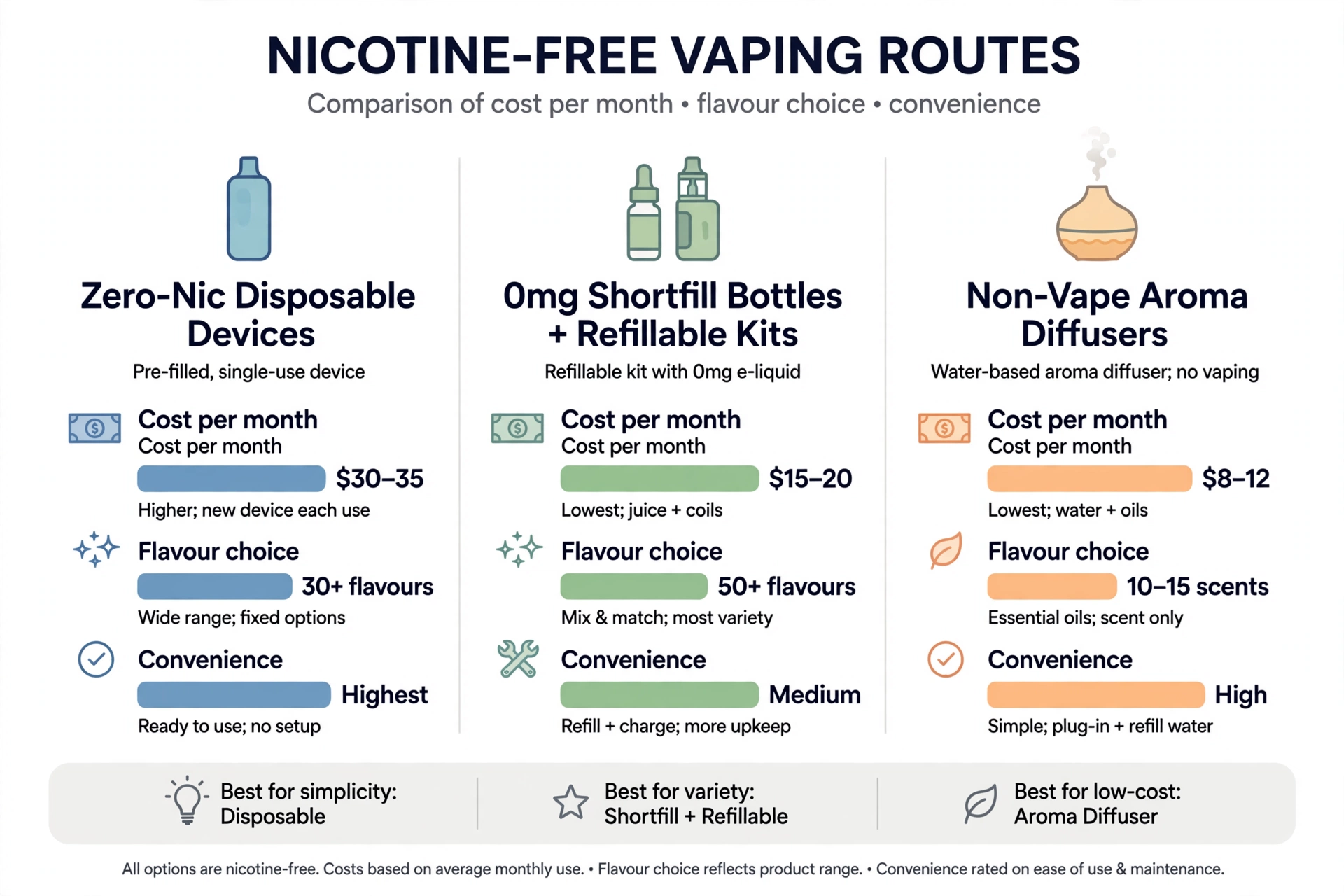
Every nicotine-free product in Britain fits into one of three routes. They differ in cost, flavour choice, convenience, and what kind of vaper they suit.
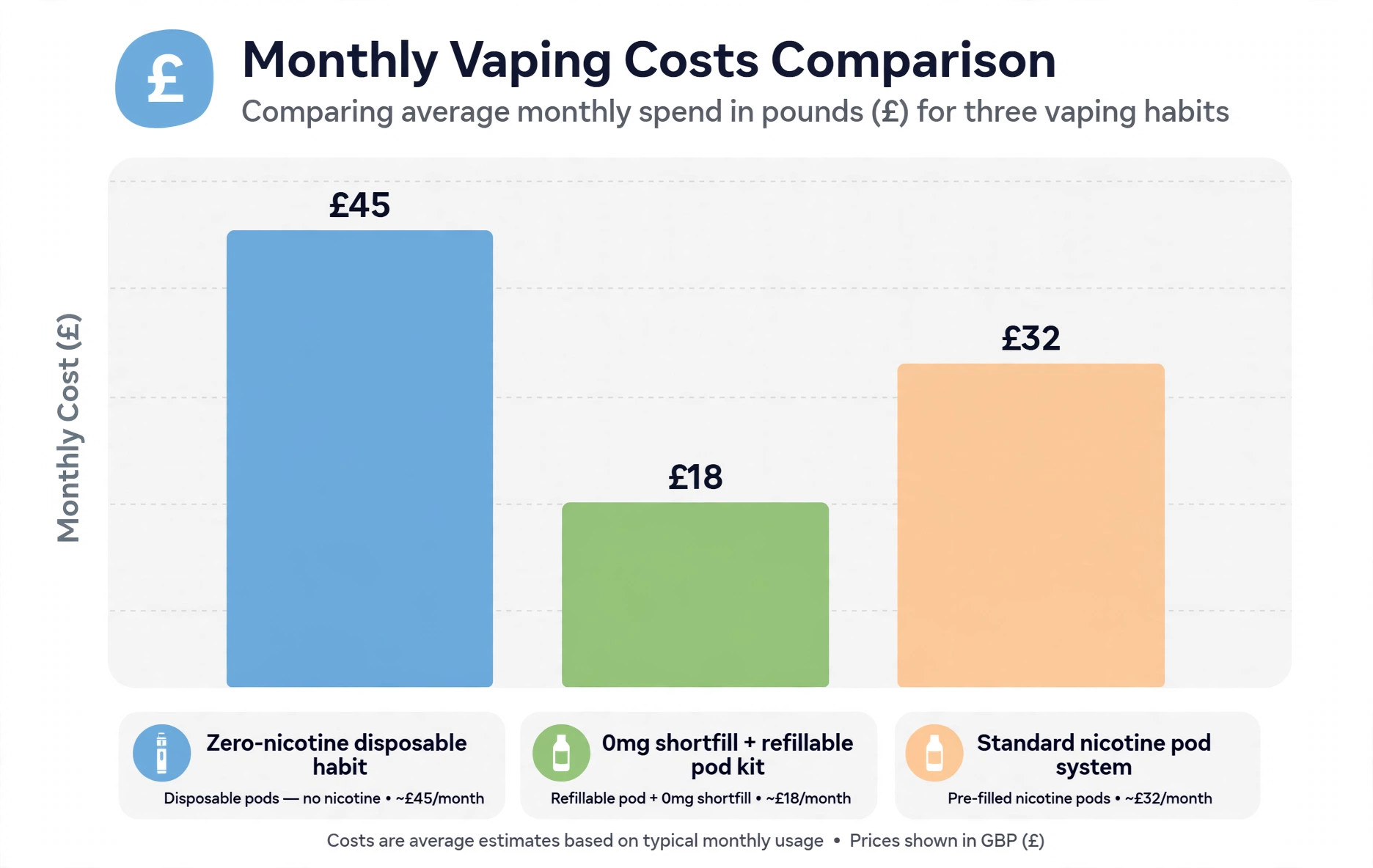
Route 1: Zero-nic prefilled devices. The simplest route. These are pod kits and (pre-ban) disposables filled with 0mg liquid: Geek Bar’s 0mg line (listed around £4, roughly 575 puffs, 500mAh), Elf Bar 600 0mg (8 to 15 flavours, 2ml, up to 600 puffs), Kingston ZERO 3500-puff 10ml devices with UK-made flavours, Hayati’s zero-nic disposables, and Lost Mary 0mg variants. Post-ban, the legal UK versions are rechargeable prefilled pod kits rather than single-use devices. Best for taperers who want continuity and ritualists who want zero effort. Worst for your wallet over time.
Route 2: 0mg shortfills in your own refillable kit. The cheapest and most flexible route. You buy 0mg e-liquid in bottles (10ml 50/50 bottles, or 100ml+ shortfills) and fill any refillable pod kit or tank. Totally Wicked’s 0mg lines (VLTZ with 30 disposable-style flavours, Red Label with 60+ flavours, from around £2.92 to £3.99 a bottle), plus every major shortfill brand’s 0mg range. JAC Vapour’s ZERO MAX 0mg formula (9 flavours, marketed at around 43p per 100 puffs) sits between the two: a dedicated no-nic formula for their rechargeable devices. Best for flavour variety, lowest running cost, and vapers who already own a refillable kit. The maths section below shows why this route wins.
Route 3: Non-vape aroma diffusers. The furthest step from vaping. Ripple makes nicotine-free, plant-powered aroma diffusers that look like vapes but contain no nicotine and no e-liquid in the traditional sense: portable aromatherapy, not e-cigarettes. The health-vape category (covered in our health vape reviews) sits in the same space: vitamin and botanical diffusers for ritualists who want the gesture with the least possible chemistry. Our Ripple brand guide decodes the whole category in full. Best for ritualists and quitters who want the hand-to-mouth habit without any vapour product at all.
The 0mg shortfill maths: what going nicotine-free actually costs
This is the section that decides the route for most people, because the three routes are not priced the same.
Route 1 maths: a zero-nic prefilled device or pod pack costs roughly £4 to £6 per unit or 2-pack. A moderate vaper going through one device every couple of days spends roughly £60 to £90 a month. That matches the old disposable habit almost exactly, because the pricing model is the same.
Route 2 maths: a 10ml bottle of 0mg 50/50 e-liquid costs roughly £2.49 to £4.99 at UK retailers, and a 100ml shortfill (nicotine-free by design, since UK law limits nicotine bottles to 10ml) runs roughly £9.99 to £16.99. A moderate vaper uses roughly 10 to 20ml a week, which works out at about £10 to £20 a month in liquid, plus the one-off kit cost of £6 to £27 for a refillable pod kit. So the same habit costs a quarter to a third of Route 1 within the first month, and the gap widens every month after.
The duty caveat: the October 2026 vape duty of £2.20 per 10ml of e-liquid applies to all e-liquid, including 0mg. That nudges every number above up a little, and it nudges prefilled products (big reservoirs, duty per ml) more than shortfills. It does not change the ordering: Route 2 still wins by a distance. Our disposable vape prices breakdown runs the full comparison maths across formats.
The takeaway most shops will give you, and it is honest: if you vape 0mg for the long term, buy a refillable kit and 0mg bottles. If you are tapering off vaping entirely, the prefilled route is the more expensive but more finite choice, which for a quitter is a feature, not a bug.
Brand picks by use case
Honest picks, from verified UK retail listings, matched to the motivation decoder above. Prices are ranges, not promises.
For tapering off nicotine: stay with the brand you already vape. Elf Bar’s 0mg ELFA pods and Lost Mary 0mg variants let you keep the exact flavour and device you are used to. Our Elf Bar brand guide covers the current Elf Bar lineup. The Lost Mary brand guide covers the sister brand in full. JAC Vapour’s ZERO MAX is the purpose-built option: a 0mg formula engineered for throat hit without nicotine, in their rechargeable Puff Box, with 9 flavours.
For flavour variety: Totally Wicked’s 0mg lines are the deepest bench in the country. VLTZ carries 30 disposable-style flavours in 0mg, Red Label runs 60+ flavours, both around £2.92 to £3.99 a bottle. Any 0mg shortfill brand’s range works in a refillable kit, and the flavour wall is effectively unlimited.
For budget: 0mg shortfills in a cheap refillable pod kit. A £7 to £15 pod kit plus 100ml shortfills at roughly £10 to £17 is the lowest-cost way to vape anything in Britain, nicotine or not.
For the ritual without the chemistry: Ripple and the health-vape diffusers. No nicotine, no e-liquid in the traditional sense, just the gesture and the flavour. The health-vape reviews roundup covers the category; the Ripple guide is the deep dive.
For quitting vaping entirely: see the taper plan below. The product matters less than the plan.
The taper plan: stepping down to zero (and past it)
If you are here to quit nicotine, this is the most important section in the guide. The research consensus and the community experience agree on the shape of it.
Step 1: step down in nicotine, not in vaping. Most vapers go 20mg to 10mg to 3mg over weeks or months. The cluster’s own keywords show the pattern: people search the step-down products before they search 0mg. Do not rush the steps; each one should feel boring before you take the next.
Step 2: switch the device last. Change one variable at a time. Keep your device and flavour when you drop a nicotine level, so your brain has only one thing to adjust to. Change the device when you go to 0mg, not before.
Step 3: the 0mg landing. This is where the ritual matters most. The first two weeks on 0mg are the psychological test: the nicotine is gone from your blood within days, but the habit has years of momentum. Keep the same flavour, the same routine, the same device. Expect the throat hit to soften (that sensation was mostly nicotine) and expect to vape slightly more for a while. That is normal and it fades.
Step 4: the exit (optional). Some 0mg vapers stay happily at zero for years, and that is a perfectly good outcome: the dependence is gone. If you want out entirely, fade the ritual deliberately: leave the device at home for short trips, then for evenings, then for days. The aroma diffusers in Route 3 exist for this exact transition, keeping the gesture while the vapour habit dies.
One thing the plan does not include: willpower as a strategy. The people who make it treat tapering as logistics, not virtue. Set the steps, buy the products for the step you are on, and do not buy the next step early.
UK law: what actually applies to nicotine-free vapes
The legal reality surprises most people, because the law mostly does not care whether your vape has nicotine in it.
The age gate still applies. UK retailers apply the same 18+ age check to nicotine-free vapes as to nicotine ones. The cluster’s “legal age to vape without nicotine” queries exist because the answer feels counterintuitive, but it is consistent: the restriction covers vaping products, not just nicotine.
The single-use ban covered 0mg disposables too. The 1 June 2025 ban made it illegal for UK businesses to sell or supply single-use vapes. The law looks at the device design, not the liquid inside, so zero-nicotine disposables fell inside it exactly like the nicotine ones. That is why the current UK 0mg market is prefilled pod kits and bottles, not single-use devices.
The 2026 duty applies to 0mg liquid too. The £2.20 per 10ml duty is levied on e-liquid, and the legislation does not exempt 0mg. Prefilled 0mg products carry it in their price; shortfill buyers pay it in the bottle price.
Advertising and packaging rules still apply. Nicotine-free vapes follow the same TPD-derived packaging, labelling and advertising rules as nicotine vapes in the UK.
None of this is a reason not to go nicotine-free. It is a reason to buy from proper UK retailers, who handle all of it for you.
The honest safety section
The cluster’s safety queries (“is nicotine free vape safe”) deserve a straight answer, not a marketing one.
What removing nicotine removes: the dependence. Nicotine is the addictive component of vaping. A 0mg vape does not create or sustain nicotine dependence, which is the single biggest health-relevant difference between 0mg and nicotine vaping. For a taperer or quitter, that is the entire point.
What removing nicotine does not remove: the aerosol. A 0mg vape still heats propylene glycol, vegetable glycerin and flavourings into an inhaled aerosol, and the long-term research on inhaling those compounds is still developing. Flavourings are food-safe for eating, which is not the same as safe for inhaling. Nobody can honestly call any inhaled product risk-free, and this guide will not.
The honest hierarchy: not vaping at all is the lowest-risk option. Nicotine-free vaping removes the dependence risk but keeps the aerosol question. Nicotine vaping keeps both. Smoking keeps both plus combustion. That ordering is the whole story, and every personal decision is just picking a rung.
For pregnancy and medical conditions: the cluster includes pregnancy queries, and the honest answer is that this is a conversation for a clinician, not a buying guide. Nicotine-free is not risk-free, and the stakes of getting it wrong are higher.
Nicotine free vape FAQ
What does 0mg mean on a vape? It means the e-liquid contains zero milligrams of nicotine per millilitre: no nicotine added in manufacturing. 0mg, 0%, zero nicotine and nicotine-free all describe the same thing.
Is a nicotine-free vape actually free of nicotine? From reputable brands, yes. But the label is a manufacturing claim, not a lab certificate, and there have been documented cases of trace nicotine in 0mg disposables from cross-contamination on shared production lines. Buy from established brands and check for batch testing if verification matters to you.
Is nicotine-free vaping safe? It removes nicotine dependence, which is the biggest risk difference versus nicotine vaping. It does not remove every consideration: it is still an inhaled aerosol product, and long-term research on flavourings is ongoing. Not vaping at all remains the lowest-risk option.
Can under-18s buy nicotine-free vapes in the UK? No. UK retailers apply the same 18+ age gate to nicotine-free vapes as to nicotine ones.
Do 0mg disposables still exist in the UK? Not as single-use devices: the June 2025 ban covered them regardless of nicotine content. The legal 0mg options are prefilled pod kits, 0mg shortfill bottles, and non-vape aroma diffusers.
Will 0mg e-liquid work in my device? Yes. Nicotine content changes nothing about device compatibility. Any 0mg liquid works in any device that takes its VG/PG ratio: 50/50 for pods, higher VG for sub-ohm tanks.
Does 0mg taste different from nicotine liquid? Mostly in the throat hit, which softens noticeably without nicotine. Flavour intensity is largely unchanged, since flavour comes from the flavourings and the PG/VG base, not the nicotine. Some vapers actually prefer 0mg for flavour clarity.
How long does a 10ml bottle of 0mg liquid last? Roughly three to seven days for a moderate pod vaper, depending on the device and how heavily you vape. A 100ml shortfill lasts a moderate vaper roughly a month or more.
What is the cheapest way to vape nicotine-free? A refillable pod kit (£7 to £15) with 0mg shortfill bottles. The monthly liquid cost runs roughly £10 to £20 for a moderate vaper, a fraction of prefilled 0mg devices.
Are there nicotine-free versions of Elf Bar and Lost Mary? Yes. Both brands sell 0mg variants of their prefilled pod ranges in the UK. Our brand guides cover the current lineups.
What is the difference between Ripple and a 0mg vape? Ripple is not a vape in the e-liquid sense: it is a nicotine-free, plant-powered aroma diffuser with no traditional e-liquid. A 0mg vape still vaporises PG/VG e-liquid, just without nicotine. Different products for different priorities.
Should I switch to 0mg to quit vaping? 0mg is the standard exit ramp: it separates the habit from the dependence, which makes the habit much easier to fade. The taper plan above lays out the steps.
Verdict: the 0mg decision
Go nicotine-free if the nicotine has served its purpose and the ritual has not. For the taperer, 0mg is the finish line of a years-long project, and the right move is 0mg versions of what you already vape. For the ritualist, it is the whole market opening up, and the right move is the flavour wall of 0mg shortfills. For the health-conscious, it is verification over price, and the right move is a dedicated 0mg brand with published testing. For the quitter, it is the exit ramp, and the right move is a plan with an end date.
Skip the 0mg aisle if you are still happily vaping nicotine with no plans to change. There is no prize for switching early, and 0mg vaping is not risk-free, just risk-different.
But give the category its due: it is the fastest-growing corner of UK vaping for a reason. Millions of vapers started with nicotine as a tool and stayed for the ritual. Nicotine-free vaping is what the ritual looks like once the tool has done its job.