
No, cigarettes and smoking are not the same thing, even though the two words are used as if they were. A cigarette is a product: a small paper tube filled with cut tobacco, usually with a filter at one end. Smoking is the act: lighting that product, burning the tobacco, and breathing in the smoke. You can hold a cigarette without smoking it, and you can smoke without a cigarette, by using a cigar, a pipe, or a waterpipe. Once that distinction is clear, the rest of the subject falls into place: what the product contains, what burning does to it, why one form is not safer than another, and what help exists for anyone who wants to stop.
The short answer: a product and an act
Think of it the way you would think of a candle and a flame. The candle is the object, the flame is what happens when you light it. A cigarette is the object, smoking is what happens when you light it and draw the smoke into your mouth and lungs. The table below keeps the two apart.
| Cigarette | Smoking | |
|---|---|---|
| What it is | A manufactured or hand-rolled product made from tobacco leaf, paper, and usually a filter | The act of burning tobacco and inhaling the resulting smoke |
| What it does | Nothing on its own: an unlit cigarette is just dried leaf in paper | Creates smoke, delivers nicotine to the brain, and exposes the lungs and body to tar and carbon monoxide |
| Examples | A factory-made cigarette, a hand-rolled cigarette | Smoking a cigarette, a cigar, a pipe, or a waterpipe |
This matters because most of the harm does not come from the tobacco leaf sitting in the paper. It comes from burning it. The leaf itself contains nicotine, which is the addictive part, but the smoke created by combustion carries thousands of chemicals, many of them toxic, into the lungs and from there around the body. That is why debates about which cigarette is “safer” usually miss the point: if the tobacco is burnt and the smoke is inhaled, the core harm is present whatever the brand, the size, or the packaging.
What a cigarette actually is
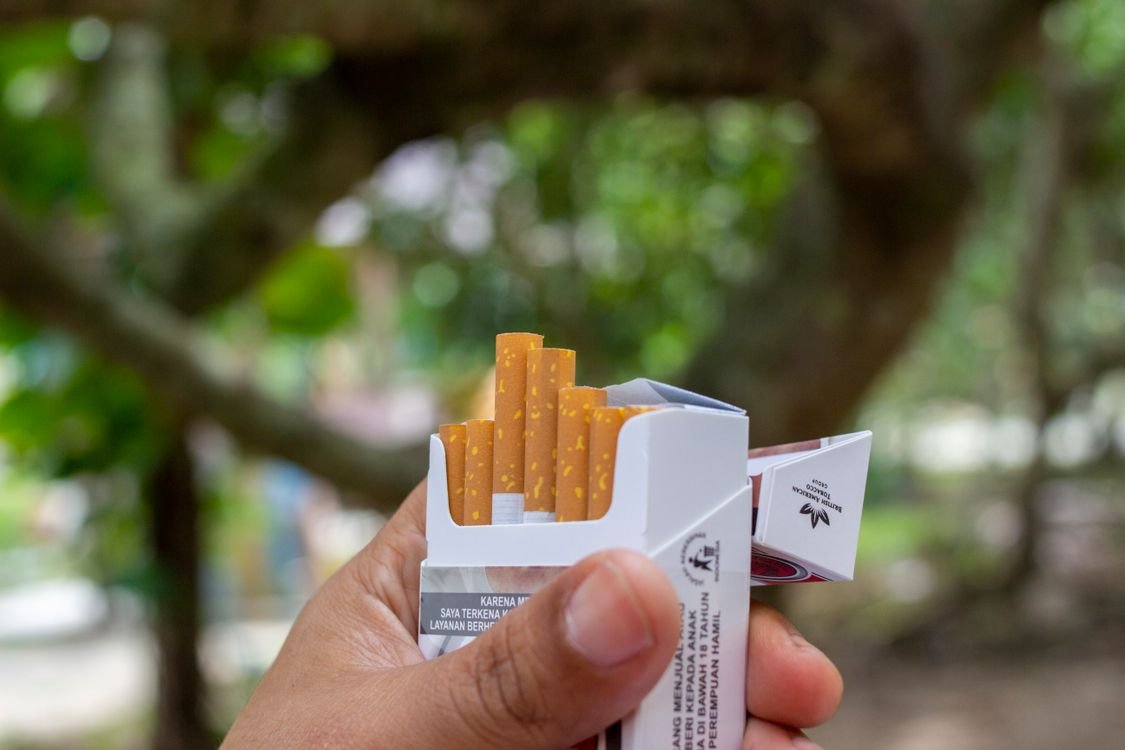
A standard manufactured cigarette has four parts, and each one has a job. The tobacco filler is cut, cured tobacco leaf, sometimes mixed with reconstituted tobacco made from leaf stems and scraps. The paper wrapper holds the filler in a cylinder and is designed to burn steadily along with it. The filter, usually made of cellulose acetate fibres, sits at the mouth end and traps some of the larger particles in the smoke as it passes through. Some cigarettes also include a small flavour capsule in the filter that releases a taste when crushed, but the capsule changes flavour, not safety.
The tobacco inside
The tobacco plant is grown, harvested, and then cured, which means the leaves are dried in a controlled way that changes their chemistry and flavour. After curing, the leaf is cut into fine shreds, and that shredded leaf is what fills the cigarette. The nicotine in the leaf is a naturally occurring drug, and it is the reason cigarettes are addictive: inhaled nicotine reaches the brain within seconds and triggers the reward signals that make a smoker want another one. The leaf also carries the raw material for everything else in the smoke, because burning plant matter never produces clean air. It produces a complex mixture of gases and fine particles.
The paper, the filter and the tip
The paper is not just packaging. It controls how the cigarette burns, how fast it burns, and how much air mixes with the smoke. The filter does trap some larger bits of partially burnt tobacco, and that is the only real job it does. It does not remove the gases, it does not remove most of the fine particles, and it does not make the smoke safe. A cigarette labelled as light or low tar still burns tobacco and still produces smoke, and the filter on it works the same way as any other filter. Judging a cigarette by its filter is like judging a fire by its chimney: the chimney shapes the smoke, it does not clean it.
What happens when a cigarette burns
Lighting a cigarette starts combustion, the same chemical process as any small fire, but happening at the tip of a paper tube. The burning end reaches very high temperatures, the tobacco smoulders, and the smoker draws the smoke through the unburnt tobacco, through the filter, and into the mouth and lungs. Two kinds of smoke come out of this. Mainstream smoke is the smoke the smoker pulls through the cigarette and inhales. Sidestream smoke is the smoke that curls off the lit end between puffs. Both are tobacco smoke, and both carry the same kinds of chemicals, which is why the smoke around a smoker matters as well as the smoke inside them.
Tar, nicotine and carbon monoxide in plain terms
Three names come up in every discussion of cigarette smoke, and each one does a different kind of damage. Tar is the sticky brown residue left when tobacco burns. It coats the airways and the lungs, it stains teeth and fingers, and it carries many of the cancer-causing chemicals in smoke. Nicotine is the addictive drug: it is not the main cause of cancer, but it is the reason quitting feels so hard, because the brain learns to expect it and protests when it is missing. Carbon monoxide is a poisonous gas, the same gas that comes from car exhausts, and it lowers the blood’s ability to carry oxygen around the body. Put together, one puff delivers an addictive drug, a lung-coating residue, and a gas that starves the tissues of oxygen, and a pack-a-day habit repeats that delivery hundreds of times a day.
Manufactured vs roll-your-own
Manufactured cigarettes, sometimes called tailor-made or straights, are made in factories to a fixed size, weight, and filter type. Roll-your-own cigarettes, known as rollies, are made by hand from loose tobacco, rolling papers, and sometimes a filter tip. The hand-rolled version is often smaller or larger than a factory cigarette, it may have no filter at all, and the amount of tobacco in each one varies with whoever rolled it. None of that makes rollies safer. A persistent myth says roll-your-own tobacco is more natural and therefore less harmful, but the smoke from a rollie is still tobacco smoke, produced by the same combustion, carrying the same tar, nicotine, and carbon monoxide. Loose tobacco is not unprocessed leaf straight from the field: it is cured, cut, and blended before it reaches the pouch. If anything, the lack of a filter on many rollies removes even the small particle trapping a factory filter provides, and the variable size makes it harder to judge how much is being smoked. The honest comparison is not which one is safer. It is that both are cigarettes, and both are smoked the same way.
Smoking beyond cigarettes
Cigarettes are by far the most common form of smoking, but smoking as an act covers more than cigarettes. Cigars are rolls of tobacco leaf without the paper wrapper, usually larger than cigarettes, and most cigar smokers draw the smoke into the mouth without inhaling it into the lungs. That does not make cigar smoke harmless: the smoke still reaches the mouth, throat, and airways, and it still drifts into the air around the smoker. Pipes work the same way, with tobacco burnt in a small bowl and the smoke drawn through a stem, again usually without deep inhalation. A waterpipe, also called shisha or hookah, passes the smoke through water before it is inhaled, but the water does not filter out the harmful chemicals, and a waterpipe session typically involves far more smoke than a single cigarette. The product changes, the wrapper changes, and the way the smoke is drawn changes, but the act is the same: tobacco is burnt, and smoke is breathed in.
Secondhand smoke: the smoke nobody chose
Secondhand smoke is the combination of the smoke a smoker breathes out and the sidestream smoke from the lit end of the cigarette. Most of the smoke from a burning cigarette never enters the smoker’s lungs at all: it goes straight into the air around them, where anyone nearby can breathe it in. Much of that smoke is invisible, so a room can look clear while still carrying it. People who regularly breathe secondhand smoke face many of the same risks as smokers, including lung cancer and heart disease, and children are especially vulnerable because their airways and lungs are still developing. That is why the practical advice is simple and does not depend on numbers: keep smoking away from other people, never smoke indoors or in a car with others in it, and treat quitting as the only step that fully protects the people around a smoker.
Why quitting is hard, and where help sits
Quitting is hard for two reasons that work together. The first is physical: nicotine addiction creates cravings, restlessness, and low mood when the supply stops, and those feelings push a smoker back to the next cigarette. The second is habit: smoking weaves itself into routines, into breaks, into mornings, into stress, so that situations themselves start to trigger the urge. Knowing both reasons helps, because it explains why willpower alone often fails and why support improves the odds.
Our guide to stop smoking aids walks through every aid, pill, and product in one place, without picking one for you.
One brief pointer for smokers still weighing a first step: some smokers switch to vaping before quitting entirely, and that route is covered separately in our guide to switching from smoking.
The benefits of stopping start quickly, with breathing easing within days and circulation improving within weeks, and they keep growing the longer someone stays stopped. This guide is general information, not medical advice, and anyone with a health condition should talk to a GP or pharmacist about the right support for them.
Frequently asked questions
Are cigarettes and smoking the same thing?
No. A cigarette is the product, a paper tube of cut tobacco with a filter. Smoking is the act of lighting it, burning the tobacco, and inhaling the smoke. You can have one without the other: an unlit cigarette is not smoking, and a cigar or pipe is smoking without a cigarette.
Is smoking just cigarettes?
No. Smoking covers any form of burning tobacco and inhaling the smoke, including cigars, pipes, and waterpipes. Cigarettes are simply the most common form, and the one most people mean when they say smoking.
Are roll-your-own cigarettes safer than manufactured ones?
No. Roll-your-own cigarettes produce the same kind of tobacco smoke, with the same tar, nicotine, and carbon monoxide, and many have no filter at all. The idea that loose tobacco is more natural and therefore less harmful is a myth.
Does a filter make cigarette smoke safe?
No. A filter traps some larger particles from the smoke, but it does not remove the gases or most of the fine particles, and it does not make the smoke safe. Light or low tar cigarettes still burn tobacco and still produce harmful smoke.
What is secondhand smoke?
Secondhand smoke is the smoke breathed out by a smoker combined with the smoke curling off the lit end of the cigarette. It drifts into the air around the smoker, much of it invisible, and breathing it regularly carries many of the same risks as smoking, especially for children.
Is cigar or pipe smoking safer because you do not inhale?
Not inhaling does not make it safe. Cigar and pipe smoke still reaches the mouth, throat, and airways, and it still fills the air around the smoker with tobacco smoke. The harm is different in emphasis, not absent.