The Short Answer: In What States Is Growing Weed Legal
In what states is growing weed legal in 2026? Roughly 24 to 27 states plus Washington DC allow some form of home cannabis cultivation, whether recreational, medical, or both, depending on exactly how you count states with narrow medical only programs. That leaves around half the country where growing your own plant, even a single one, is still a criminal offense regardless of how the state treats possession or purchase.
This guide breaks down exactly which states allow home growing and under what conditions, how many plants you can actually keep at once, the states that trip people up by legalizing purchase but not cultivation, and what happens if you grow somewhere it’s not allowed. It also covers a handful of specific city and state questions that come up constantly, from Texas to Wisconsin to the Carolinas.
Why Legal Weed States Don’t Always Allow Home Grow
This is the single biggest source of confusion around this topic, and it’s worth addressing directly before getting into any state list. States legalize weed and states legalize growing weed are two completely separate legislative decisions, and a state saying yes to one doesn’t automatically mean yes to the other. New Jersey, Delaware, and Washington state are the clearest examples, all three allow adults to legally buy and possess cannabis, and all three still ban home cultivation entirely for recreational users.
Illinois splits the difference in an interesting way, recreational users can’t grow at all, but registered medical patients can cultivate a limited number of plants under the state’s medical program. Nevada takes yet another approach, generally only permitting home grow if you live more than 25 miles from the nearest licensed dispensary. The pattern across all these examples is the same: never assume growing rights just because a state shows up on a general list of states where weed is legal. Check the cultivation provision specifically.
Table of Contents
States With No Plant Limit or Generous Home Grow Rules
Most legal states that do permit cultivation cluster around a similar structure, roughly six plants per adult with a household cap around 12 regardless of how many adults live there. A handful of states go noticeably further than that baseline.
- Missouri: Under Amendment 3, growers can keep six flowering plants, six non-flowering plants, and six seedlings under 14 inches, totaling 18 plants at various growth stages
- Michigan: Recreational growers can keep up to 12 plants, with medical caregivers permitted even higher limits under separate provisions
- Rhode Island medical patients: Up to 12 mature and 12 immature plants specifically for registered medical patients
These generous limits stand in sharp contrast to states on the stricter end, and the gap between them is significant enough that two neighboring legal states can produce wildly different outcomes for the same grower.
How Many Plants Can You Legally Grow? State by State Limits
Most states set their cap somewhere between four and twelve plants, but the specifics genuinely matter since exceeding your state’s limit, even by accident, is treated as a separate offense from simple possession.
How Many Weed Plants Can You Grow in Colorado
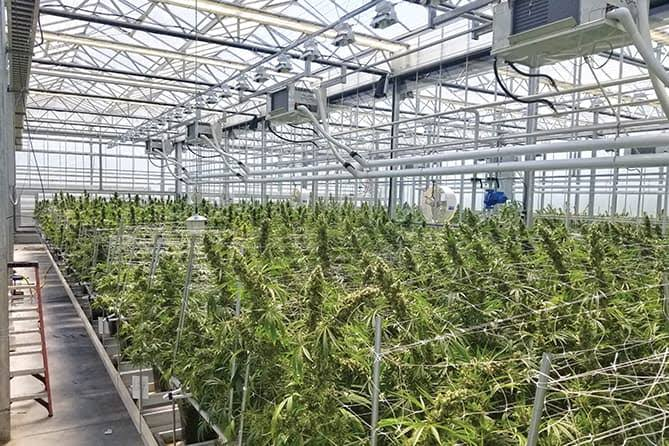
Colorado allows adults 21 and older to grow up to six plants, with no more than three mature and flowering at any one time. This is one of the more commonly cited baseline limits nationally, since several other states modeled their own cultivation laws closely on Colorado’s original framework.
How Many Weed Plants Can You Grow in Ohio
Ohio joined the list of legal home grow states more recently than Colorado, and it follows a similar six plant per adult structure with a 12 plant household cap. Ohio’s inclusion is a good reminder that this list genuinely moves year to year, a guide written even a year or two ago could easily have Ohio in the wrong category.
How Many Weed Plants Can You Have in California
California permits adults 21 and older to grow up to six plants per household, not per adult, which is a meaningful distinction from states that calculate the limit per person. There’s no specific cap on how many of those six can be mature versus immature at once, though local city ordinances can add restrictions on top of the state baseline, particularly for outdoor grows.
States Where Weed Is Legal to Use But Illegal to Grow
This category deserves its own spotlight since it’s genuinely the most confusing part of cannabis law for a lot of people trying to figure out where they stand.
Is Weed Legal in Houston
Texas hasn’t legalized recreational marijuana at all, so the home grow question doesn’t even come up the way it does in states with legal purchase but no grow rights. Weed remains illegal to possess, buy, or grow anywhere in Texas, including Houston, regardless of any local city attitude toward enforcement.
Growing Weed in Texas
Since Texas has no legal cannabis market of any kind, growing weed in Texas is illegal statewide with no exceptions for personal use quantities. Cultivation charges in Texas tend to carry more serious penalties than simple possession too, since the state treats growing as evidence of intent beyond personal use in many cases. For a deeper look at how Texas handles nicotine vape regulation by comparison, including the state’s own country of manufacture restrictions, this guide on geek bar ban texas covers a related but separate regulatory story worth understanding.
States Where Weed and Home Growing Are Both Illegal
A meaningful chunk of the country still bans marijuana entirely, meaning there’s no purchase question to even separate from the growing question.
Is Weed Illegal in Philly
Pennsylvania has not legalized recreational marijuana as of 2026, and Philadelphia’s more relaxed local enforcement attitude toward small amount possession doesn’t change the underlying state law. Growing marijuana in Pennsylvania remains fully illegal statewide, and Philadelphia’s municipal decriminalization ordinance for possession does not extend to cultivation.
Is Weed Legal in Pittsburgh
Pittsburgh sits under the same statewide Pennsylvania prohibition as Philadelphia, and Pittsburgh weed laws don’t carve out any local exception either for possession or for growing. Pennsylvania has discussed expanding cannabis access in recent legislative sessions, including some home cultivation proposals, but nothing has passed into law as of 2026.
Weed Legal in South Carolina, Gatlinburg, and Myrtle Beach
South Carolina remains a fully prohibited state with no medical or recreational program, which means weed legal in South Carolina questions have a simple answer, no, across the entire state including Myrtle Beach. Gatlinburg sits in Tennessee, another fully prohibited state with no home grow provision of any kind, and its status as a major tourist destination doesn’t change the underlying state law for visitors or residents.
States on the Edge: Where Legalization Is Pending
A few states sit in an actively shifting position, worth understanding since the answer here could change within a legislative session or two.
Does West Virginia Have Recreational Weed
No. West Virginia has a limited medical marijuana program but no recreational legalization and no home grow provision for patients or general adults. Reform discussions have surfaced periodically without producing a law change.
When Will Weed Be Legalized in NC
North Carolina has not legalized marijuana for recreational or medical use as of 2026, despite periodic legislative proposals and growing public support in polling. There’s no reliable timeline for when or if that changes, and predictions floated online should be treated skeptically until an actual bill clears both chambers.
Is Recreational Weed Legal to Grow in Wisconsin
No. Wisconsin has no recreational or comprehensive medical cannabis program at all, and growing marijuana anywhere in the state, in any quantity, remains a criminal offense under state law. This puts Wisconsin firmly in the fully prohibited category alongside states like Texas and Kansas, despite being surrounded by legal states including Illinois, Michigan, and Minnesota. For the complete picture of Wisconsin’s cannabis law, including CBD exceptions, DUI rules, and cross border transport risk, see this guide on is weed legal in Wisconsin.
Can You Smoke or Grow Weed in Other Major Cities
A cluster of specific city questions comes up constantly, and the answer almost always comes down to state law rather than anything the city itself controls.
Is Weed Legal in San Antonio
No, San Antonio follows Texas state law exactly like Houston, meaning weed remains illegal to possess, buy, or grow anywhere in the city regardless of local police enforcement priorities.
Is Weed Legal in Charlotte
No, Charlotte sits under North Carolina’s statewide prohibition, and no local ordinance changes that underlying legal status for possession or cultivation.
Is Weed Legal in Tampa Florida
Florida permits medical marijuana for registered patients but does not allow home cultivation even under its medical program, and recreational use remains illegal statewide, including in Tampa.
Can You Smoke Weed in Public in San Diego
California allows recreational use and home cultivation statewide, including in San Diego, but public consumption is still restricted similarly to smoking tobacco, meaning designated private spaces are generally required regardless of the state’s broader legalization.
Which State Has the Best Weed for Home Growing
This one comes down more to climate and cultivation freedom than legal technicalities. States with long growing seasons and more permissive outdoor cultivation rules, like California, Oregon, and Colorado, tend to give home growers the most flexibility to actually produce a strong yield rather than being restricted to cramped indoor setups. States that legalized more recently, like Ohio and Missouri, are still catching up in terms of established grower community knowledge and local resources, even where the legal plant limits themselves are generous.
What Happens If You Grow Illegally
Penalties for illegal cultivation vary significantly by state, but they’re almost always treated more seriously than simple possession, since courts and prosecutors generally view growing as evidence of larger scale involvement even at small personal quantities.
- Felony level charges are common. Unlike simple possession, which is often a misdemeanor in restrictive states, cultivation frequently gets charged as a felony regardless of plant count.
- Penalties scale with plant number. More plants generally means harsher potential sentencing, even in states without a specific commercial intent threshold written into law.
- Federal exposure exists separately. Growing marijuana remains a federal crime in all 50 states regardless of state law, though federal prosecution of small personal grows in legal states is rare in practice.
- Local ordinances can restrict further. Even in fully legal states, cities and counties can impose additional permitting requirements or outright bans on cultivation, so state legality alone doesn’t guarantee you’re clear locally.
Renters and anyone living in an HOA governed community face an additional layer worth knowing about. Landlords can prohibit growing in a lease even in a state where cultivation is fully legal, and HOAs can restrict or ban it through community covenants regardless of what state law allows.
Do Vaping Age Laws Apply the Same Way to Homegrown Weed?
Not directly, since cannabis and nicotine vaping fall under entirely separate legal frameworks, but the underlying age principle is consistent across both. Every state that permits home cannabis cultivation restricts it to adults 21 and older, matching the same federal age floor that governs nicotine vaping nationwide. For a full explanation of how the federal vaping age law works and where states are permitted to layer additional restrictions on top of it, see this guide on how old do you have to be to vape.
Frequently Asked Questions
In what states is growing weed legal in 2026?
Roughly 24 to 27 states plus Washington DC allow some form of home cannabis cultivation, including Alaska, Arizona, California, Colorado, Michigan, Missouri, Ohio, and Oregon among others. The exact count depends on how narrowly you define legal, since some states only permit cultivation for registered medical patients rather than general adult use.
Can you grow weed in a state where it’s legal to buy but not to grow?
No. New Jersey, Delaware, and Washington state are the clearest examples of states that allow legal purchase and possession while banning home cultivation entirely for recreational users. Always check a state’s cultivation law specifically rather than assuming purchase legality includes growing rights.
How many marijuana plants can you legally grow at home?
Most states cap the limit between four and twelve plants, with six plants per adult and a twelve plant household cap being the most common structure nationally. Some states like Missouri and Michigan allow significantly more, while others set stricter per household rather than per person limits.
Is it illegal to grow weed even in states with legal recreational marijuana?
Sometimes, yes. Legalizing recreational purchase and legalizing home cultivation are separate legislative decisions, and several fully legal recreational states, including New Jersey and Washington, still prohibit home growing entirely.
What happens if I get caught growing weed illegally?
Penalties vary by state but are typically more severe than simple possession charges, often reaching felony level regardless of plant count. Federal law also technically criminalizes cultivation in every state, though federal prosecution of small personal grows within legal states is uncommon in practice.

