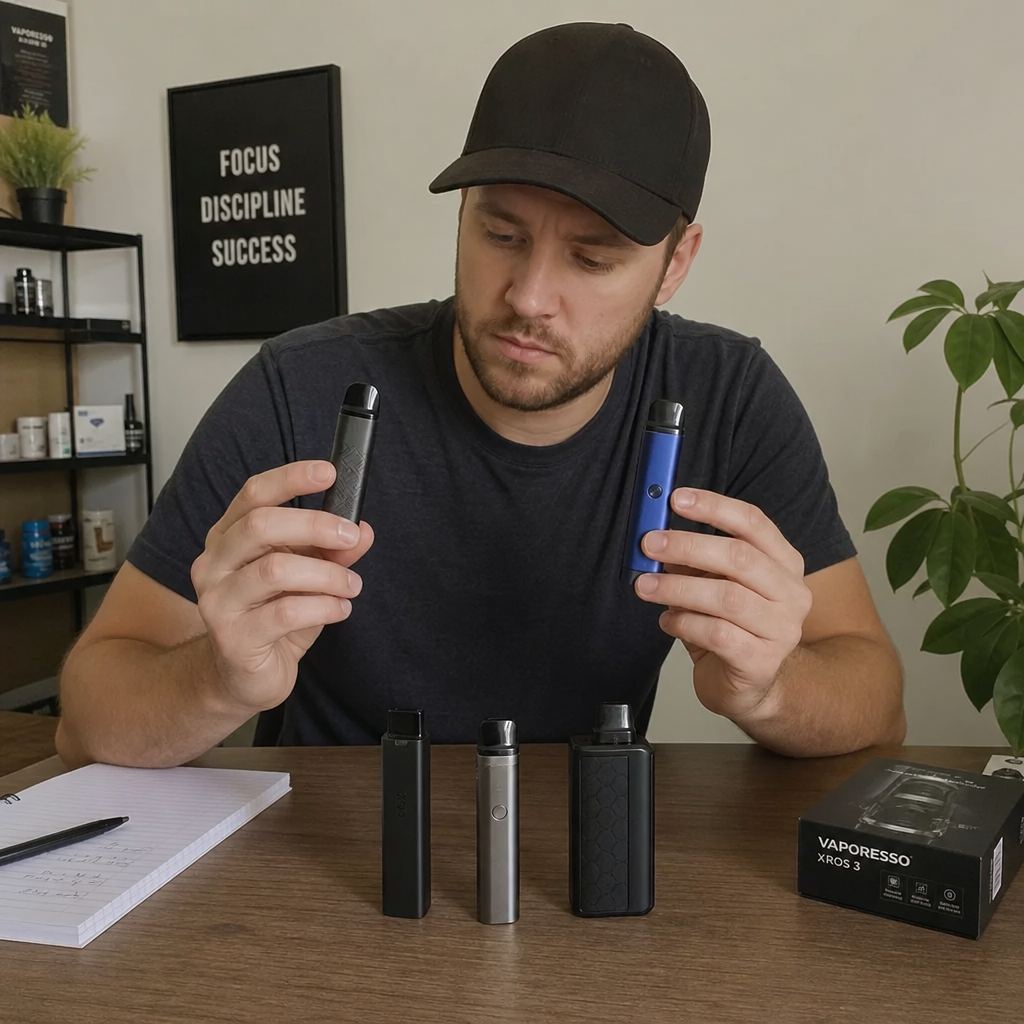

Walk into any corner shop in Sydney, Melbourne, or Brisbane and ask for a vape, and you will be met with a shake of the head. Not because they are out of stock. Because selling one there is a crime. In Australia, a vape is not a consumer product. It is a medicine, regulated under the same framework as prescription drugs, and the only legal place to buy one is a pharmacy.
No other country on earth has gone this far. The United States runs vapes through the FDA. The UK sells them openly while taxing them. New Zealand, just across the water, treats them as a regulated retail good. Australia looked at all of those models and chose a different path: prescription-only access, pharmacy-only sales, and some of the heaviest penalties in the world for anyone who ignores the rules.
This guide walks through exactly how the system works, the two legal ways to buy a vape, what the products look like, what happens if you break the law, what visitors need to know, and why a 2026 Senate report says the whole model may be failing.
The short version
If you are short on time, here is the system in one paragraph: since October 2021, nicotine vapes in Australia have been prescription-only. A 2024 overhaul banned every non-therapeutic vape, killed the import of disposables in March 2024, and from July 2024 restricted all vape sales to pharmacies. From October 2024, adults over 18 can buy low-strength therapeutic vapes (20 mg/mL or less) from a participating pharmacy after a pharmacist consultation, no doctor visit required. Anything stronger, or any buyer under 18, still needs a prescription. Legal products come in plain packaging and in only three flavour families: tobacco, mint, and menthol. Selling outside pharmacies can mean prison time and fines in the millions.
Three turning points that built the model
Australia did not arrive here overnight. The current system is the product of three distinct tightening waves.
October 2021: the prescription era begins. The Therapeutic Goods Administration, the federal regulator, closed a long-standing gap between Commonwealth and state law by requiring a prescription for the personal importation of nicotine e-cigarettes. From that point, importing nicotine vapes without a doctor's sign-off was illegal, and domestic supply was already confined to pharmacies dispensing against prescriptions. This is the date people point to as the birth of the prescription-only model.
March to July 2024: the great clampdown. On March 1, 2024, the import ban on disposable vapes took effect, and the Personal Importation Scheme stopped covering vapes entirely. Even prescription holders could no longer order from overseas. Then on July 1, 2024, the Vaping Reforms Act came into force and banned all non-therapeutic vapes outright. Every vape sold anywhere had to be a therapeutic product, and only pharmacies were allowed to sell them. Vape shops, tobacconists, and convenience stores were shut out of the market in a single day.
October 2024 and July 2025: access loosens slightly, standards tighten. The October 2024 reforms created the pharmacist consultation pathway for adults, removing the need for a doctor's prescription for low-strength products. Meanwhile, product standards kept getting stricter. From July 2025, strengthened standards capped bottle sizes at 60 mL and pods at 5 mL, demanded plain pharmaceutical packaging, and limited flavours to mint, menthol, and tobacco, with unflavoured products also allowed. Anything fruity, candy-sweet, or dessert-flavoured simply has no legal existence in Australia.
The two legal ways to buy a vape
Everything legal runs through a pharmacy. There are two routes in, depending on what you need.
Route one: the pharmacist consultation (no prescription). Since October 2024, if you are 18 or older, you can walk into a participating pharmacy and buy a therapeutic vape containing 20 mg/mL of nicotine or less without seeing a doctor first, wherever state and territory laws permit it. It is not as simple as grabbing one off a shelf. You must speak with the pharmacist, who will discuss the product and dosage with you, talk through other options for quitting smoking or managing nicotine dependence, and check your ID to confirm your age. You can only purchase a one-month supply within any one-month period. Not every pharmacy stocks these products, so calling ahead is sensible.
Route two: the prescription. You still need a doctor's prescription in two situations: you want a product stronger than 20 mg/mL (up to the legal maximum of 50 mg/mL), or you are under 18. Doctors who are approved as Authorised Prescribers can write the prescription directly. Other GPs apply to the regulator through the Special Access Scheme, which adds a processing step. In practice, telehealth clinics specialising in smoking cessation often employ Authorised Prescribers, so a consultation and prescription can happen in a single appointment. Prescriptions are typically written for 3 to 12 months, and like any prescription, they are only filled at a pharmacy.
What is legal and what is not: the quick table
| Situation | Legal or illegal? |
|---|---|
| Buying a low-strength vape at a pharmacy after a pharmacist chat (18+) | Legal |
| Buying a higher-strength vape at a pharmacy with a prescription | Legal |
| Buying any vape from a vape shop, tobacconist, or corner store | Illegal |
| Ordering a vape from an overseas website, even with a prescription | Illegal since March 2024 |
| Owning a fruity or dessert-flavoured vape | Illegal, flavours are restricted to tobacco, mint, and menthol |
| Selling vapes anywhere except a pharmacy | Illegal, with the heaviest penalties |
| An under-18 buying or possessing a vape without a prescription | Illegal, police can seize the device in most states |
That middle row catches people out. Before March 2024, prescription holders could legally import up to a three-month supply from overseas, and New Zealand websites did a roaring trade. That door is now shut. Imports today require a licence and permit from the Office of Drug Control, which in practice only commercial importers supplying pharmacies can obtain.
What a legal Australian vape actually looks like
Forget the colourful disposables that dominate the rest of the world. The disposable vapes that top sales charts in the US and UK have no legal equivalent in Australia at all. A therapeutic vape sold in an Australian pharmacy is a deliberately clinical object: plain packaging, printed health warnings, ingredient lists, usage instructions, and traceability markings. Nothing about it is designed to look fun.
The rules go deep into the formulation. Nicotine is capped at 50 mg/mL, and the actual concentration must sit within 90 to 110 percent of what the label states. Only five ingredients are permitted: nicotine, propylene glycol, glycerol, water, and a flavouring agent drawn from the three approved flavour categories. Menthol used as a flavouring cannot exceed 20 mg/mL. Mixed combinations such as cherry mint or chocolate mint are banned outright. Since July 2025, bottles are capped at 60 mL and pods at 5 mL. If you have ever shopped for flavours overseas, you will notice the gap immediately: the entire fruit, candy, and dessert shelf of the global vape market is missing.
That gap shows up in the wallet too. Pharmacy products cost more than black-market or overseas equivalents, and a dispensing fee may be added at the counter. Prices vary between pharmacies, and stock varies as well, since not every pharmacy carries the same brands or formats. For a sense of what legal markets charge elsewhere, our breakdown of vape juice prices gives a useful baseline.
Who the penalties actually target
Australia's enforcement is deliberately aimed at sellers, not users. The Therapeutic Goods Act sets out tiered penalties that read like they were written for a drug cartel, because for commercial operators, they nearly are. Possessing a commercial quantity of vaping goods can bring up to 7 years in prison and fines of up to $2.191 million for an individual, or $21.91 million for a corporation. Having less than a commercial quantity on retail premises carries up to 12 months in prison and fines up to $313,000 for an individual, or $3.13 million for a corporation. Manufacturing vapes without authorisation is punishable by up to 7 years or 5,000 penalty units.
For everyday consumers, the realistic enforcement scenarios are border seizure of illegally imported products, confiscation, and in many states, police seizing devices from under-18s. Still, the message from regulators is consistent: buying from a pharmacy keeps you clearly on the right side of the law, while buying from a vape shop, a social media seller, or an overseas website creates real legal exposure. State laws add their own layers, with penalties for personal possession of non-compliant products varying from around $1,100 in New South Wales to as much as $45,000 in Western Australia.
Visiting Australia? What travellers need to know
The system makes no exception for the fact that you bought your vape legally back home. If you are flying or sailing into Australia, a limited traveller exemption lets you bring a small quantity for personal use: a maximum of 2 vapes, 20 accessories such as cartridges or pods, and 200 mL of vape liquid. Customs officers can inspect your items on arrival, and anything over the limit can be seized. The exemption is framed around therapeutic use, so carrying a prescription from your home country is wise even though the exemption does not explicitly require one.
Once you are in the country, you cannot top up at a corner shop. Your options are the same pharmacy routes as residents, and tourists should know that many vape products that are completely ordinary overseas, from fruit-flavoured disposables to the kinds of devices covered in our SBX vape review, have no legal equivalent on Australian shelves. If your trip is short, the simplest strategy is to bring enough within the exemption limits to last you.
How Australia compares to the rest of the world
| Feature | Australia | United Kingdom | United States | New Zealand |
|---|---|---|---|---|
| Where vapes are sold | Pharmacies only | Shops, supermarkets, online | Shops and online, state-dependent | Regulated retail stores |
| Prescription needed | Yes, for most access | No | No | No |
| Flavours | Tobacco, mint, menthol only | Broad range, disposables banned June 2025 | Varies by state, FDA market authorisations | Regulated range |
| Nicotine cap | 50 mg/mL (20 mg/mL without prescription) | 20 mg/mL | Varies | 50 mg/mL |
| Packaging | Plain, pharmaceutical | Branded with health warnings | Branded with warnings | Branded with warnings |
The UK comparison is instructive. Britain long treated vaping as a harm-reduction tool and only moved to restrict it through measures like the single-use ban and the UK vape tax, while keeping products freely available to adults. The United States sits in a patchwork of federal rules and state bans, with only a narrow list of FDA-authorized vapes and outright prohibitions in places covered by our reporting on the Texas vape ban. New Zealand is arguably Australia's most important reference point: a regulated retail model introduced in 2020 that keeps vapes in shops under age restrictions and product standards, without the pharmacy wall.
The elephant in the room: the black market
Here is the uncomfortable part of the story. A 2026 Australian Senate committee examined the pharmacy-only model and concluded it was failing. Its report found that the restricted system had pushed consumers toward the black market, citing an estimate from the federal illicit tobacco and e-cigarette commissioner that 95.7 percent of all vapes sold in Australia were illegal. Committee members described a mass consumer revolt: most pharmacies do not want to sell vapes, and many vapers do not want to buy them through a medicalised process when an illicit shop down the road sells the flavours they actually want with no questions asked.
The committee recommended moving toward a regulated retail model closer to New Zealand's, allowing nicotine vapes to be sold as a comparatively less harmful alternative for smokers. The recommendation was not unanimous, and the government has not committed to it. But the pressure is real, and the direction of travel matters: the strictest system in the world is producing the world's largest illicit vape market.
That tension is the core policy question behind the model. Australia built its rules on a genuine dilemma, familiar to anyone who has read our piece on vaping versus cigarettes: regulators wanted to give smokers a legal off-ramp from cigarettes without creating a new generation of nicotine users. The pharmacy wall achieves the second goal at the cost of the first. Whether the coming years bring reform or even tougher enforcement, Australia remains the test case the rest of the world is watching.
FAQ
Do I need a prescription to vape in Australia? It depends on what you buy. Adults 18 and over can buy therapeutic vapes containing 20 mg/mL of nicotine or less from a participating pharmacy after a pharmacist consultation, with no prescription. A prescription is still required for stronger products and for anyone under 18.
Can I buy vapes online in Australia? Only through an Australian-based online pharmacy. Ordering from an overseas website is illegal, even if you hold a prescription, and has been since March 2024.
What flavours are legal in Australia? Only tobacco, mint, and menthol, plus unflavoured products. All other flavours, including every fruit, candy, and dessert flavour, have been illegal since June 2024.
Is it illegal to vape without a prescription in Australia? Possessing a nicotine vape outside the legal supply pathways is an offence, and state penalties vary widely. The law is enforced most heavily against sellers and commercial suppliers.
Can tourists bring vapes into Australia? Yes, within limits. Travellers arriving by ship or aircraft may bring up to 2 vapes, 20 accessories, and 200 mL of vape liquid. Anything beyond that can be seized at the border.
Why is Australia's system so strict compared to other countries? Regulators classified nicotine vapes as therapeutic goods rather than consumer products, aiming to give smokers a supervised quitting tool while preventing youth uptake. The trade-off is a legal market so narrow that an estimated 95.7 percent of vapes sold are illegal.
Are vape shops legal in Australia? No vape shop, tobacconist, or convenience store may legally sell any vape product, nicotine or otherwise, since July 2024. Only pharmacies can supply them.
Will the laws change? A 2026 Senate committee recommended opening up regulated retail sales along New Zealand lines, but the proposal faced dissent and the government has not adopted it. The model could evolve, but for now the pharmacy-only system stands.