
The short answer
Yes, you can order vapes online in Wisconsin if you are 21 or older, but the device itself has to pass a Wisconsin-specific test first. It must be listed on the Wisconsin Electronic Vaping Device Directory. If it is not on that directory, it cannot legally be sold in Wisconsin, no matter where the seller is based. On top of that, the federal PACT Act controls how the order is verified and delivered: your age is checked at checkout, and an adult aged 21 or older must sign for the package with photo ID at the door.
That combination is what makes Wisconsin different from a simple “yes, online sales are allowed” state. There is no separate statewide flavor ban doing the filtering here. The directory does it.
| Question | Answer for Wisconsin |
|---|---|
| Can I order vapes online in Wisconsin? | Yes, at 21 or older, from a compliant seller, directory-listed devices only. |
| What decides whether a device can be sold? | The Wisconsin Electronic Vaping Device Directory, under sec. 995.15, Wis. Stats. |
| How is my age checked? | At checkout against your name, date of birth, and address, then again at delivery. |
| Who signs for the delivery? | An adult aged 21 or older, with government-issued photo ID. |
| Can it arrive by regular mail? | No. USPS does not carry vaping products to consumers, so compliant sellers use specialized private carriers. |
| What tax applies? | A Wisconsin excise tax of 5 cents per milliliter of liquid, plus applicable sales taxes. |
The Wisconsin directory decides what you can buy
Wisconsin enacted its directory law in 2023, and it is now the single most important rule for anyone ordering vapes online in the state. The directory is a public list, kept by the Wisconsin Department of Revenue, of electronic vaping devices whose manufacturers have certified compliance with sec. 995.15, Wis. Stats. The rule is blunt: only devices listed on the directory can be sold or offered for sale in Wisconsin.
The definition is wide. An electronic vaping device covers the device itself, its components, parts, and accessories, and any liquid that can be aerosolized or vaporized by it, whether or not it contains nicotine. A battery sold on its own is excluded, but a battery sold as part of a device kit must be listed. Every flavor and concentration variant counts as a separate device, each carrying its own fee.
For manufacturers, the mechanics run on an annual cycle. They must hold a tobacco and vapor products manufacturer permit, then certify each device through the Department of Revenue’s My Tax Account system by July 1 each year, paying a $500 fee per device. That fee is nonrefundable and does not guarantee a listing. The directory is updated nightly, and a device that is not recertified is removed on July 2, after which sellers get 21 days to clear it from inventory. After that window, it cannot be bought or sold in Wisconsin at all.
| Date | What happened |
|---|---|
| 2023 | Directory law enacted under sec. 995.15, Wis. Stats. |
| July 1, 2025 | First annual certification deadline for manufacturers. |
| September 1, 2025 | Directory live; unlisted device sales banned; $1,000 per day forfeiture per unlisted device begins for manufacturers and retailers. |
| July 1, 2026 | Hemp device certification deadline, with a lab certificate of analysis. |
| July 2, 2026 | Unlisted hemp device sales banned. |
| September 1, 2026 | $1,000 per day forfeiture begins for unlisted hemp devices. |
Enforcement has been real, not theoretical. Between September 2025 and the end of May, Department of Revenue agents carried out 146 inspections, conducted 77 seizures of illegal devices, and issued at least six fines, collecting $4,530. Fifteen barrels of seized vapes were sent for hazardous waste disposal. The largest penalties reported went to a four-store chain fined roughly $12.4 million plus a further $431,000 after follow-up inspections found continued sales of unlisted products; those fines were appealed. A Green Bay retailer was fined $450,000 in a separate case involving an expired municipal license and unlisted products.
The directory law has been challenged in federal court, with opponents arguing that federal law leaves premarket authorization to the FDA alone. A district court declined to block the law, and an appeal was argued before the Seventh Circuit. The current status of that appeal is uncertain from the sources checked for this guide, but the law remains in effect and is being enforced, so buyers should treat the directory as binding. If you are comparing how other states handle this, the picture varies widely, which is why a list of vape directory states is worth checking before assuming Wisconsin works like its neighbors.
Who can order: 21, and the 18 versus 21 quirk
The age rule for ordering vapes online in Wisconsin has a quirk that confuses even in-state shoppers. Wisconsin’s own retail statute, sec. 134.66, still sets the state purchase age at 18 in its text, and bills to raise it to 21 have been introduced without changing that text as of the latest legislative memo checked. But that does not make 18 the working rule. Federal Tobacco 21 law, in effect nationwide since December 2019, makes it illegal to sell any tobacco product, including e-cigarettes, vapes, and e-liquids, to anyone under 21, with no exemptions for 18 to 20 year olds. The Wisconsin Department of Health Services puts it plainly: 21 means 21, no matter what.
For an online order, the federal rule is the one that bites, because the seller must verify age under the PACT Act before the sale completes and again at delivery. An 18, 19, or 20 year old cannot lawfully complete an online vape order for delivery in Wisconsin, even though the older state text says 18. Anyone ordering on behalf of an underage person is also breaking the law. For the wider picture, see the guide to the US vaping age rules.
What age verification actually looks like
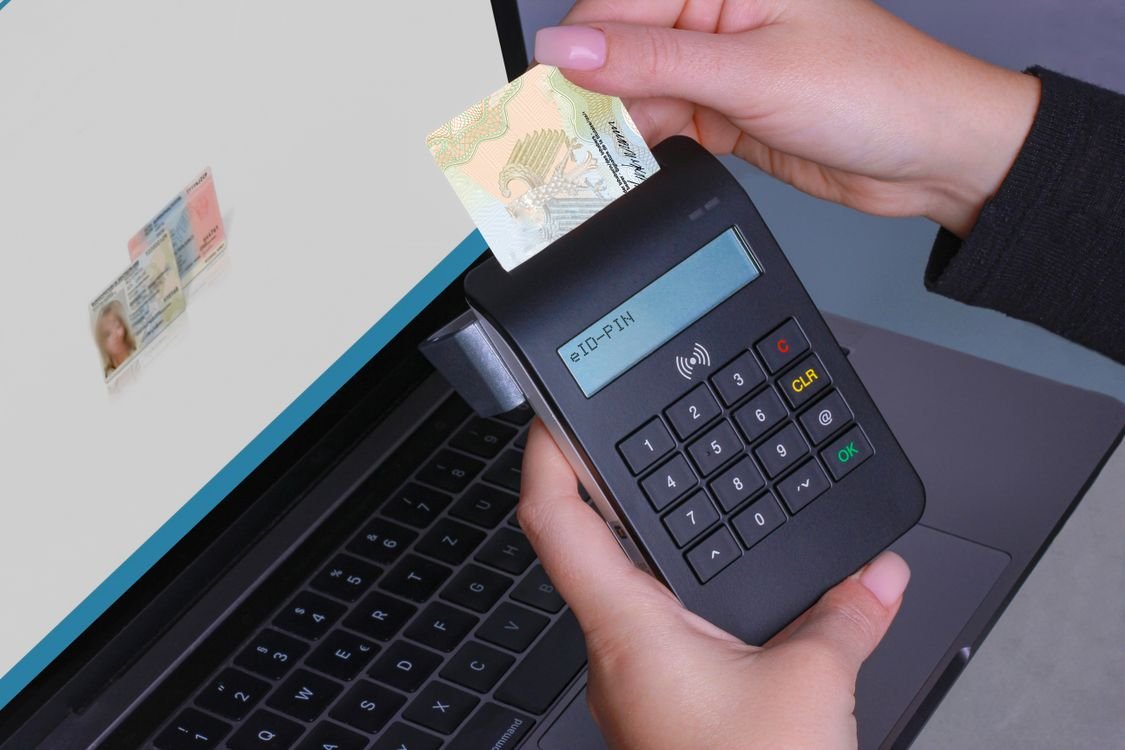
A compliant online vape seller does not rely on a checkbox that asks whether you are 21. Under the PACT Act, the seller must verify your age before accepting the order, using your full name, date of birth, and address, checked against commercial databases. If that check fails, the order does not proceed. The second check happens at your door: the package must be handed to an adult aged 21 or older who signs for it and shows government-issued photo ID. If no qualifying adult is home, the carrier will typically hold the package or return it to the sender, and the seller’s policy decides refunds and redelivery attempts. Ordering to a PO Box usually fails at checkout with compliant sellers, because a PO Box cannot take an adult signature delivery.
Those two checks are also the easiest way to spot a seller you should avoid. A site that lets you check out with no age verification at all, or promises delivery with no signature, is not following the federal rules. Your order is then far more likely to be cancelled, lost, or refused at delivery.
Delivery rules: no regular mail, specialized carriers only
The PACT Act started life in 2010 as a cigarette trafficking law and was expanded to vaping products in December 2020, with seller compliance required from March 27, 2021. It covers e-liquids, disposable vapes, pods, devices, coils, and other parts and accessories, with or without nicotine. One of its most visible effects is on shipping: USPS does not carry vaping products to residential consumers, with only narrow business-to-business exceptions. Major private carriers have also restricted consumer vape shipments, which is why compliant sellers use specialized carriers built around adult-signature delivery.
Sellers shipping to Wisconsin must also register with the ATF and with the tax authority of each state they ship to, collect applicable state taxes before the order ships, label packages with the required federal tax notice, and report each month’s sales to state tax authorities. The full federal picture is covered in the guide to PACT Act rules for online vape sales.
Taxes and permits behind the checkout price
Wisconsin’s vapor products excise tax is 5 cents per milliliter of liquid in a vapor product, imposed under sec. 139.76(1m), Wis. Stats. It applies to liquids sold as one packaged item with a vapor product, whether or not the liquid contains nicotine. Equipment and devices sold without liquid are not hit by this tax, and neither are liquids that are not packaged and sold with a vapor product.
On the seller side, the tax is collected through a permit system. A manufacturer, distributor, or subjobber selling vapor products to Wisconsin customers must hold a tobacco and vapor products distributor permit from the Department of Revenue, applied for on Form CTV-200 under sec. 139.79. A Wisconsin retailer that brings untaxed vapor products into the state for sale to consumers needs that distributor permit too. Remote retail sellers based outside Wisconsin must hold a remote retail seller permit under sec. 139.795. Retailers selling from a premises in Wisconsin also need a municipal retail license under sec. 134.65(1d), issued by the city, village, or town where the shop sits.
There is one buyer-side tax trap worth knowing. If you somehow receive vapor products on which no Wisconsin excise tax was paid, you owe use tax yourself at the same 5 cents per milliliter rate under sec. 139.78(1m), reported on Form TT-104S. That is the state’s backstop for untaxed product, and a good reason to buy from sellers that show Wisconsin tax at checkout.
What happens when a seller ignores the rules
The consequences land hardest on sellers, and Wisconsin’s directory enforcement shows how quickly they stack up. An unlisted device sold or offered for sale draws a $1,000 per day forfeiture for each device, imposed on manufacturers and retailers, and the device itself is treated as contraband, subject to seizure and destruction at the holder’s cost. Distributors escape that forfeiture unless they are also a manufacturer or retailer of the device, but they can still have unlisted stock seized if it is held for sale in Wisconsin rather than for sale outside the state.
For buyers, the risks are different and less dramatic, but still real. An order for an unlisted device may be cancelled once the seller’s compliance team catches it, or refused at the point of sale if the seller checks the directory. A package that cannot be delivered for lack of an adult signature is held or returned, and refund terms are set by the seller, not by law. And as noted above, untaxed product leaves the buyer holding a use tax bill. There is no verified Wisconsin penalty aimed at the buyer simply for placing an online order, and this guide does not invent one. The buyer’s real exposure is a lost order, a lost payment while a dispute plays out, and a use tax obligation.
One more honest uncertainty: the Department of Revenue describes directory eligibility as manufacturer certification of compliance with sec. 995.15, and retailer reporting describes listed products as FDA-authorized or pending-application products. The directory itself is the authoritative check, and it is updated nightly. If a product’s listing status is unclear, the directory listing, not a retailer’s claim, is what counts.
Check before you order
Before you pay, run through this short list. It takes two minutes and filters out most of the sellers that cause problems.
- Confirm the exact device and flavor variant is on the Wisconsin Electronic Vaping Device Directory. Variants are certified separately, so a listed brand does not mean every flavor is listed.
- Check that the seller verifies age at checkout, not just with a birthday checkbox.
- Confirm delivery needs an adult aged 21 or older to sign with photo ID, and plan to be available.
- Look for Wisconsin tax shown at checkout. A missing tax line is a warning sign, not a bargain.
- Avoid sellers that promise shipment by regular mail or to a PO Box. Both conflict with how compliant delivery works.
- Keep the order confirmation and tracking. If a delivery fails on signature, those records decide how a refund or redelivery is handled.
Frequently asked questions
Can I order vapes online in Wisconsin at 18?
No. Wisconsin’s older state text says 18, but federal Tobacco 21 law requires 21 or older for every tobacco product sale, including online, and that is the rule sellers must enforce at checkout and delivery.
Can I order flavored vapes online in Wisconsin?
Yes, if the specific flavor variant is listed on the Wisconsin Electronic Vaping Device Directory. Wisconsin has no separate statewide flavor ban that could be verified for this guide; the directory is what filters flavored products in practice.
Why does a site refuse to ship to Wisconsin?
Usually because the seller does not hold the Wisconsin permits, does not want to handle the directory check, or does not carry listed devices. A refusal is often a sign the seller is being careful, not proof that Wisconsin bans online sales outright.
What happens if nobody 21 or older is home for delivery?
The carrier cannot hand the package over. It is typically held for collection or returned to the sender, and the seller’s own policy decides refunds and redelivery attempts.
Do I owe Wisconsin tax if the seller does not charge it?
Yes, if the product arrives untaxed. Wisconsin imposes a use tax of 5 cents per milliliter on untaxed vapor products used or stored in the state, reported on Form TT-104S.
Are hemp vapes covered by the same directory?
Yes, with their own track. Hemp devices without nicotine must be certified with an independent lab certificate of analysis showing hemp content and no nicotine. Unlisted hemp device sales were banned from July 2, 2026, with the $1,000 per day forfeiture applying from September 1, 2026.