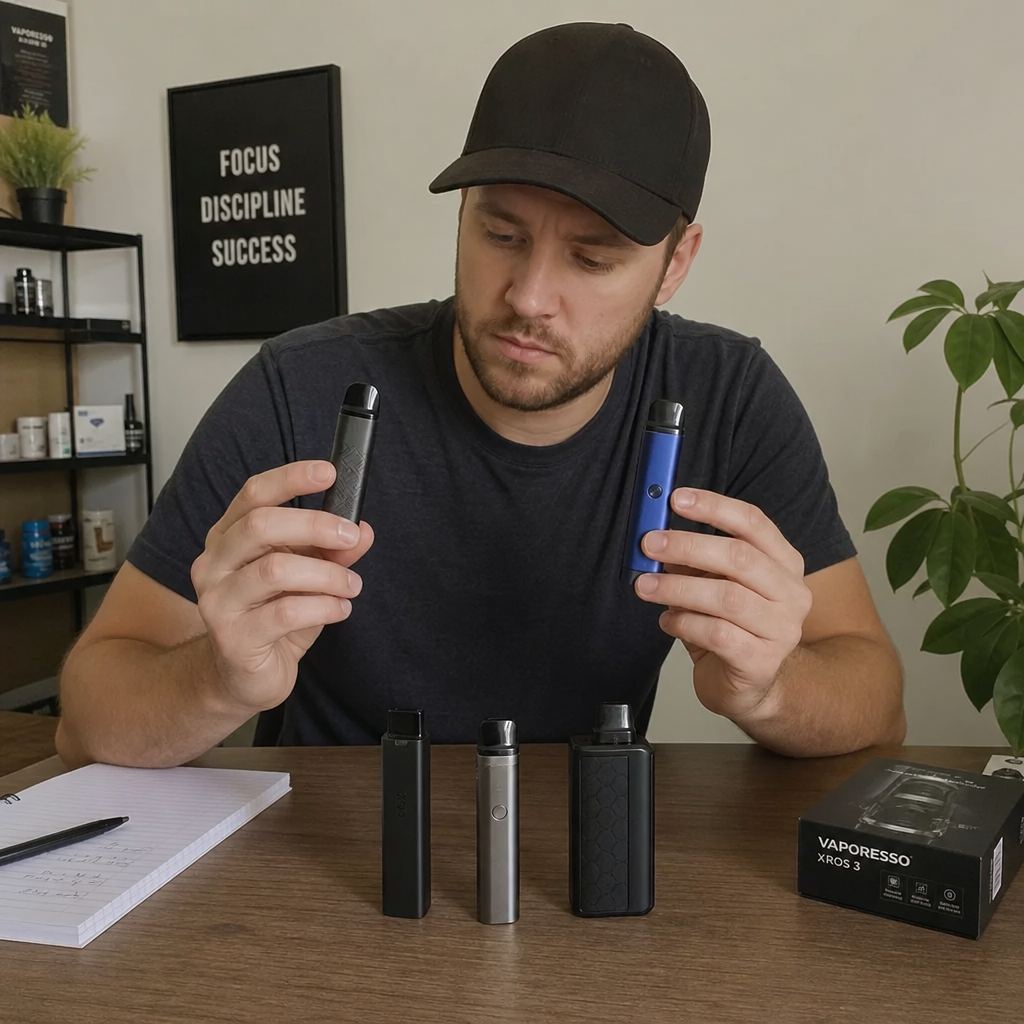

Yes, you can buy vapes in Utah, but Utah is one of the strictest states in the country for what you can buy and how you can buy it. You must be 21 or older, you must buy in person from a licensed retailer, and the product itself must pass three separate tests: it must be listed on Utah’s Electronic Cigarette Product Registry, it must taste only of tobacco or menthol, and it must contain no more than 4% nicotine. Fail any one of those tests and the sale is not legal, even if the same product is sold openly in a neighboring state.
This guide walks through the buying rules as they stand now: who can buy, where to buy, what is actually on the shelves, why online orders do not work, and what vapes cost once Utah’s tax is added. It is general information about Utah law, not legal advice, and the rules below are the ones that decide whether a purchase is legal.
Who can buy vapes in Utah
The minimum age is 21. Utah law makes it an offence to provide a tobacco product, an electronic cigarette product, or a nicotine product to anyone under 21, and the penalties escalate with repeat offences. There is no lower age for any product type, and no exception for buying a device without nicotine. If you are under 21, you cannot legally buy vapes in Utah, and a shop that sells to you is breaking the law.
Expect to show photo ID. Licensed shops check ID as a matter of routine, and tobacco specialty shops in Utah must electronically verify proof of age for anyone who enters the premises. That entry rule matters: if you are under 21, you cannot even enter a retail tobacco specialty business unless you are accompanied by a parent or legal guardian, or you are there only to provide a service such as making a delivery while monitored by staff. A parent or guardian who takes you inside still cannot let you buy anything.
There is no military exception in the current entry rule. Older versions of Utah law contained one, but the rule as it stands now does not. Everyone, including service members, must be 21.
For comparison with the rest of the country, the US vaping age rules are 21 nationwide, so Utah matches the federal floor and then adds its own stricter sales rules on top.
Where to buy vapes in Utah
Buy in person, from a licensed retailer. Utah retailers must hold a Tax Commission licence to sell electronic cigarette products, and the licence is tied to a specific owner and location. A shop also needs a local permit on top of the state licence, and it must buy its stock tax paid from licensed Utah distributors. Those three facts are your quickest way to judge a shop: a legitimate Utah vape retailer is licensed, buys through licensed distributors, and sells face to face across a counter.
Tobacco specialty shops are the main channel for vape products, because they are built around age restricted entry and staffed sales. General retailers such as convenience stores can also sell electronic cigarette products if they hold the right licence and stock registry listed products, but in practice their vape range is usually narrow. What you will not find is a self service wall of vapes you can pick up without staff involvement, because Utah requires sales to happen in a face to face exchange.
When you walk into a shop, three things should be true. The shop should be licensed and display its signage about the under 21 rules. The products on sale should be tobacco or menthol only. And the products should be ones you could find on the state registry. If a shop offers you fruit, candy, dessert, or mint flavours, or a 5% device, that sale would break Utah law no matter how normal it looks.
What you can actually buy in Utah
Utah’s product registry is the filter that decides what is on the shelves. Since January 1, 2025, a retailer may not sell or offer for sale an electronic cigarette product that is not on the Electronic Cigarette Product Registry, which is published through the Tax Commission’s Taxpayer Access Point system. To qualify, a product must be premarket authorized by the federal Food and Drug Administration or have a premarket application still pending, and it must also pass Utah’s flavour and nicotine rules. Federal authorization alone is not enough.
Flavours are limited to tobacco and menthol only. Utah law defines a flavoured electronic cigarette product to include anything tasting of fruit, chocolate, vanilla, honey, candy, cocoa, dessert, alcoholic beverage, herb, spice, or mint. That last word catches people out: mint counts as a flavour under current Utah law, so mint is banned even though older guides still describe mint as allowed. Only a product tasting of tobacco alone, or menthol alone, escapes the flavour ban.
Nicotine is capped at 4.0% by weight per container, or 40 milligrams per millilitre. This is why the popular 5% disposables and pods that dominate shelves in other states are not legal in Utah. Utah’s own health department confirmed the point in 2026, when it explained that newly federally authorized products at 5% nicotine still could not be sold in Utah because they exceed the state cap and, in some cases, the flavour rules too. Federal authorization does not override Utah law.
There is no separate law that names disposable vapes, but in practice most disposables fail at least one of the three tests. A disposable that is fruit flavoured, or 5% nicotine, or not on the registry cannot legally be sold. A plain tobacco disposable at 4% or less that is on the registry could qualify, which is why the legal shelf in Utah looks so different from the shelf in Nevada or Wyoming.
The registry rules arrived through a 2024 law, and enforcement has a history worth knowing. The rules took effect on January 1, 2025, were challenged in court in December 2024, and were paused by a temporary restraining order before a federal judge lifted that order in March 2025 for the flavour restrictions, allowing enforcement to begin. A restraining order remained in place for certain other enforcement pieces, so the legal fight is not entirely over, but the flavour ban, the registry, and the nicotine cap are all enforced now. A repeal attempt in 2025 failed, so the framework stands.
Utah is not the only state with a product list, and the national picture helps explain why Utah shelves look the way they do. The state vape directory laws now cover a growing list of states, but Utah pairs its directory with a flavour ban and a nicotine cap, which makes it stricter than most.
| Product | Legal to sell in Utah? | Why |
|---|---|---|
| Tobacco flavour, 4% or less, on the registry | Yes | Passes flavour, nicotine, and registry tests |
| Menthol flavour, 4% or less, on the registry | Yes | Menthol is excluded from the flavour ban |
| Fruit, candy, dessert, or mint flavour | No | Covered by the flavour ban, including mint |
| Any flavour at 5% nicotine | No | Exceeds the 4% nicotine cap |
| Any product not on the registry | No | Registry listing is required since January 1, 2025 |
| Federally authorized but 5% or flavoured | No | Federal authorization does not override Utah law |
Buying online and getting delivery in Utah
The short answer is that online ordering does not work for Utah consumers. Utah requires tobacco and electronic cigarette sales to happen in a face to face exchange, and the state’s tax guidance states plainly that only licensed persons may buy these products through the internet, phone, or mail order. A seller who makes such a sale to an unlicensed person in Utah faces a fine of up to $5,000 for each sale. Business to business sales between licensed entities are a different matter, but a consumer order to a Utah home address is not a legal route.
This is where buyers get caught out. Some online vape shops still advertise fast shipping to Utah cities and list flavoured products that Utah bans. Those listings do not change Utah law. An order placed with such a shop risks seizure, loss of money, and a product that cannot legally be sold in Utah. If a site offers to ship flavoured or 5% products to a Utah address, treat that as a warning sign, not a loophole.
The federal delivery rules add another layer, because even where a sale is lawful, shipping nicotine products has its own age verification and carrier rules. The online vape sales rules explain how federal law treats remote sales, and Utah’s own face to face requirement sits on top of that framework.
Neighboring states do not solve the problem either. Nevada, Wyoming, and Colorado have different rules, and some Utah residents cross the border to buy products they cannot get at home. But Utah’s sales rules govern what Utah retailers can sell, and bringing products back for resale in Utah would break the sales rules. Whether an adult possessing a product bought elsewhere for personal use breaks any Utah rule is a point we could not confirm from official sources, so do not assume it, and do not resell.
One practical tip: if you cannot find a product in a Utah shop, ask the staff whether it is on the registry before assuming it is out of stock. Shops sometimes present a registry problem as a stock problem, and knowing the three tests helps you tell the difference.
What vapes cost in Utah
Utah taxes electronic cigarette products at 71% of the manufacturer’s sales price. That is an excise tax applied before retail markup, and regular sales tax applies on top of the shelf price. The result is that Utah shelf prices run noticeably higher than in states with low or no vape excise tax, even for the same tobacco or menthol product. The tax is one reason Utah’s legal market is smaller and more expensive than the markets in neighboring states, and it applies to every legal sale, not just to certain flavours or strengths.
Price also reflects the registry. Because only a limited set of products can legally be sold, shops cannot compete on the wide flavoured ranges that drive discounting elsewhere. If a deal in Utah looks far cheaper than every licensed shop, check whether the product is actually registry listed, because an unregistered product sold cheaply is still an illegal sale. Our guide on how to spot fake vapes covers the packaging and labelling checks that help here.
After you buy: where you can use it
Buying legally is only half the picture, because Utah also restricts where you can vape. The Utah Indoor Clean Air Act prohibits smoking and using electronic cigarettes in all enclosed indoor places that allow public access, and within 25 feet of any entrance, exit, open window, or air intake of such a building. That covers restaurants, bars, workplaces, shops, schools, hospitals, and public transport. Private homes and outdoor areas beyond the 25 foot buffer are the usual legal settings, unless a local rule or a property owner says otherwise. Some cities add their own restrictions, so check local rules as well as state law.

Before you pay checklist
Use this checklist in the shop. If any answer is no, walk away from that product.
| Check | What to look for |
|---|---|
| Your age and ID | You are 21 or older with valid photo ID, and the shop checks it |
| The shop’s licence | A licensed retailer selling face to face, not a self service display |
| The registry | The product is listed on Utah’s Electronic Cigarette Product Registry |
| The flavour | Tobacco or menthol only, remembering that mint counts as flavoured |
| The nicotine strength | 4% or 40 mg per ml or less on the label |
| The channel | Bought in person in Utah, not ordered online to a Utah address |
Frequently asked questions
Can you buy vapes in Utah at 18, 19, or 20?
No. The minimum age is 21 for buying, and under 21s cannot even enter a retail tobacco specialty business unless accompanied by a parent or legal guardian. There is no military exception in the current rule.
Can you buy vapes online in Utah?
No, not as a consumer. Sales must happen face to face, and only licensed persons may buy through the internet, phone, or mail order. A seller who ships to an unlicensed Utah buyer faces a fine of up to $5,000 per sale.
Are flavoured vapes legal in Utah?
Only tobacco and menthol flavours are legal. Fruit, candy, dessert, alcoholic beverage, herb, spice, and mint flavours are all covered by the flavour ban.
What nicotine strength can you buy in Utah?
Up to 4% nicotine by weight, or 40 milligrams per millilitre. Products at 5% are above the cap and cannot legally be sold, even if they are federally authorized.
Can tourists buy vapes in Utah?
Yes, the same rules apply to everyone buying in Utah. A visitor who is 21 or older with valid photo ID can buy registry listed tobacco or menthol products in person from a licensed retailer, under the same flavour and nicotine limits.
Can you buy disposable vapes in Utah?
Only disposables that pass all three tests: on the registry, tobacco or menthol flavour only, and 4% nicotine or less. Most disposables sold elsewhere fail at least one test, which is why Utah shelves carry so few of them.
Can you buy vapes in a Utah gas station or convenience store?
A general retailer can sell electronic cigarette products if it holds the right licence, stocks registry listed products, and sells them face to face. In practice, tobacco specialty shops carry the wider vape range, while general stores stock a narrower selection.
What happens if a shop sells you an unregistered product?
The sale breaks Utah law, and the retailer faces fines and licence action. As a buyer, you have no legal way to make that product compliant after the fact, so check the registry status before you pay rather than after.