

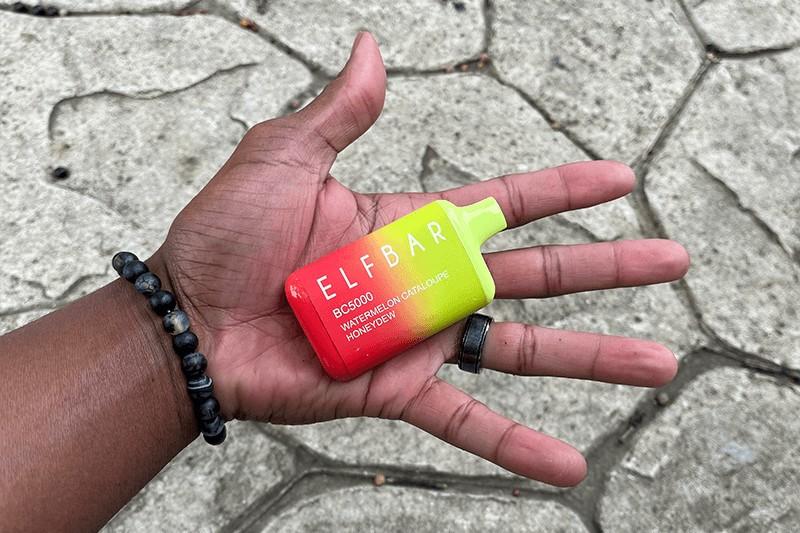
A disposable vape is a prefilled, pre-charged vaping device built to be used up and thrown away: no refilling, no coil changes, no maintenance. You draw on it, it makes vapor, and when the liquid or the battery gives out, the whole device is done. That was the whole definition five years ago. In 2026 it needs three corrections: most disposables are now rechargeable, many carry screens and power modes, and a growing share of products sold under the word disposable are not disposables at all, but pod kits and refillable devices wearing the label because the label sells.
This guide covers the category as it actually exists: how the devices work, the four kinds on sale, how to read the specs without being misled by them, what they cost in the US right now, how long they last, the legal position, and what to do when one misbehaves. Every claim about a specific model below comes from that model’s manufacturer or retailer specifications, checked in November 2026.
Table of Contents
How a Disposable Vape Works
Four parts, all sealed in one shell:
The battery: a small lithium cell, 400 to 1,200 mAh depending on size. On modern devices it is rechargeable by USB-C, not because the device is meant to live long, but so the battery can outlast the liquid.
The reservoir: prefilled e-liquid, from about 2 mL in the smallest sticks to 30 mL in the largest devices. Nicotine strength is most often 5 percent (50 mg) nicotine salt in the US, with 0 percent versions of most popular models.
The coil: almost always mesh now, often dual mesh, wrapped in cotton wicking that draws liquid from the reservoir.
The airflow sensor: there is no fire button on most disposables. Drawing on the mouthpiece triggers the sensor, the battery powers the coil, and the coil vaporizes the liquid in the wick.
When it ends, it ends one of two ways: the liquid runs out (hits turn thin, then burnt) or the battery can no longer hold a charge. There is nothing to service, which is the entire point of the category, and also its waste problem, covered under disposal below.
The Four Kinds Sold as Disposable
Retailers shelve all four of these together, and the biggest numbers in the category belong to the two kinds that are not really disposable. Learn the split before you compare prices or puff counts:
| Kind | What you actually get | Examples | The catch |
|---|---|---|---|
| Sealed single-use | Prefilled, precharged, no charging port. Use it up, discard it. | Basic sticks and small bars, the original format | The battery can die before the liquid on cheaper models. Now a minority of US sales. |
| Rechargeable sealed | Prefilled and sealed, but the battery recharges by USB-C so you can finish the liquid. | Geek Bar Pulse X2, NEXA Ultra II, Lost Mary VIZ 55K | The mainstream kind. Still discarded whole at the end, battery included. |
| Modular pod kits | A reusable battery base plus replaceable prefilled pods. | Foger Switch Pro, RAZ Vue, Off-Stamp X-Cube | Not a disposable at all. Cheaper per mL and less waste, but you are keeping a device. |
| Refillable disposables | A disposable-shaped device with a refillable tank. | iJoy XP200K and XP100K | The giant puff counts assume refills. You are maintaining a device, not using one up. |
The check is one question: does it take a replacement pod or a bottle of liquid? If yes, it is a system, not a disposable, whatever the listing calls it. That distinction explains how a 200,000 puff disposable exists: it is a refillable device counting every refill it will ever take.
The Specs, Decoded
Every disposable box prints the same five numbers. Here is what each one is worth, with four current devices as worked examples. Prices are US retailer listings from November 2026.
| Device | Rated puffs | Liquid | Battery | Price | mL per 1,000 puffs |
|---|---|---|---|---|---|
| Geek Bar Pulse X2 | 50,000 (25,000 in Pulse mode) | 18 mL | 1,000 mAh | about $19 | 0.36 |
| NEXA Ultra II | 50,000 (30,000 in Turbo mode) | 20 mL | 900 mAh | about $15 to $17 | 0.40 |
| Lost Mary VIZ 55K | 55,000 | 16.7 mL | Not stated by the retailer | about $17 | 0.30 |
| iJoy XP200K (refillable) | 200,000, counting refills | 30 mL prefilled | 1,200 mAh | about $16 | 0.15 |
Puff count: a machine rating, not a promise. See the next section before trusting any of them.
Liquid capacity (mL): the most honest number on the box. Puffs come from liquid; more mL at the same price is more vaping, whatever the puff claim says.
Battery (mAh): decides how often you charge, not how long the device lasts. Note the Lost Mary row: some retailers do not even list it. A missing battery spec on a rechargeable device is a small red flag about the listing, not the device.
Nicotine strength: 5 percent is the US default; most popular models also come in 0 percent. One current listing runs 6 percent, so read the box rather than assuming.
Modes and screens: a second power mode roughly halves the puff rating when you use it (the Pulse X2 is a 50,000 puff device or a 25,000 puff device, depending on the mode). Screens earn their keep by showing the two things you actually need: battery and liquid level.
Nicotine strengths, decoded
The percent on the box is a concentration: 5 percent means 50 mg of nicotine per milliliter, and it is the US default because nicotine salt makes that strength smooth enough to vape. Lower strengths, 2 and 3 percent, exist but are a small shelf compared to 5 and 0. Two label traps matter more than the number itself. Tobacco-free nicotine and synthetic nicotine are still nicotine, made in a lab instead of extracted from tobacco; the strength means the same thing. And the only true zero is a box that prints 0 percent or 0 mg: most popular models sell a nicotine and a zero version in packaging similar enough that people buy the wrong one every day.
Puff counts, honestly
Puffs are counted by machines taking short, identical draws, and the count is only as big as the draw is small. That is why the honest comparison is not puffs but the last column of the table above: milliliters of liquid per 1,000 rated puffs. The Pulse X2 spends 0.36 mL to make its thousand; the refillable iJoy spends 0.15 mL for the same thousand, meaning its puffs are less than half the size. Neither brand is lying exactly; they are counting different puffs. Judge devices by mL and price, and treat the puff number as a rough size class.
In real hands, expect roughly 40 to 60 percent of the rated count, because human draws run two to three seconds, not one, and boost modes burn liquid faster. The devices also age: a coil that has been in daily use for three weeks tastes tired long before a 50,000 puff rating runs out, which is why retailers describe the big devices as lasting two to four weeks rather than the two months the raw math suggests.
The full longevity ranking, with the same math applied device by device, is in the longest lasting disposable vape guide.
How Long Does One Last?
Using the same conversion throughout this site (real draws deliver about half the rated count; an average user takes roughly 400 real puffs a day, a heavy user 800):
| Rated puffs | Average use | Heavy use |
|---|---|---|
| 5,000 | about 6 days | about 3 days |
| 15,000 | about 2 to 3 weeks | about 9 days |
| 25,000 | about a month | about 2 weeks |
| 35,000 | about 6 weeks | about 3 weeks |
| 50,000 | the math says 2 months; flavor and coil age usually end it in 3 to 6 weeks | about a month |
However long the liquid lasts, the device has four separate clocks running: liquid, coil, battery cycles and the hardware itself. The shortest one wins.
That framework, with the numbers for every device type, is set out in how long does a vape last.
What They Cost
US prices, November 2026, from the two largest online retailers’ category pages: mainstream rechargeable disposables run about $8 to $20, with most popular 25,000 to 70,000 puff models clustered between $14 and $18. Small sealed sticks cost less; a few premium or novelty models reach $30 to $45. Two widely repeated price claims are wrong: the $15 to $33 range in Google’s AI Overview sits above what the big retailers actually charge, and per-device price alone tells you little anyway.
Compare on cost per milliliter instead. The Pulse X2 at about $19 for 18 mL works out near $1.05 per mL. The refillable iJoy XP200K at about $16 for 30 mL prefilled is near $0.53 per mL, before the refill bottles it will need. Modular pod kits land between the two once pods are counted. Cost per day then depends on your draw count; the method, with worked examples, is in the longest lasting guide linked above. One warning: a price far below the mainstream band is the most reliable counterfeit signal there is.
Choosing One
Best overall: there is no single winner, and any guide that crowns one without showing its method is guessing. Five major guides name five different best disposables this year. The consensus shortlist, ranked on verified specs, is linked below.
Longest lasting: buy milliliters, not puffs, and expect the coil to age out before the liquid on the biggest devices.
Zero nicotine: most popular models now have a 0 percent twin in near-identical packaging. Check the strength printed on the box, because the nicotine version sits right beside it on the shelf.
Flavor first: the same device can carry 15 to 40 flavors, and lineups differ by brand more than hardware does.
Brand first: Geek Bar and Lost Mary dominate US sales; RAZ, FLUM, Foger, NEXA, DOJO and Fifty Bar make up most of the rest of the serious shelf.
The brands that matter, at a glance:
| Brand | Known for | Representative devices |
|---|---|---|
| Geek Bar | The US volume leader; big screens, dual modes, the Pulse line | Pulse X2, Pulse 2, Pulse |
| Lost Mary | Flavor range and the Turbo line; made by iMiracle, the company behind Elf Bar | VIZ 55K, MT35000 Turbo, MT15000 Turbo |
| RAZ | Large displays and high counts, plus the Vue replaceable-pod system | DC25000 (LTX 25K), Vue 70K kit |
| FLUM (Float) | Design-led compact bars; the UT Bar line is its high-capacity arm | Mello Pro 50K, UT Bar 50K |
| NEXA | High capacity with the Juicy Lock separate-tank design | Ultra II 50K |
| DOJO | Vaporesso’s disposable arm; mode-driven devices | PUREX 60K |
| Foger | Modular systems: a reusable power dock with disposable pods | Switch Pro, Bit 35K |
| Fifty Bar | US brand (Beard Vape Co) built around dessert flavors | Fifty Bar 20K |
Start with the honest shortlist of the best disposable vapes, then go deeper with the disposable vape brands guide and the disposable vape flavors guide. For the zero nicotine shelf specifically, see the zero nicotine disposable vape guide, and for how the rechargeable class works, rechargeable disposable vapes explained.
Using One Properly
Unbox and strip the seals: silicone plugs, mouthpiece caps and base stickers all come off. An airflow sticker left in place is a classic cause of a dead first draw.
First draws gentle: a few short, soft puffs to saturate the wick before normal use.
Charge with a low-power source, a laptop port or a plain 5V/1A adapter, and unplug when the screen or light says full. Fast phone chargers are the wrong tool.
Store upright, at room temperature, out of cars. Heat thins liquid and ages the battery.
If a brand new device does none of this, work through the brand new disposable checklist before assuming it is a dud, and keep the packaging: genuine duds are a returns case, not a repair project.
When Something Goes Wrong
Disposables fail in a small number of well-understood ways, and each one has a dedicated fix guide on this site:
No vapor at all: airflow, charge and liquid, diagnosed in order in why is my vape not hitting.
Dead straight out of the box: the brand new checklist above covers plugs, first charge and the returns playbook.
Will not charge: cables, ports and the dead-verdict rule in brand new disposable vape not charging.
Blinking light: decode it by situation, count and color in the blinking decoder.
Burnt taste: which causes are fixable and which mean the coil is finished, in why does my vape taste burnt.
Leaking: find it by where it is wet, in is a leaking vape dangerous.
Disposable vs Refillable
The honest trade: a refillable pod kit costs more on day one and much less per month, tastes closer to a disposable than it used to, and asks for pod changes and refills in return. A disposable asks for nothing and charges you for the convenience every single week. With mainstream prices above, a 30 mL a month habit runs roughly $34 to $50 in disposables against $16 to $23 in refillable running costs, with the kit paid back inside the first month or two.
The full comparison, including who should not switch, is in the refillable vapes guide.
Are Disposable Vapes Legal in the US?
The short version, as of November 2026. Federally, vaping products are 21 and over, everywhere in the US. The FDA maintains a list of e-cigarettes it has authorized for sale; that list is short, and no flavored disposable vape is on it. Most disposables on US shelves are therefore unauthorized products, sold in a market the FDA polices unevenly through import alerts, seizures and warning letters rather than at the till. Nothing on a box changes that: a claim like FDA-certified materials refers, at most, to materials marketing, not to authorization of the product.
States then add their own layers: several ban flavored vapes outright, some run product registries, most add taxes, and online sales require age verification with an adult signature on delivery. There is no federal ban on the disposable category itself, despite the headlines the phrase generates. Rules in this category change often, so check your own state’s current law before ordering; this site’s Laws section tracks the state rules one by one. This page is information, not legal advice.
How to Dispose of a Disposable Vape
Every disposable contains a lithium battery, which is why it does not belong in household trash and must never be opened, punctured or burned. The workable options: battery recycling drop-offs at big-box electronics and home improvement stores, municipal hazardous waste programs, and the take-back or mail-in recycling programs some vape retailers and brands run. A modular pod kit or a refillable device cuts this waste sharply, which is the one environmental argument in their favor that holds up. If a device is hot, swelling or damaged, do not carry it around in a pocket: set it on a non-flammable surface and take it to a battery recycler once it has cooled and stayed cool.
FAQs
What is the best disposable vape?
There is no consensus winner: the five biggest guides this year name five different ones. Ranked on verified specs and cross-guide agreement, the NEXA Ultra II and Geek Bar Pulse X2 sit at the top of most lists. The full shortlist is in the best disposable vape guide linked above.
How many puffs is a disposable vape?
Sealed devices run from about 400 puffs for the smallest sticks to 50,000 for the largest mainstream models. Anything rated far above that is counting replacement pods or refills. Real-world delivery is roughly half the rating.
How many puffs of a disposable equal a cigarette?
There is no honest fixed number. A cigarette is finished in about 10 to 15 puffs, but disposable puffs are smaller, machine-counted, and vary two-fold between brands, so the equivalence math on packaging is marketing. Compare liquid volume and nicotine strength instead.
What is the safest disposable vape?
None can honestly be called safe, and this site will not rank them that way. The practical version of the question: buy sealed devices from established retailers, verify the authenticity code on the box, and beware prices far below the mainstream band, which is where counterfeits live.
Is it OK to smoke disposable vapes?
They are vaped, not smoked, and they are adult products: 21 and over in the US, not risk-free, and not a quitting aid. Within that, the difference between devices is specs, cost and flavor, which is what this guide covers.
Can you recharge a disposable vape?
Most current ones, yes: if it has a USB-C port, it recharges. The sealed single-use kind has no port and cannot. Recharging only tops up the battery so you can finish the liquid; it does not extend the device’s life beyond that.
Can you refill a disposable vape?
A sealed one, no, and prying one open is a battery risk, not a hack. If refilling appeals to you, the refillable devices and pod kits in the taxonomy above are built for it.
How do I dispose of a disposable vape?
Not in the trash. Take it to a battery recycling drop-off, a municipal hazardous waste program, or a retailer take-back scheme, battery intact and device unopened.