

A nicotine pouch is a small white sachet of nicotine, plant fiber and flavoring that sits between your gum and your upper lip and delivers nicotine through the lining of the mouth. No tobacco leaf, no smoke, no vapor, no spitting, no device. That simplicity is why pouches became the fastest-growing nicotine category in America after entering the US market in 2016, and why one brand name, ZYN, now functions as the category’s generic word. This pillar covers what is inside a pouch, how it works, the formats and strengths on the US shelf, who makes what, and exactly what the FDA has and has not said, because in this category the regulatory facts are the story.
Inside a Pouch
| Component | What it is | Why it is there |
|---|---|---|
| Nicotine | Purified from tobacco, or synthetic (chemically identical) | The active ingredient; printed on the can in mg per pouch |
| Plant fiber filler | Food-grade cellulose, roughly half a gram per pouch | The body of the pouch; carries the nicotine and flavor evenly |
| Flavorings | Food-grade; mint family dominates the US shelf | The taste, and most of the product’s identity |
| Sweeteners | Xylitol and similar | Rounds the flavor; keeps the pouch palatable for a full session |
| pH adjusters | Carbonate-class food-safe alkalis | Control how readily nicotine releases and absorbs; why the same mg feels different across brands |
| Humectants | Vegetable glycerin or propylene glycol in small amounts | Manage the fill’s moisture |
The absence is the point: there is no tobacco leaf in the pouch. That is the line between a nicotine pouch and snus, which is portioned tobacco. ‘Tobacco-free’ on a can describes the leaf’s absence; when the nicotine itself was extracted from tobacco, the can’s wording will usually say so in the fine print, and when it is synthetic the marketing tends to say that instead.
How a Pouch Works
Saliva moistens the fill, the nicotine and flavor dissolve out, and the nicotine crosses the oral mucosa, the thin lining of the gum and cheek, into the bloodstream. Nothing is burned, heated or inhaled, and nothing is swallowed on purpose. A session typically runs 20 minutes to about an hour depending on the product and the user, after which the pouch comes out and goes in the trash (many cans carry a catch compartment in the lid for used pouches).
Placement, timing, and the mistakes that waste a pouch are the whole subject of how to use nicotine pouches, and the strength question, why two cans with the same mg on the lid can feel a world apart, belongs to the nicotine pouch strength guide.
Formats: Size and Moisture
| Format | Shape | Release character |
|---|---|---|
| Slim | Long and narrow; the standard US format | The default fit under the lip; most brands’ main line |
| Mini | Small and low-profile; on! built its name on ultra-mini | The discreet option; smaller fill, usually lower strengths |
| Regular / large | Fuller pouch | Often carries the stronger products |
| Dry (like ZYN) | Low moisture fill | Slower, longer, cleaner release |
| Moist | Pre-moistened fill | Faster onset, stronger early flavor |
The US Strength Landscape, in One Paragraph
Mainstream American pouches live between 2 and 11 mg: on! at 2, 4 and 8 mg; ZYN’s core at 3 and 6 mg with the 9 and 11 mg Ultra line added in 2026; VELO’s US range in the same single-digit territory. A dental literature review puts average products at roughly 1.3 to 6.1 mg, with some reaching 17 mg. The 35 to 50 mg products Americans see in import-shop windows are European specialist brands, not the US shelf, and nothing about them is a recommendation. Higher is a tolerance story, not a quality story.
The ZYN Gravity
Search data for this category bends around one brand because the market does. ZYN, made by Swedish Match and owned by Philip Morris International, accounts for roughly six in ten nicotine pouches sold in the US by retail measurement (Nielsen figures for early 2026 put it near 61 percent by dollar value and 56 percent by volume; other industry estimates run higher). The challengers are VELO (British American Tobacco), on! (Altria), Rogue (Swisher), ALP (Turning Point Brands) and Lucy, inside a field of more than 30 brands.
The ‘what is ZYN’ answer, completely: a dry-format slim pouch line whose ten FDA-authorized flavors are Chill, Cinnamon, Citrus, Coffee, Cool Mint, Menthol, Peppermint, Smooth, Spearmint and Wintergreen, each at 3 and 6 mg; Smooth and Chill are the unflavored-style entries, and the rest of the flavor range, berry and other lines included, sits outside that authorized list, a distinction the next section explains.
Every brand’s ownership, range and verification story is in the nicotine pouch brands guide, and the counted consensus on which cans earn their money is in the best nicotine pouches guide.
The FDA Picture, Dated and Exact
January 16, 2025: the FDA authorized the marketing of 20 ZYN products, the first nicotine pouch authorizations in US history, through the PMTA pathway. The agency found the products contained substantially lower amounts of harmful constituents than cigarettes and most smokeless tobacco. The same announcement was explicit that authorization is not approval, that ‘there is no safe tobacco product’, and that no nicotine pouch is approved to help anyone quit smoking.
December 19, 2025: six on! PLUS products were authorized, taking the authorized pouch count to 26.
June 30, 2026: the FDA granted modified risk orders for the same 20 ZYN products, permitting one specific claim: ‘Using ZYN instead of cigarettes puts you at a lower risk of mouth cancer, heart disease, lung cancer, stroke, emphysema, and chronic bronchitis.’ That claim belongs to those 20 products only. It is not a statement this site makes about pouches in general, and neither is its opposite.
August 2026: further on! flavors and 11 ZYN Ultra products were authorized. On October 30, 2026, 24 VELO Mini products became the first BAT pouch authorizations; by late October 2026 more than 60 specific pouch products held FDA marketing authorization. Every other pouch on the US shelf, whatever its sales, is sold without that authorization, in a market the FDA is actively policing.
Two reading rules follow. ‘FDA-authorized’ names a marketing permission for specific named products after a scientific review; it is never ‘FDA-approved’, and any seller who upgrades the word is telling you something about themselves. And an authorization for ZYN’s ten flavors says nothing, either way, about any other brand or flavor.
The Safety Frame
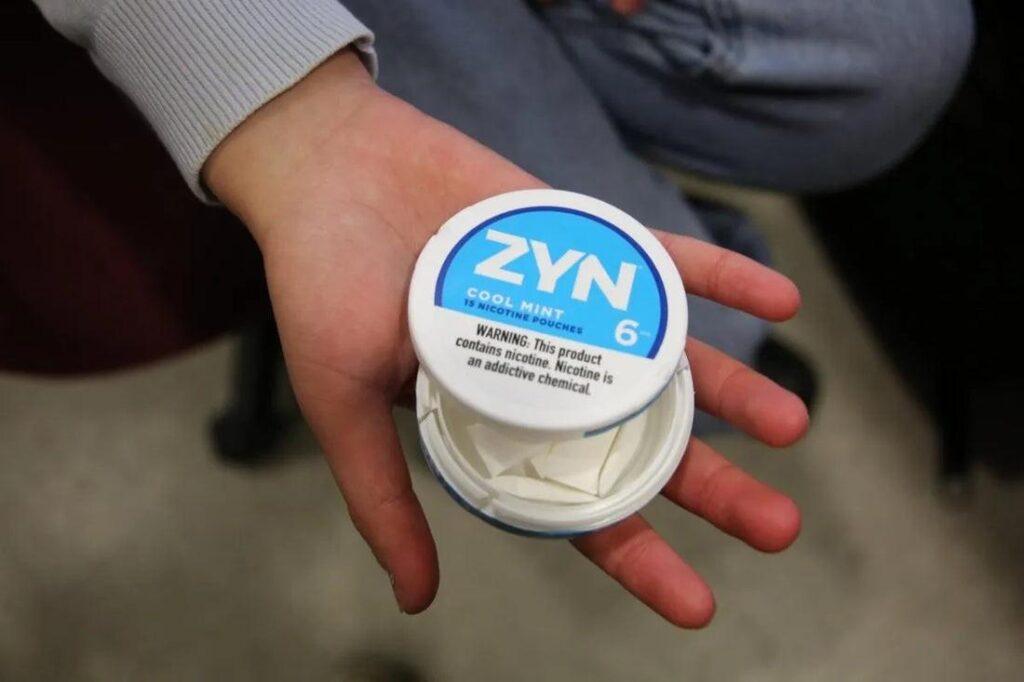
Nicotine is addictive, and a pouch delivers it efficiently; that sentence does not change with the delivery route. Pouches are adult products, 21 and over in the US, and the can in the photograph carries the same warning as every nicotine product on this site: ‘WARNING: This product contains nicotine. Nicotine is an addictive chemical.’ Practical rules that belong in the pillar: keep cans closed and away from children and pets, because a swallowed pouch is a genuine poisoning event for a small child (Poison Control: 1-800-222-1222), and if you are pregnant, have cardiovascular disease, or take medication nicotine interacts with, this category is a conversation for your clinician, not a shopping decision.
The full effects and side-effects picture, including the too-much-nicotine signs and the oral health questions, is the pouches effects and safety guide , and for readers removing nicotine rather than repackaging it, the zero nicotine pouches guide covers the 0 mg shelf. How pouches sit among the other nicotine-free and nicotine formats is in the nicotine free vapes guide .
FAQ
What is ZYN?
The dominant US nicotine pouch brand: dry slim pouches from Swedish Match (Philip Morris International), core strengths 3 and 6 mg, and the only pouch line with FDA marketing authorization (January 2025) and a permitted modified risk claim (June 2026) as of this writing.
Do nicotine pouches contain tobacco?
No tobacco leaf. The nicotine inside is either purified from tobacco or made synthetically; the pouch itself is fiber, flavoring and the chemistry listed in the table above. That leaf-free build is the whole difference from snus.
Are nicotine pouches FDA approved?
No product is ‘FDA approved’ in this category. More than 60 specific products held FDA marketing authorization as of late October 2026, ZYN the largest share of them, which permits their sale after scientific review. The FDA states plainly that authorization does not mean a product is safe.
How long does a nicotine pouch last?
Typically 20 minutes to about an hour in the lip, with dry formats at the longer, slower end. When the flavor and sensation fade, the session is over; leaving a spent pouch in adds nothing but irritation.
Can nicotine pouches help me quit smoking?
They are not approved as quit aids in the US, and this site makes no cessation claims for them. Smokers who switch completely to an authorized pouch are the population the FDA’s modified risk claim addresses, and it is quoted exactly, for those products only, in the FDA section above.
Are nicotine pouches the same as snus?
No. Snus is portioned tobacco leaf; pouches contain no leaf. They share the under-lip placement and little else, including regulatory treatment in the US.