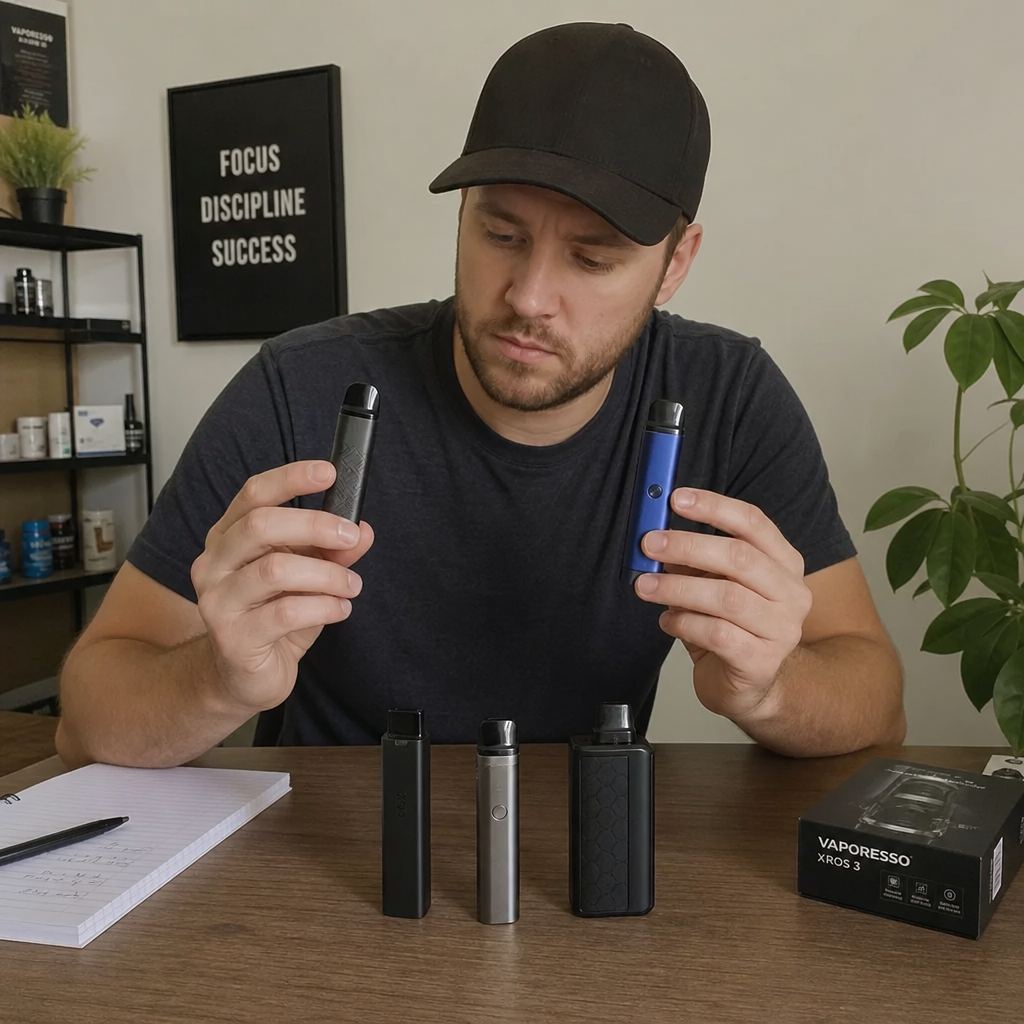

The first thing to know about Ripple is that it is not a vape. It looks like one, it puffs like one, and it sits in the vape aisle at Sainsbury’s, but there is no nicotine in it, no tobacco, no THC, no CBD. Ripple+ is a British brand selling what it calls portable aromatherapy diffusers: devices that heat a plant-based liquid into an inhaleable vapour, flavoured with botanical blends built around moods like RELAX, FOCUS and DREAM.
That category confusion is exactly why this guide exists. Search “ripple vape” and you will find two kinds of people: nicotine vapers wondering if Ripple can replace their disposable, and non-vapers who want the ritual of vaping without the addiction. Both deserve a straight answer, because Ripple is genuinely good for one of those groups and a waste of money for the other. This guide covers what Ripple actually is, every aroma family decoded, the real UK costs, and the honest safety picture.
The 30-second Ripple decoder
Ripple+ was founded in the UK by siblings Sam and Lucie Beecham, and the origin story matters: it started as a quit-nicotine project, not a vape company. The pitch is simple. Take the hand-to-mouth ritual of vaping, remove the addictive substance, and fill the gap with aromatherapy style botanical blends. The brand claims over 1.5 million people have switched to its zero-nic products.
Here is what is inside a Ripple, according to the brand: vegetable glycerin, propylene glycol, natural plant extracts and natural flavourings. That base will look familiar to any vaper, because it is the same VG/PG carrier used in e-liquid. What is missing is the nicotine, and that changes everything about how the product behaves. There is no throat hit to speak of, no buzz, no craving satisfied. What you get is flavoured vapour with a botanical character, closer to inhaling a strong herbal tea than to vaping.
Three things Ripple is not. It is not a smoking cessation medicine, and the brand makes no medical claims. It is not regulated like a vape in the same way, because there is no nicotine, though UK retailers still sell it as an 18+ product. And it is not risk-free, a point we will come back to honestly in the safety section.
The aroma families, decoded by mood
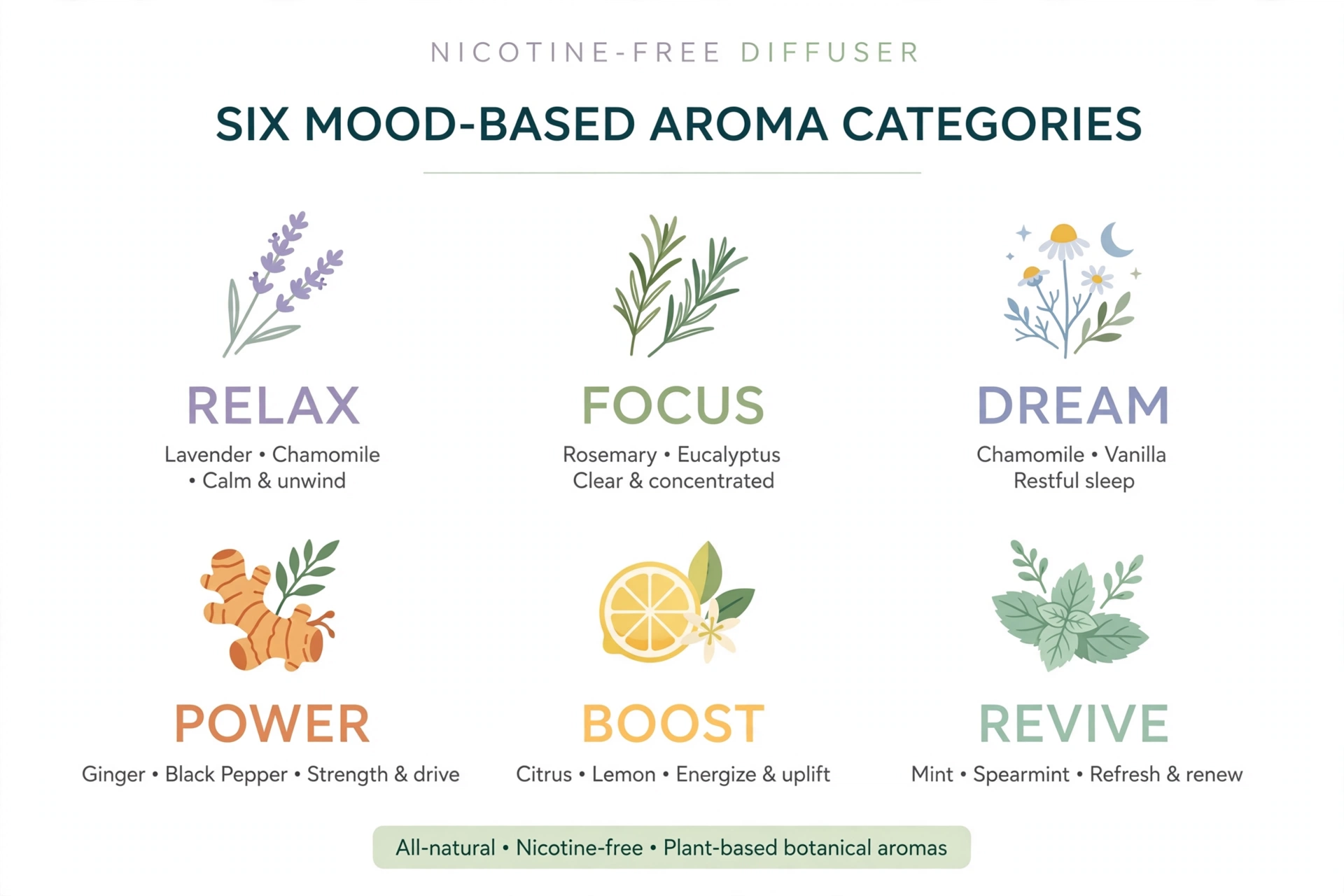
Ripple organises its range by intent, not by flavour the way disposable brands do. Each family pairs an aroma with a botanical blend aimed at a mood or moment. This is the part of the range UK shoppers find most confusing, so here is the full decoder.
RELAX is the flagship. Jasmine aroma with chamomile and lemon balm. This is the one stocked widest in the UK and the one most reviews mention first. The jasmine is floral but not soapy, and it is the closest thing Ripple has to an all-day aroma.
DREAM is the evening one. Lavender aroma with valerian and jujube seed, aimed at winding down. A newer blackcurrant DREAM variant has also appeared in the rechargeable pod line, which keeps the same calming positioning with a fruitier aroma.
FOCUS is the daytime counterpart. Mango aroma with bacopa and guarana. Brighter and fruitier than RELAX, built for the desk rather than the sofa.
POWER is the sharpest of the set. Peppermint aroma with ginseng and ginkgo biloba. The mint gives it the most “vape-like” sensation of the range, which is why ex-menthol vapers tend to land here.
BOOST is the fruity energy one. Lychee aroma with green tea and maca. Sweet, distinctive, and the most obviously “fun” flavour in the lineup.
REVIVE rounds out the original six. Lemon aroma with ashwagandha and rhodiola. Citrusy and clean, positioned as a reset button.
The newer rechargeable pod range has also introduced straight fruit aromas including peppermint, jasmine, blackberry, pomegranate, mango and passionfruit, which sit alongside the mood families rather than replacing them. If you are choosing, start from the mood, not the fruit. Someone buying Ripple for evening wind-down wants DREAM regardless of whether they like lavender, and someone buying for the workday wants FOCUS or POWER.
How to pick your first aroma: start with the moment, not the flavour. If you want something for the evening, DREAM is the obvious first buy even if you have never liked lavender, because the intent matters more than the taste. If you want a daytime companion, pick FOCUS for fruity or POWER for minty. Most first-time buyers do best with RELAX, which is the mildest of the six and the most widely stocked in UK shops, then branch out once they know whether the ritual works for them at all.
The hardware: Singles vs the POD kit
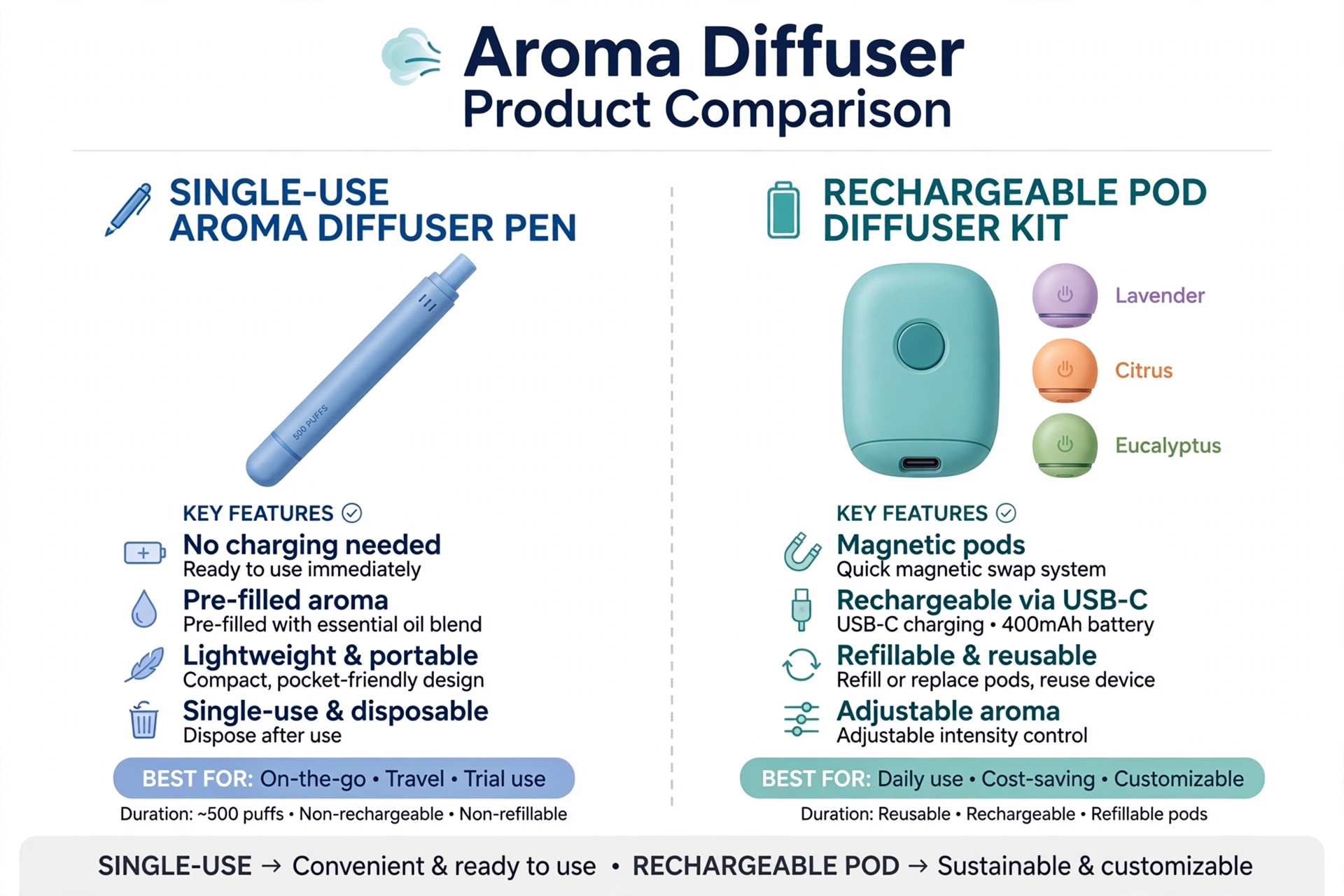
Ripple sells two formats, and the economics of each are very different.
Ripple Singles are the disposable-style pens. One device, roughly 1,000 puffs, no charging, no refilling. UK retail sits around £12 per device at shops like The Fragrance Shop, with Sainsbury’s and Superdrug also stocking the brand. You use it until it runs out, then recycle it through the brand’s scheme.
The POD kit is the rechargeable system. A slim aluminium device with a soft-touch finish, magnetic pods that click in and swap without finishing the previous one, and a USB-C charging dock that the brand says restores a full charge in about 45 minutes. The starter kit bundles the device with six pods. Each pod delivers roughly 500 puffs, so two pods equal one Single in puff terms. The “+” light on the device glows red when the battery is low, pulses while charging, and turns solid white when full.
The practical difference is commitment. Singles are the trial format: one aroma, no hardware to keep, higher cost per puff. The POD kit is the habit format: lower running cost, swappable aromas, but you own a device. If you are unsure Ripple is for you at all, a Single is the cheaper experiment. If you already know you like it, the POD kit pays for itself quickly.
The real cost maths
Ripple is not cheap, and the brand does not pretend otherwise. A Single at around £12 for roughly 1,000 puffs works out at about £1.20 per 100 puffs. The POD kit starter bundle costs more up front, but replacement pods bring the per-puff cost down substantially, roughly halving it depending on the bundle.
Compare that with nicotine disposables and the picture gets interesting. Our disposable price guide has the current per-device figures, but the short version is that a nicotine disposable delivers a similar puff count for roughly half the price of a Ripple Single. You are paying a premium for the nicotine-free, plant-based positioning and the brand’s recycling scheme, which takes back used devices and pods and offers 10% off the next order for returning them.
Whether that premium is worth it depends entirely on why you are buying. As a cheaper alternative to vaping, Ripple fails the maths. As a nicotine-free ritual with a sustainability story, the price is the price of the category, and the POD kit is the only format where the numbers start to look sensible for regular use.
Ripple vs nicotine vapes: the honest head-to-head
This is the section the affiliate reviews will not write, so let us be direct.
What Ripple does better than a nicotine vape: there is no addiction risk from the product itself, no nicotine cravings created or fed, and no tobacco regulation baggage. For someone who has already quit nicotine but misses the ritual, or someone who never vaped and wants a calming inhaleable without starting a habit, Ripple is the safer choice by a wide margin. It is also the only option of the two you can use without any nicotine tolerance at all.
What a nicotine vape does better: it satisfies cravings, which is the entire point for a smoker trying to switch. Ripple cannot do that job. The botanical blends do not scratch a nicotine itch, and anyone buying Ripple expecting it to feel like the devices in our Lost Mary brand guide will be disappointed within a day. The quitting evidence for nicotine vapes as quit aids is strong; there is no equivalent evidence base for Ripple, because it is not a quit aid in the medical sense.
The bottom line: Ripple competes with fidget toys, herbal tea and breathing exercises, not with vapes. Judge it on those terms and it makes sense. Judge it as a vape and it will always lose.
Who should buy Ripple, and who should skip it
Buy it if: you have quit nicotine and miss the hand-to-mouth ritual; you never vaped but want a calming or focus aid you can inhale; you like the aromatherapy concept and the vegan, recyclable positioning matters to you; you want something for specific moments, like winding down with DREAM or a mid-afternoon FOCUS break.
Skip it if: you are trying to quit smoking and need nicotine replacement, because Ripple will not scratch the craving and you will relapse faster; you want the cheapest way to inhale flavoured vapour; you have asthma, allergies to botanical ingredients, or any respiratory condition, without talking to a doctor first; you are pregnant or breastfeeding; you are under 18.
That last point deserves emphasis. Ripple contains no nicotine, but UK retailers sell it as an 18+ product, and it is not for children. Zero nicotine does not mean zero age gate.
Safety and ingredients: the honest section
“Is ripple vape bad for you” and “is ripple vape safe for lungs” are two of the most searched questions about the brand, so here is the straight answer.
What we know in Ripple’s favour: no nicotine means no addiction, no nicotine-related cardiovascular load, and none of the vitamin E acetate issue associated with the EVALI outbreak. The brand says its products are lab tested in the UK, vegan, and free of artificial additives. The base liquids, VG and PG, are the same carriers used in e-liquids for over a decade.
What we do not know: almost everything about long-term daily inhalation of heated botanical and essential-oil compounds. Inhaling anything other than clean air carries some risk, and the research on breathing vaporised plant extracts all day is thin. Essential oils in particular vary wildly in inhalation safety from oil to oil. Occasional, moderate use is a very different proposition from chain-puffing a device all day, and the honest reviews that mention mild throat dryness are a reminder that “plant-powered” is not the same as “inert”.
The fair summary: Ripple is lower-risk than a nicotine vape by a wide margin, because it removes the most harmful and addictive component. It is not risk-free, and it is not medicine. If you have a respiratory condition, talk to a doctor before inhaling anything on purpose.
Ripple and UK law: what actually applies
Because Ripple contains no nicotine, it sits outside the tobacco and vaping regulations that govern e-cigarettes. The 1 June 2025 disposable ban does not touch it, since that ban targets nicotine-containing disposables, and the 2ml tank and 20mg nicotine limits are irrelevant to a nicotine-free product.
That does not mean it is unregulated. UK retailers sell Ripple as an 18+ product with age checks at checkout, and the brand positions it for adults only. Advertising is still constrained by the same common-sense rules that apply to anything inhaled: no targeting under-18s, no health claims it cannot prove. If you see a shop selling Ripple to kids or marketing it as a health treatment, that is the retailer breaking the rules, not the product being illegal.
Where to buy Ripple in the UK
Ripple is one of the easiest nicotine-free brands to find on the British high street. Sainsbury’s stocks the range, which is why “ripple vape sainsbury’s” is one of the top searches, and Superdrug carries it too. The Fragrance Shop lists the diffusers online at around £11.90. Buying from established UK retailers also means you get the 18+ age check and a genuine product. For the wider nicotine-free landscape, our nicotine-free vape guide covers where the whole category is stocked. Our health vape reviews look at the other wellness-positioned brands.
One note on fakes: Ripple’s popularity has attracted copycats, particularly around the best-selling Singles. Buy from proper retailers, be suspicious of prices far below the going rate, and check packaging. The UK vaping guide has the broader legal picture for anything you inhale in Britain.
Ripple vape FAQ
Is Ripple a vape?
Not technically. It is a portable aromatherapy diffuser that heats a plant-based liquid into vapour. It looks and puffs like a vape but contains zero nicotine.
Is Ripple vape bad for you?
It is lower-risk than a nicotine vape by a wide margin, but not risk-free. You still inhale a heated aerosol of VG, PG, flavourings and plant compounds, and long-term data on that does not exist yet.
Is Ripple vape safe for lungs?
No inhaled product is proven safe for lungs. Ripple avoids nicotine and the known EVALI-linked additives, which removes the biggest risks associated with vaping, but people with asthma or respiratory conditions should be cautious.
What are Ripple vape ingredients?
Vegetable glycerin, propylene glycol, natural plant extracts and natural flavourings. No nicotine, no tobacco, no THC, no CBD, no artificial additives, according to the brand.
Does Ripple help you quit nicotine?
It can help with the ritual side of quitting, the hand-to-mouth habit, but it does not address nicotine cravings. It is not a licensed stop-smoking aid.
How many puffs are in a Ripple?
Around 1,000 puffs per Single device. In the rechargeable system, each POD delivers roughly 500 puffs, so two pods equal one Single.
How old do you have to be to buy Ripple in the UK?
18 or over. UK retailers apply an 18+ age check despite the zero-nicotine formula.
Where can I buy Ripple in the UK?
Sainsbury’s, Superdrug, The Fragrance Shop and other established UK retailers, plus the brand’s own site.
Is Ripple vegan and recyclable?
Yes on both counts, according to the brand. Used devices and pods can be sent back through its recycling scheme, which offers 10% off the next order.
Ripple vs a nicotine vape, which should I choose?
If you need nicotine, choose a nicotine vape. If you want the ritual without the addiction, choose Ripple. They solve different problems.
The verdict
Ripple is the rare “vape” that is better understood as a wellness product that happens to be inhaled. The aroma families are genuinely well thought out, the hardware is nicer than the price suggests, and the recycling scheme is a real differentiator in a category drowning in disposable waste. For the ex-nicotine user who misses the ritual, or the curious non-vaper who wants a calming aid, it is a legitimate option with honest limitations.
It is not a quit-smoking aid, not a cheap thrill, and not for anyone who needs nicotine. Buy it for what it is, a zero-nicotine botanical diffuser with a premium price tag, and it delivers. Buy it expecting a vape, and you will wonder what the point was. Know which customer you are before you spend the £12, and if you decide you are a Ripple person, skip the Singles after the first try and go straight to the POD kit.