

A vape tank is the refillable top half of a serious setup: a glass reservoir that stores e-liquid, holds a replaceable coil at its base, routes air across that coil, and sends the vapor up a central chimney to the mouthpiece. It screws onto pens and mods through the universal 510 thread, which means the tank is a free choice, and that choice decides more about how a setup vapes than the device under it does: the draw, the capacity, the coil family you are locked into, and how often you will be mopping up a leak. This guide covers the parts, the one physical idea that explains almost everything a tank does, and the two families the brand searches keep asking about.
Table of Contents
Anatomy of a Tank
| Part | Job | Failure mode |
|---|---|---|
| Glass reservoir | Stores the liquid; straight or bubble-shaped | Cracks from drops; a hairline crack breaks the vacuum and the tank leaks |
| Top cap and fill ports | Seals the top; opens for top-filling | A worn cap seal weeps liquid and air |
| Chimney | The central tube carrying vapor from coil to mouthpiece | Liquid inside it means flooding, gurgling and spitback |
| Coil seat (base) | Holds the replaceable coil; carries the 510 pin to the mod | A cross-threaded or loose coil leaks and misfires |
| Airflow ring | Adjustable slots feeding air to the coil | Where bottom-airflow tanks leak when the coil floods |
| O-rings | Rubber seals at every joint | Torn, twisted or missing rings are the quiet cause of most leaks |
| Drip tip | The mouthpiece; 510 narrow or 810 wide-bore | The loosest fit in the system; check its own O-rings too |
The Vacuum: How a Tank Holds Liquid at All
A tank is not sealed like a bottle, and it is not meant to be. It holds several milliliters of liquid above a cotton wick that leads straight to open air, and what stops the liquid simply draining through is a partial vacuum: the seals close the system, and the pocket of air above the liquid holds back the flow, letting the wick draw juice at the rate you vape it away. Once that idea clicks, half the tank advice on the internet becomes obvious. Fill to about 90 percent, because the air pocket is functional, not wasted space. A cracked glass or a torn O-ring leaks not at the crack but out of the airflow, because the vacuum died first. A plane cabin makes tanks leak because the trapped air expands at altitude and pushes liquid through the coil. And correct assembly, coil seated square, seals in their grooves, threads finger-tight rather than wrenched, is the fix for the large majority of leaks, because assembly is what creates the vacuum.
The full leak and danger diagnosis, including the child and pet exposure rules, lives in the leaking vape guide; this page’s job is the hardware that makes those failures possible or impossible.
Top Airflow vs Bottom Airflow
| Design | How air travels | The trade |
|---|---|---|
| Bottom airflow | In through slots at the base, straight across the coil, up the chimney | The direct path generations of vapers credit for flavor; also a direct exit, so a flooded coil leaks out of the base slots |
| Top airflow | In through the top cap, channeled down inside the tank wall to the coil, then up | No open slot beside the liquid, so leaks through the airflow are rare; the design GeekVape’s Z family built its reputation on |
| Top-to-bottom | Top entry with a longer guided path down and under the coil | The modern refinement of top airflow, used by newer flagship tanks |
Both designs adjust with a ring: closing it tightens the draw, warms the vapor and concentrates flavor; opening it cools and loosens the draw and makes more vapor. The airflow setting and the draw you take have to agree: hauling hard on a nearly closed ring pulls more liquid into the coil than it can vaporize, which is flooding, which is gurgling, which on a bottom-airflow tank becomes a leak.
MTL Tanks vs Sub-Ohm Tanks
| MTL tank | Sub-ohm tank | |
|---|---|---|
| Coils it takes | Above 1 ohm | Below 1 ohm |
| Chimney and airflow | Narrow, restricted | Wide, open |
| Power | Roughly 8 to 25 W | 40 W and well beyond |
| Liquid | 50/50 and salts | High-VG freebase |
| Capacity (US) | Commonly 2 to 4 mL | Commonly 4 to 8 mL |
| Drinks liquid | Slowly | Fast; the capacity exists because it needs it |
The class follows the coil, not the marketing: a tank is an MTL or sub-ohm tank because of the coils built for it. The US capacity figures deserve one note, because search results mix markets: American tanks carry no federal size cap, and the same tank sold at 2 mL in Britain is routinely 5 mL in the US. Bubble glass, the bulged spare tube in many boxes, is simply the bigger of two glasses for the same tank.
Choosing the coil inside either class, its family, resistance and printed wattage, is the replacement coils guide‘s whole subject.
Fit and Care
Diameter check: tanks run roughly 22 to 28 mm at the base. The 510 thread always fits; the question is whether the tank’s body overhangs your mod’s top plate, which is cosmetic on most mods and a wobble on narrow pens.
Spare O-rings and a spare glass are in almost every tank box. Keep them; the day the glass cracks they are the difference between a five-minute repair and a new tank.
Finger-tight is the torque spec. Overtightening warps seals and cracks glass at the threads; undertightening never forms the vacuum.
A silicone vape band around the glass is cheap insurance against the one drop that matters.
Rinse the tank (glass, cap, base, coil removed) in warm water when you change flavors or coils; dry fully before assembly so water does not thin the first fill.
What the tank screws onto is covered by the mods and box mods guide, and a tank that starts tasting burnt is a coil or pacing problem before it is a tank problem: see the burnt taste fixes.
The Two Families the Searches Ask About
GeekVape tanks: the Z (Zeus) family
GeekVape’s tank identity is the Z line, still widely called Zeus after the original. The formula is top airflow for leak resistance, push-fit Z Series mesh coils, and top filling, in a 5 mL US-format tank. The family tree matters more than the flagship: the Z Max is the bigger, higher-power sibling and takes M Series coils, not Z; the Z Nano is the compact MTL-leaning one and takes B Series coils. Same brand, three tanks, three coil families, which is the entire compatibility lesson of this site in one product line.
SMOK tanks: the TFV line
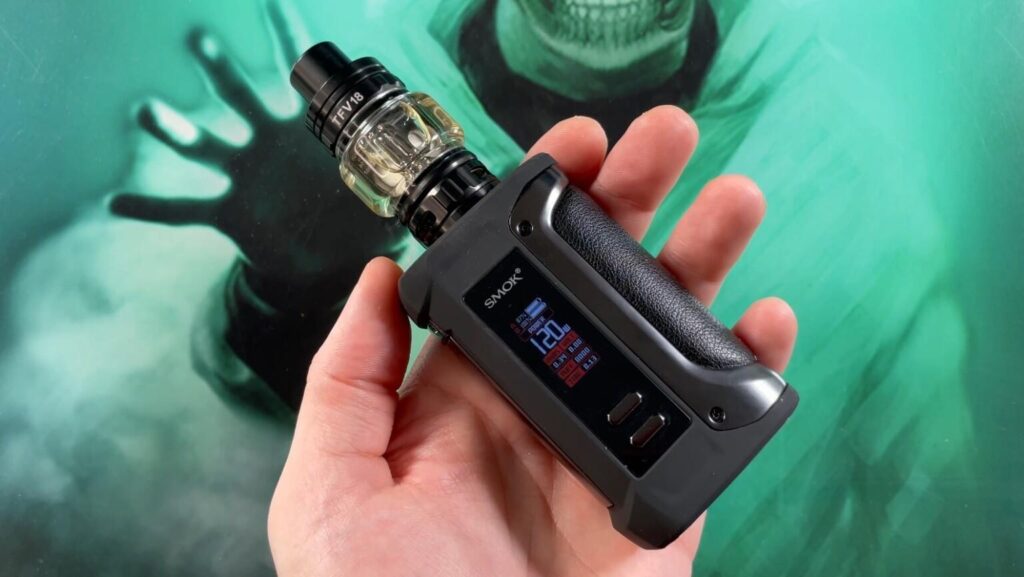
SMOK’s TFV tanks are the other default name in American sub-ohm vaping: a long-running family (TFV9, TFV16, TFV18 generations) of big-capacity, high-power tanks that ship in the box with most of SMOK’s larger kits, so a great many vapers’ first serious tank is a TFV whether they chose it or not. They are bottom-airflow, bubble-glass tanks built for high-VG liquid and wattage. SMOK’s coil families are as model-specific as anyone’s; the name on the coil, not TFV on the glass, is what to reorder.
As for the best tank question inside this cluster: there is no consensus winner across guides, and this page will not invent one. The criteria that actually separate tanks are the ones above: a coil family with a future, airflow that matches your draw, honest capacity for your market, and seals and glass you can buy spares for. Judge any tank, including the two families above, on those four.
FAQ
What size tank should I get?
Match capacity to consumption. A sub-ohm setup drinking 10 mL a day makes a 2 mL tank a chore and a 5 to 8 mL tank a day; an MTL setup sipping 2 to 3 mL is happy at 2 to 4 mL. Bigger glass is not better, just fewer refills.
Why does my tank gurgle?
The coil is flooded: more liquid arrived than it can vaporize. Usual causes are a brim-full fill, juice down the chimney while filling, a draw too hard for the airflow setting, or liquid too thin for the coil. Flick the tank gently over a tissue, mouthpiece down, and check the fill level.
Can I put an MTL coil in a sub-ohm tank?
Only if that exact coil exists in the tank’s family and is listed for it. Class follows the coil family; a random high-resistance coil from another line will not fit, and forcing fit questions is how tanks leak.
How do I stop my tank leaking in my pocket?
Close the airflow before it goes in, keep it upright where you can, and check the three vacuum killers: coil seated, seals intact, glass uncracked. On flights, travel with the tank empty or nearly so; cabin pressure will push a full tank through its coil.
What is bubble glass?
A bulged replacement glass tube that increases a tank’s capacity without changing its height. Many US tanks include both the straight and bubble glass in the box.