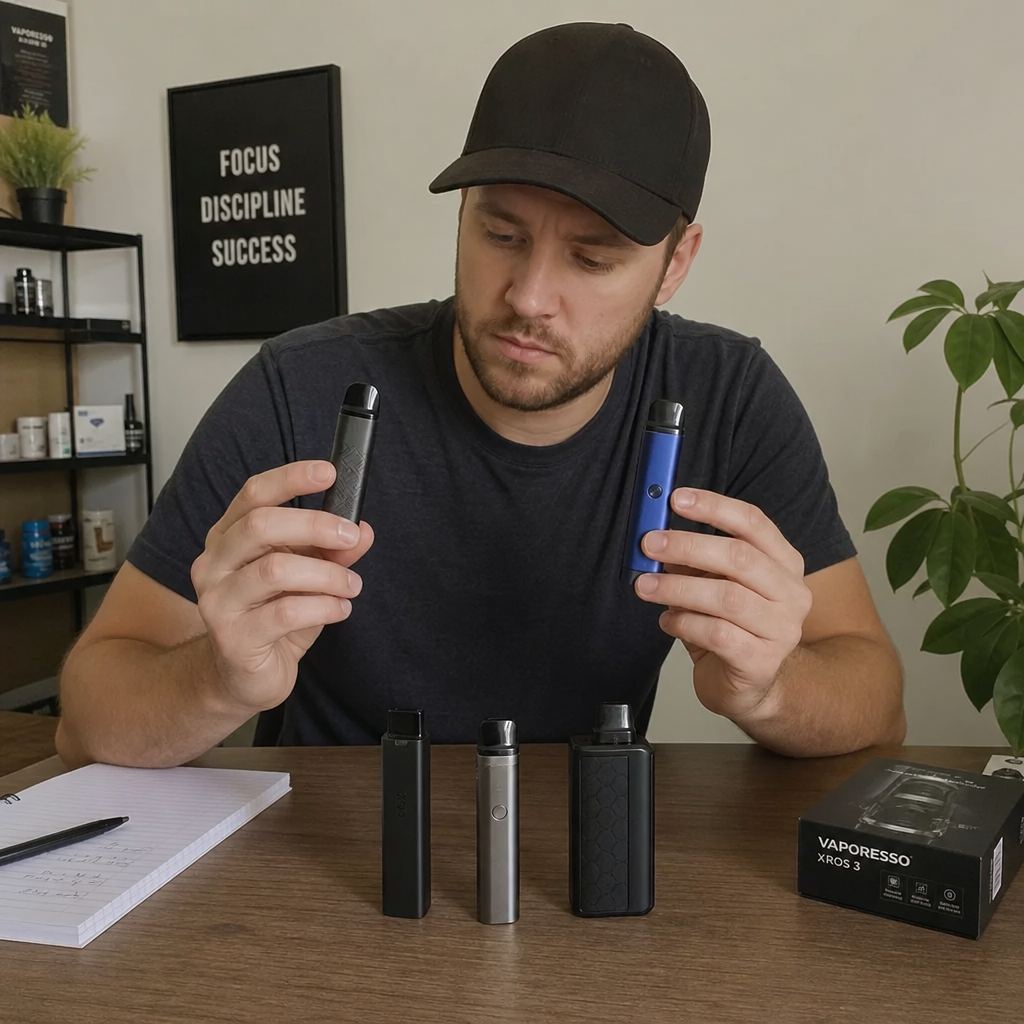

Every guide to vape wholesale on Google is written by a wholesaler. Every one of them will tell you they are the cheapest, the biggest, the most trusted, and that you should open an account today. This one is written by nobody’s supplier. It is for the person on the other side of the trade counter: the shop owner, the market stall holder going legit, the convenience store manager adding a vape bay, or anyone thinking about opening a vape shop in the UK and wondering where the stock actually comes from.
Wholesale is where your business lives or dies. Get the supplier right and the shelves fill themselves with products customers already want. Get it wrong and you are sitting on dead stock, counterfeit pods, or worse, products you cannot legally sell. This guide is the buyer’s audit: how the UK wholesale market works, what the law requires of your stockroom, how to vet a supplier before your first order, and the red flags that mean walk away.
Who this guide is for (and who it is not)
This is a trade guide. It assumes you are buying to resell: a vape shop, a convenience store, a supermarket buyer, or someone setting one of those up. The advice is written for the UK market under UK rules.
It is not for vapers hunting a bargain. If you are a consumer looking for the cheapest way to buy for yourself, wholesalers sell trade-only, and buying “wholesale” as an individual usually means grey-market stock with no warranty and no comeback. The consumer guides elsewhere on this site are the right shelf for you.
One more boundary: this guide does not recommend any wholesaler. Naming names would make this exactly the kind of seller-written page it is trying not to be. Instead it gives you the checklist to judge any supplier yourself, which is more useful and does not go out of date when a company changes its prices.
The UK vape wholesale landscape, mapped
Wholesale in the UK is not one thing. There are four kinds of supplier, and they serve different buyers.
Trade-only distributors. The big warehouses. They carry hundreds of brands, sell in case quantities, and exist to be a shop’s single weekly order. Most established vape shops buy the bulk of their stock from one or two of these. They usually require a business account, a VAT number, and sometimes proof of premises before they will sell to you.
Brand-direct and authorised distributors. Some manufacturers sell to retailers through appointed UK distributors rather than general wholesalers. This route matters for popular brands, because it is the cleanest chain of custody: the product goes from the brand to the authorised distributor to your shelf, which is your best defence if anyone ever questions authenticity.
Cash-and-carry and general wholesalers. The big cash-and-carry chains and regional wholesalers that serve convenience stores now carry vape ranges alongside everything else. The selection is narrower and the staff know less about the products, but for a convenience store that wants one delivery covering the whole shop, this is the practical route.
Online B2B platforms. Websites that sell wholesale quantities with no minimum order or low minimums, aimed at small shops and new businesses. Flexible, but this is also where due diligence matters most: the barrier to entry is low for the seller as well as the buyer.
Most shops end up with a mix: a main distributor for the weekly order, brand-direct for the lines that matter most, and a cash-and-carry top-up for the odds and ends. There is no single right answer, only the mix that keeps your shelves full without tying up your cash in stock that does not move.
The post-ban reality: what a wholesaler can legally sell you now
Since 1 June 2025, single-use disposable vapes cannot legally be sold in the UK. That changed wholesale more than any other event in the industry’s history. The disposable was the perfect wholesale product: cheap, standardised, and bought by the thousand. Its death rewrote every wholesaler’s catalogue.
What your wholesaler should be offering now falls into legal categories. Rechargeable prefilled pod kits with replaceable pods: the direct successor to the disposable, and the current volume driver. Refillable pod kits and vape pens: the devices, plus the e-liquids and nic salts that go in them. Bottled e-liquids and nic salts in compliant sizes. Coils, pods, and accessories for the devices you already sell.
What should not be in any UK wholesaler’s catalogue any more is single-use disposables, in any branding, under any “while stocks last” story. The ban has no sell-through period for retailers. If a supplier offers you disposables for the UK market, that is not a bargain, it is a liability, and it tells you everything about how that supplier treats the law. If you want the full picture of what replaced the disposable era, our pod kits vs disposables comparison runs through the format shift. Our old best disposable vapes guide is now a museum piece: a record of what the bestseller lists looked like before the ban.
The compliance checklist: 7 things to verify before your first order
Your wholesaler’s paperwork is your legal shield. If Trading Standards ever walks into your shop, the question will be where your stock came from and whether it was legal to sell. Here is the checklist.
1. MHRA notification. Every nicotine-containing product sold in the UK must be notified to the MHRA, and each carries a notification number. Ask your supplier for the notification details of the products you are buying, and check a sample against the MHRA’s published list. A legitimate wholesaler has this at their fingertips. A hesitant one is telling you something.
2. TPD product rules. Pods and tanks capped at 2ml, nicotine e-liquid capped at 20mg/ml, refill containers capped at 10ml. Your wholesaler’s catalogue should reflect these limits on every product. Anything over is not legal UK stock, whatever the packaging claims.
3. Age-gating your own sales. You must not sell vapes to anyone under 18, and from 29 October 2026 that rule extends to zero-nicotine vapes and nicotine pouches for the first time. Your supplier should be able to tell you which of their lines this affects. Our UK vaping age rules guide covers the current law in full.
4. Excise duty. The UK’s vape duty of £2.20 per 10ml applies to e-liquid, and it flows through the wholesale price. If a supplier’s e-liquid prices look too good against the market, ask how the duty is accounted for. Our UK vape tax guide explains the duty in detail.
5. Business legitimacy. A real wholesaler has a registered UK company, a VAT number, a trade-only ordering system, and invoices with full business details. If you are being offered “wholesale” through a messaging app with payment by bank transfer and no invoice, you are not dealing with a wholesaler.
6. Product labelling. UK-sold nicotine products need compliant labelling: nicotine warnings, ingredient lists, and the required health warnings. Check a sample of what arrives against what the law requires. Non-compliant labelling is one of the most common reasons stock gets seized.
7. Advertising rules. The rules on what you can say about vapes in your shop are tightening, with the full advertising ban arriving in stages. Your supplier’s marketing materials, the posters and display units they send you, need to comply too. Do not put up a display just because it arrived free in the box.
How to vet a wholesaler: the 10-point audit
Price is the last thing to check, not the first. Run every potential supplier through this audit before you commit.
1. How long have they been trading? Companies House is free to check. A wholesaler that has survived several years, including the disposable ban, has proven it can adapt. A company incorporated three months ago has proven nothing.
2. Who else buys from them? Ask for trade references, or at least look at which shops stock their name. A distributor that supplies established high-street shops has a reputation to protect. One that cannot name a single customer does not.
3. Is the range deep or just wide? A good wholesaler stocks the full ecosystem: the kit, the replacement pods, the coils, the chargers. A seller with fifty kit brands but no replacement pods is selling you one-off sales with no repeat business attached.
4. What are the minimums? Minimum order values and case quantities vary enormously. Make sure the minimums fit your cash flow. A £500 minimum is fine for an established shop and fatal for a new one.
5. What are the real delivery terms? Next-day delivery sounds standard until you read the exclusions: order cut-off times, postcode exceptions, and what happens when a delivery goes missing. Ask what their failed-delivery rate looks like and how they handle it.
6. What is the returns policy? Faulty devices, short-dated stock, and damaged deliveries are facts of wholesale life. A supplier with a clear, written returns process is worth more than a slightly cheaper one with no process at all.
7. Do they offer exclusives or just commodities? Some distributors offer exclusive brands or early access to new launches. That is genuine value: it gives your shop something the store down the road does not have.
8. How do they handle compliance queries? Email them a question about MHRA notification for a specific product before you order. The speed and substance of the answer tells you how the relationship will work when it matters.
9. What does their pricing actually include? Compare like with like: does the price include VAT, does it include delivery, are there card fees? The cheapest headline price is often not the cheapest landed cost.
10. What happens when something goes wrong? Every supplier is good when things work. Ask directly: a batch turns out faulty, a product gets recalled, Trading Standards queries your stock. The good ones have answers. The bad ones change the subject.
Margins and minimums: how the maths actually works
Wholesale margin is the difference between your landed cost per unit and your shelf price, and it has to cover rent, staff, shrinkage, and the stock that never sells. The structure of it is simple; the discipline is hard.
Work backwards from the shelf. Decide what a product needs to retail at to be competitive in your area, subtract VAT, subtract your required margin, and that is the maximum you can pay wholesale. If no supplier hits that number, the product does not belong on your shelf, however popular it is. Chasing volume at no margin is how shops die slowly.
Watch the mix, not just the margin. High-margin lines that sell one unit a week are worth less than lower-margin lines that sell fifty. Your wholesaler’s bestsellers list, the products other shops reorder every week, is more valuable data than any single product’s margin percentage.
And respect the minimums. Case quantities exist because the wholesaler’s economics need them, but they are also a trap for new shops: twelve cases of a slow line is cash turned into cardboard. Start narrow, reorder fast, and let the sales data tell you what deserves a deeper buy. The shops that fail at wholesale almost always fail by over-ordering, not under-ordering.
What to stock: the shelf, category by category
A new shop does not need everything. It needs the right things, in depth.
Prefilled pod kits and their pods. This is the current volume category, the legal successor to the disposable. Stock the kits your customers ask for by name, and always stock the matching replacement pods. The kit is a one-off sale; the pods are the repeat purchase that pays the rent. Pods are not interchangeable between brands, so match them carefully.
Refillable pod kits. The devices for customers who want lower running costs: the kits themselves, in the two or three brands your area actually buys. Our best refillable vape guide shows which devices the market rates. Our best vape guide covers the wider device landscape your customers are choosing from.
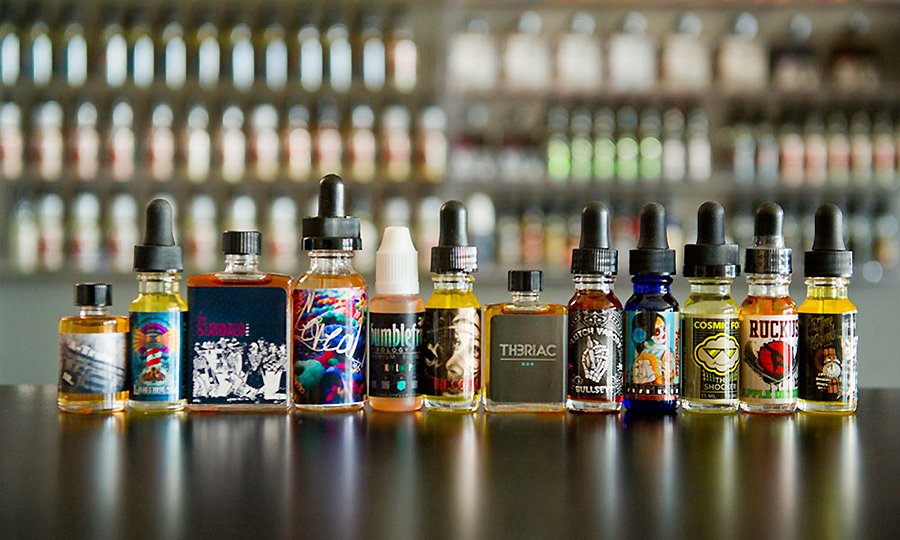
E-liquids and nic salts. Bottled liquid in 10ml sizes, nic salts for pod users, and the flavour families that sell: tobacco, menthol, and the fruit ranges. This is also where the excise duty bites hardest, so buy from suppliers whose duty accounting you trust.
Coils and consumables. Coils for the tanks you sell, replacement pods for the kits you sell. Nothing kills a customer relationship faster than selling them a device and then having no coils when they come back.
Batteries, chargers, and accessories. The unglamorous shelf that prints money: chargers, cases, and replacement parts. Handle batteries properly in storage and sale, and our vape battery safety guide covers the rules that keep your stockroom safe.
What not to stock: anything you cannot verify as compliant, anything without a clear reorder path for its consumables, and any line where you are the only shop in town being offered it. Exclusivity from an unknown supplier is not an opportunity, it is a warning.
Red flags: when to walk away
Some suppliers disqualify themselves. Walk away from any wholesaler that does any of the following.
Offers single-use disposables for the UK market. The ban is absolute. A supplier still pushing disposables is either ignorant or criminal, and neither is someone you want in your supply chain.
Cannot produce compliance paperwork. If MHRA notification details, invoices, or company registration are met with delays and excuses, the paperwork does not exist.
Sells only through messaging apps. Legitimate wholesale runs on accounts, invoices, and bank transfers to business accounts. A “plug” on an encrypted chat app is not a wholesaler.
Prices far below every other supplier. Wholesale has real costs: duty, VAT, warehousing, delivery. A price dramatically below the market is not efficiency, it is counterfeit stock, diverted stock, or duty evasion. Your margin is not worth your licence.
Pressures you to buy big on a first order. “This price is only for 50 cases” on a first conversation is a pressure tactic. A good supplier wants you to start small and grow, because a customer who survives is worth more than a customer who over-orders once.
Has no physical presence you can verify. A website and a mobile number are not a business. A warehouse address, a landline, a company registration: these are cheap to have and telling to lack.

The fake-stock problem
Counterfeit vapes are a wholesale problem before they are a retail problem. Fake pods and devices enter the UK through the same channels as legitimate stock, and they end up on shelves because a retailer bought them from a supplier they did not vet.
The defence is the audit above, plus one habit: verify. Check scratch-off authenticity codes on a sample of every delivery, not just the first one. Compare what arrives against the brand’s official product: the packaging, the labelling, the weight. Keep your invoices, because if Trading Standards seizes stock, your paper trail is your defence. Our fake vapes guide shows the full checklist, from packaging tells to the verification step most buyers skip.
One hard truth: if you bought it cheap from an unverified seller and it turns out to be fake, “my supplier said it was genuine” is not a defence that impresses anyone. The liability sits with the seller. That seller is you.
Vape wholesale FAQ
Do I need a licence to buy vape wholesale in the UK?
There is no single vape wholesale licence, but you need a registered business, and your suppliers will typically require a VAT number and proof of trade premises. Your obligations are around what you sell: compliant products, age verification, and duty-paid stock.
What is the minimum order for vape wholesale?
It varies by supplier: some online B2B platforms have no minimum, while big distributors set minimum order values. Match the minimum to your cash flow, and be wary of any supplier that pressures a large first order.
How do I check if a vape product is MHRA notified?
Ask your supplier for the product’s notification number and check it against the MHRA’s published list of notified products. A legitimate wholesaler provides this without hesitation.
Can I still buy disposable vapes wholesale for the UK?
No. Single-use disposables cannot legally be sold in the UK since 1 June 2025, so no legitimate wholesaler should offer them for the UK market. Any offer of disposables is a red flag.
What margin should a vape shop aim for?
Work backwards from a competitive shelf price: subtract VAT and your required margin to find your maximum wholesale cost. The right margin depends on your rent, staff costs, and how fast the line sells. There is no universal number.
Should I buy from one wholesaler or several?
Most shops use a main distributor for the weekly order plus brand-direct or specialist suppliers for key lines. A single supplier is simpler; several give you backup when one is out of stock.
How do I spot a fake wholesaler?
Messaging-app-only contact, no company registration or VAT number, no invoices, prices far below market, pressure to buy big immediately, and no compliance paperwork. Any one of these is a reason to walk away.
Does the £2.20 vape duty affect wholesale prices?
Yes. The excise duty on e-liquid flows through the wholesale price. If a supplier’s liquid prices look impossibly low against the market, ask how the duty is accounted for.
What sells best in UK vape shops now?
Rechargeable prefilled pod kits and their replacement pods are the current volume category, followed by refillable pod kits with bottled e-liquids and nic salts. Stock the kits and always stock the matching pods.
Can I return faulty stock to a wholesaler?
A proper wholesaler has a written returns process for faulty, damaged, or short-dated stock. Confirm the policy before your first order, not after your first problem.
Verdict: the supplier is the product
Here is the uncomfortable summary of this entire guide: in vape retail, you are not really in the product business. You are in the supplier business. Your customers will never meet your wholesaler, but every product they buy, every pod they reorder, and every problem they bring back to your counter traces back to that relationship.
So choose it like it matters, because it is the choice that matters most. Audit the supplier before the price. Verify the compliance before the catalogue. Start small, reorder fast, and let the till tell you what to buy deep. The shops that thrive in the post-ban UK are not the ones with the most stock. They are the ones with the right stock, from suppliers they trust, bought in quantities their cash flow can carry.
Get the wholesaler right, and the rest of the business gets easier. Get it wrong, and nothing else you do will save it.