If you’re wondering whether you can pick up a vape at your local liquor store, gas station, or online, the short answer is: it depends heavily on your state and even your city. Vape and e-cigarette retail is regulated through a patchwork of federal minimums and widely varying state and local rules, and that patchwork has been shifting fast in 2026. This guide breaks down how licensing actually works, who can legally sell vapes, and what rules apply to you as a buyer.
The Federal Baseline
At the federal level, there’s one hard rule every retailer has to follow regardless of state: nobody under 21 can be sold a tobacco or vapor product. This is federal Tobacco 21 law, and it applies whether you’re buying from a gas station, a dedicated vape shop, or a liquor store.
Beyond the age minimum, the FDA regulates vapes as tobacco products under its authority from the Family Smoking Prevention and Tobacco Control Act. Manufacturers are supposed to get marketing authorization through the Premarket Tobacco Product Application (PMTA) process before legally selling a product in the US. In practice, enforcement against unauthorized products (especially imported disposables) has been uneven, and a lot of what’s on shelves hasn’t formally cleared that process which is part of why some states have started building their own enforcement tools, discussed below.
Table of Contents
Do Liquor Stores Actually Sell Vapes?
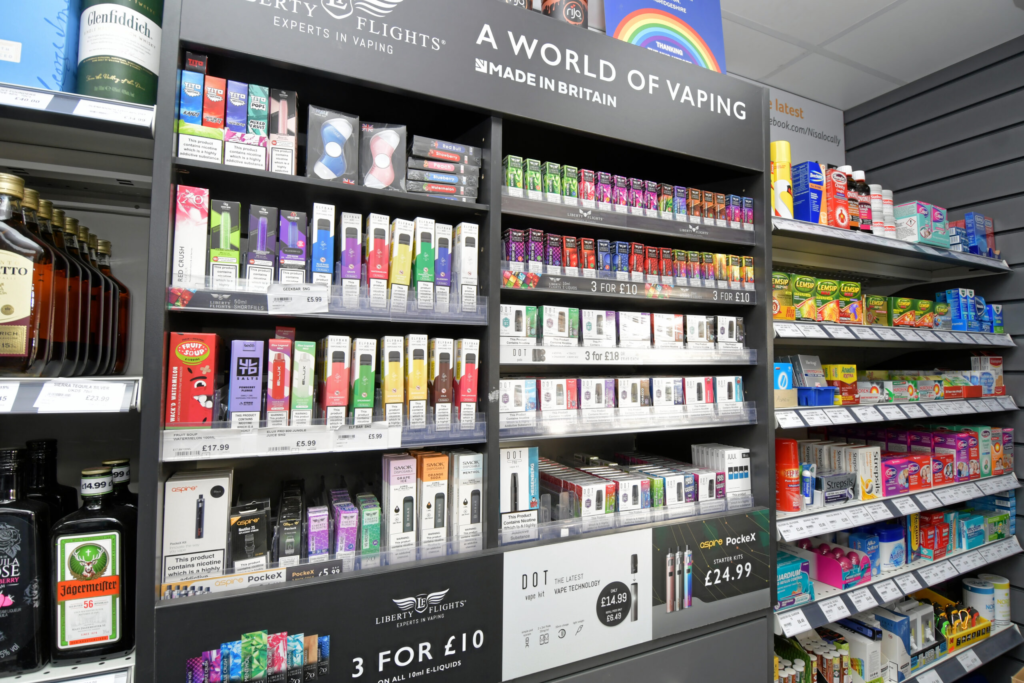
Yes, in many states liquor stores can and do sell vapes but it’s not automatic. It usually comes down to whether the store holds the right kind of license, separate from its liquor license. A few patterns show up across the country:
- Some states fold vapor products into general tobacco licensing. If a liquor store already holds a tobacco retail license (common for stores that sell cigarettes), it can typically add vapes without much extra hassle.
- Other states have started requiring specific nicotine/vapor permits. Virginia is a good recent example: as of July 2026, the Vape Enforcement Act shifted regulatory authority over liquid nicotine sales to the state’s Alcoholic Beverage Control Authority, and retailers now need a specific ABC permit to sell it — separate from a general tobacco license.
- A growing number of states are also introducing “directory” laws, where only PMTA-authorized or state-approved products can legally be sold at retail, liquor stores included. North Carolina put this kind of law into effect in mid-2025, and it’s currently being challenged in court by the Vapor Technology Association, so the picture there could still shift.
The practical upshot: a liquor store selling vapes almost always needs some form of tobacco or nicotine retail license on top of its alcohol license, and what that license requires varies a lot by state.
Age Verification Rules
Every legal vape sale, wherever it happens, requires ID verification for anyone who looks under 21 (many retailers card everyone as a practical matter, since ID scanners often flag anyone under 30 for a manual check). States have been tightening penalties for getting this wrong:
- Several states now impose escalating fines for underage sales, sometimes reaching into the thousands of dollars per violation.
- Repeat violations can lead to license suspension or full revocation this applies to a liquor store’s tobacco/vapor permit even if its liquor license stays intact.
- Some states, like South Dakota under laws that took effect in mid-2026, have gone further and banned certain sales channels entirely (online, mail-order) while tightening in-person distribution requirements.
If you’re buying, expect to show ID basically everywhere, including self-checkout and vending machines where those are legal (vending is its own regulatory subcategory, generally restricted to age-verified or adult-only locations).
Flavor Bans and Product Restrictions
This is one of the biggest reasons vape selection varies wildly by state, including at liquor stores:
- States like California, New York, New Jersey, and Oregon have full or near-full bans on flavored vapor products, sometimes exempting only tobacco-flavored or unflavored options.
- Excise taxes on vapor products also vary enormously — some states charge nothing, others charge per-milliliter rates, and a few (Washington, Minnesota) tax vapor products at 95% of the selling price.
- A handful of states have banned specific categories outright, such as disposable vapes manufactured in China, while leaving refillable devices with domestically filled e-liquid legal.
If a liquor store in a flavor-ban state carries vapes, expect the selection to lean toward tobacco or menthol-only options, or nicotine-free/zero-flavor devices, depending on the local carve-outs.
Online Sales Are More Restricted Than You’d Think
If liquor store selection is limited, buying online isn’t necessarily an easy workaround. Federal law (the PACT Act) already puts significant reporting and shipping restrictions on mail-order vapor sales, and several states have layered on outright bans or heavy restrictions on online and mail-order sales of certain products. Some 2026 legislation, like South Dakota’s, explicitly bans online and mail-order nicotine sales as part of a broader distributor-licensing crackdown.
A Quick State-Level Snapshot
Regulatory intensity varies from “minimal beyond the federal baseline” to “heavily restricted,” and that intensity often has nothing to do with whether liquor stores specifically can sell vapes — it’s about what’s legal to sell at all:
| Regulatory posture | What it typically looks like |
|---|---|
| Low regulation | Age 21+ only, no flavor ban, no state product directory, no or minimal excise tax |
| Moderate regulation | Tobacco/vapor retail license required, per-milliliter or wholesale excise tax, no flavor ban |
| High regulation | Flavor bans, product directories requiring FDA authorization, high excise taxes (up to 95% in some states), separate nicotine retail permits |
Because this changes constantly several of the laws above took effect just in the past year — the only reliable way to know your local rules is to check your state’s tobacco/alcohol regulatory agency directly, or ask the retailer what license they’re operating under.
The Bottom Line
Liquor stores selling vapes isn’t unusual, but it’s never automatic it depends on whether the store holds the right license (which increasingly means a nicotine-specific permit, not just a general tobacco or liquor license), what your state allows in terms of flavors and product types, and how strict local age-verification enforcement is. If you’re shopping around, dedicated vape retailers and smoke shops tend to have more consistent stock and staff who actually know the regulatory status of what they’re selling, but a liquor store carrying vapes is operating within the same legal framework just under an added layer of licensing.
Frequently Asked Questions
Do I need to be 21 to buy a vape, even a nicotine-free one?
In most states, yes Tobacco 21 laws generally apply to vaping devices and e-liquids regardless of nicotine content, since the device itself is regulated as a tobacco product. Some states specifically exempt nicotine-free products, so check local rules if this matters to you.
Why do vape prices vary so much between stores and states?
Excise taxes are the biggest factor some states charge no tax at all, while others tax vapor products at up to 95% of the sale price. Licensing costs and product availability (flavor bans limiting what a store can legally stock) also play into pricing.
Can any store just start selling vapes if they already sell cigarettes?
Not necessarily. Some states treat vapor products as covered under a general tobacco license, but a growing number require a separate nicotine or vapor-specific permit, sometimes issued by a different agency (like a state’s alcohol control board) than the one that issues tobacco licenses.
What is a state “vapor product directory,” and why does it matter?
It’s a list of products a state has determined are legal to sell, usually based on FDA marketing authorization status. If a product isn’t on the list, retailers including liquor stores can’t legally sell it, even if it’s sold legally elsewhere. North Carolina’s directory law is a notable current example, and it’s being challenged in court.
Are vape vending machines legal?
It depends on the state and location. There’s no blanket federal ban, but most states restrict vending machines to adult-only locations, require age-verification technology, or mandate specific permits rules vary enough that what’s legal in one state may not be in the next.
This article is for general informational purposes and reflects publicly available regulatory information as of August 2026. Vape and tobacco laws change frequently at the state and local level always confirm current rules with your state’s tobacco or alcohol regulatory agency before purchasing or selling.

