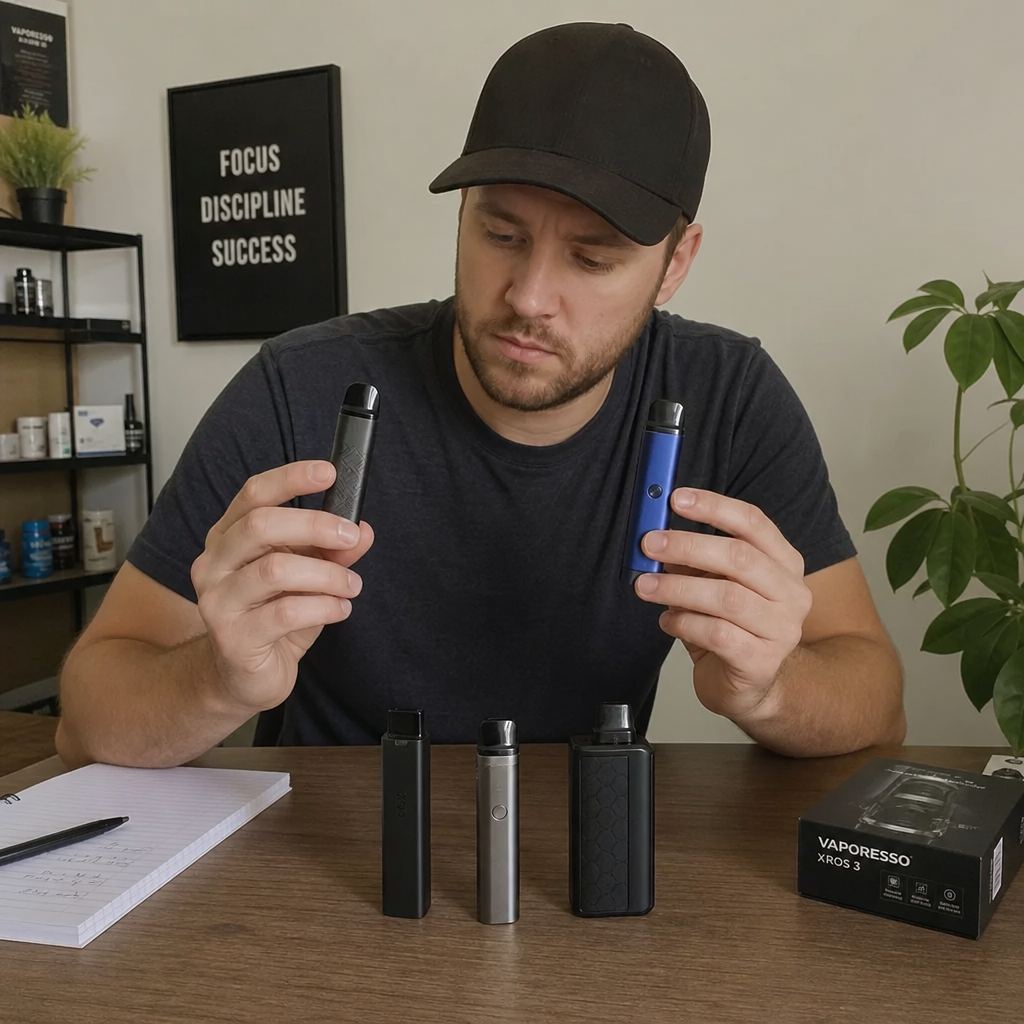

Picture an American vaper landing at Toronto Pearson with a pocket full of 50 mg disposables. Three surprises await: nothing that strong can be legally sold anywhere in Canada, the buying age in Ontario is 19 not 18, and the fruity flavours on shelves here are illegal two provinces east. One country, three layers of law, and rules that change the moment you cross a provincial line.
The two-minute version
- Vaping is legal across Canada, but regulated at federal, provincial, and municipal levels.
- The federal floor: no sales to anyone under 18, a 20 mg/mL nicotine cap nationwide, mandatory bilingual health warnings and child-resistant packaging, and a near-total ban on youth-visible advertising.
- Provinces raise the bar: most set the purchase age at 19, PEI sets it at 21, and five provinces have banned most non-tobacco flavours outright.
- Taxes are layered too: a federal excise duty applies everywhere, and ten provinces and territories double it through coordinated agreements.
- Where you vape matters: every province bans vaping in enclosed public places, most add outdoor buffer zones, and vaping in a car with a minor inside is prohibited everywhere.
Layer one: Ottawa’s federal rulebook
The foundation is the Tobacco and Vaping Products Act (TVPA), in force since 2018. It decides what a vaping product can contain, how it must be packaged, who can buy it, and how it can be advertised. Provinces can add stricter rules on top, never below this floor. Four regulation sets do the heavy lifting:
- Nicotine Concentration in Vaping Products Regulations set the 20 mg/mL ceiling and make it illegal to manufacture, import for sale, or sell anything above it.
- Vaping Products Labelling and Packaging Regulations require health warnings, the nicotine concentration, and a full bilingual ingredient list.
- Vaping Products Promotion Regulations ban displays and advertising anywhere young people can see or hear them, and prohibit devices shaped like toys, candy, or other novelties.
- Vaping Products Reporting Regulations force manufacturers and importers to file sales and ingredient reports with Health Canada.
The federal Non-smokers’ Health Act extends vaping bans to federally regulated workplaces and to aircraft, trains, and vessels travelling between Canada and other countries. Canada’s 20 mg/mL cap mirrors the approach taken under the EU TPD rules, which set the same ceiling across Europe.
The 20 mg ceiling: why Canadian vapes feel weaker than American ones
The most noticeable federal rule for anyone arriving from abroad is the nicotine cap. No vaping product sold in Canada may exceed 20 mg/mL of nicotine, whether it is a sealed pod, a disposable, or a bottle of e-liquid. Many popular disposables sold in the United States contain 50 mg/mL, more than double Canada’s limit. Only a small set of products carry FDA authorized vapes status south of the border.
One nuance: the cap covers products manufactured or imported for sale. Personal possession of a higher-strength product is not a criminal offence under federal law, but no compliant Canadian retailer can sell you one. If a Canadian website advertises anything above 20 mg/mL, treat it as a compliance red flag.
How Canada hides vaping from young people
The TVPA bans entire categories of promotion outright:
- Lifestyle advertising: no associating a vape with glamour, adventure, or social success.
- Testimonials and endorsements: no person, character, or animal, real or fictional, may be shown endorsing a vaping product, including on the packaging itself.
- Youth-appealing advertising: anything with reasonable grounds to be considered appealing to young people is prohibited.
- Sponsorship: linking a vape brand to a person, event, activity, or facility is illegal.
- Health claims: no promotion may suggest health benefits or compare a vape favourably with tobacco.
Retailers face an extra layer: products and packaging cannot be displayed at point of sale in any way visible to young people. That is why Canadian vape shops keep stock behind counters or in closed cabinets.
Flavours get their own treatment at the federal level. Schedule 3 of the TVPA makes it illegal to promote vaping products using flavour descriptions tied to cannabis, confectionery, dessert, soft drinks, or energy drinks. Note the distinction: this restricts the marketing of those flavours, not the flavourings themselves. For now, there is no nationwide federal flavour ban, and the provinces have gone their own ways instead.
Layer two: the taxman cometh
Canada taxes vaping liquid with a federal excise duty, and the rates rose on July 1, 2024. Britain’s approach to taxing vapes took a different path, as our breakdown of the UK vape tax explains. The structure is tiered:
- First 10 mL: $1.12 per 2 mL (or any fraction).
- Above 10 mL: $1.12 per 10 mL (or any fraction).
Ten provinces and territories have signed coordinated taxation agreements with Ottawa, so the same rates are charged again as an additional provincial duty: Alberta, Manitoba, New Brunswick, the Northwest Territories, Nova Scotia, Nunavut, Ontario, Prince Edward Island, Quebec, and Yukon. Buy in one of them and you are effectively paying double duty. Products there must carry a province-specific excise stamp; elsewhere, a peach-coloured federal Canada stamp proves the duty was paid.
What that looks like at the till:
| Bottle size | Federal duty | Total in a coordinated province |
|---|---|---|
| 10 mL | $5.60 | $11.20 |
| 30 mL | $7.84 | $15.68 |
| 60 mL | $11.20 | $22.40 |
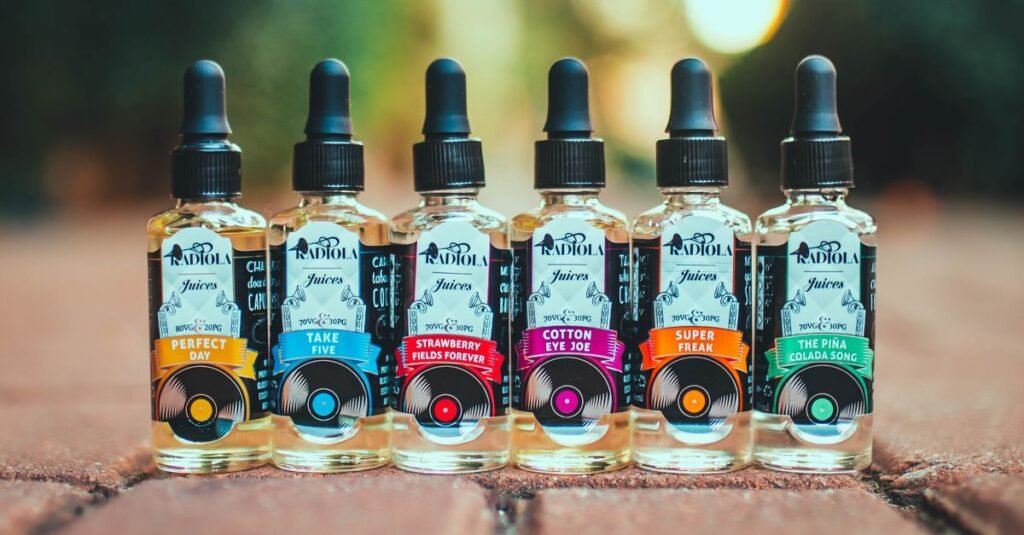
That is before GST, provincial sales tax, or the retailer’s margin. It explains a large part of Canadian vape juice prices, which run well above what Americans pay for equivalent bottles.
Layer three: your province, your rules. All 13 at a glance
Bookmark this table. Federal rules apply everywhere; these are the provincial additions that change what you can actually buy.
| Province / Territory | Legal age | Flavour rule | Notes |
|---|---|---|---|
| British Columbia | 19 | Flavoured products only in adult-only specialty shops; tobacco flavour everywhere | Nicotine-only e-substances; 30 mL max refills, 2 mL max pods |
| Alberta | 18 | No provincial flavour restrictions | Follows federal standards only; coordinated excise province |
| Saskatchewan | 19 (since Feb 2024) | Flavoured products only in adult-only vape stores; tobacco, mint, menthol in general retail | Age raised from 18 in 2024 |
| Manitoba | 18 | No flavour ban in force | Bill 54 proposes pulling flavours from urban convenience stores; still in the legislature |
| Ontario | 19 | Flavours other than tobacco, mint, menthol only in specialty vape stores or cannabis shops | Since July 2020; displays must not be visible from outside |
| Quebec | 18 | Only tobacco and unflavoured products; all other flavours banned | Since late 2023; covers nicotine and zero-nicotine products |
| New Brunswick | 19 | Tobacco flavour only; mint and menthol included in the ban | Coordinated excise province |
| Nova Scotia | 19 | Tobacco flavour only since April 2020 | First to ban flavours; NS excise stamp enforced from July 2026 |
| Prince Edward Island | 21 | Tobacco flavour only since March 2021 | Strictest province overall; sales limited to adult specialty stores |
| Newfoundland and Labrador | 19 | No flavour restrictions identified | Federal rules only beyond age and public-use bans |
| Yukon | 19 | No flavour restrictions identified | Coordinated excise territory |
| Northwest Territories | 19 | Most non-tobacco flavours banned | Coordinated excise territory |
| Nunavut | 19 | No flavour restrictions identified | Coordinated excise territory |
The pattern is clear. Age splits three ways: 18 in three provinces, 19 in nine jurisdictions, and 21 in PEI alone. Flavours are messier: five jurisdictions with near-total bans, four confining flavours to adult-only shops, and the rest on federal rules.
The flavour map, province by province
The five strictest jurisdictions, Quebec, Nova Scotia, New Brunswick, Prince Edward Island, and the Northwest Territories, have banned most non-tobacco vaping flavours. Fruit, candy, and dessert profiles are off the shelves; tobacco generally remains, and Quebec also permits unflavoured products. New Brunswick’s ban sweeps in mint and menthol too, Nova Scotia’s dates to April 2020, and PEI pairs its tobacco-only rule with a 21 age limit and adult-only stores. Compliant online retailers must restrict what ships to addresses in these provinces.
The middle-path provinces, British Columbia, Ontario, and Saskatchewan, moved flavours behind an age gate instead of banning them. Flavoured products are sold only in licensed specialty vape shops where minors cannot enter; convenience stores and gas stations are limited to tobacco flavour, with Ontario and Saskatchewan also allowing mint and menthol. Ontario’s version dates to July 2020. BC adds its own product rules: only nicotine-containing e-substances may be sold, so shoppers looking for nicotine-free vapes will find different shelves there, capped at 30 mL refills and 2 mL pods.
Alberta has no provincial flavour restrictions at all, and Manitoba’s proposed Bill 54 is still working through the legislature.
Where you can and cannot vape
Indoor rules are the most consistent part of Canadian vaping law. Every province and territory prohibits vaping in enclosed public places and workplaces, mirroring existing tobacco bans. Restaurants, bars, shopping malls, offices, schools, hospitals, and public transit are off-limits everywhere. The practical rule is simple: if it is enclosed and shared with other people, do not vape there. British Columbia allows one narrow exception: small-scale product testing inside adult-only vape shops.
Outdoors is where visitors get tripped up, because buffer zones differ by province:
- Ontario: 9 metres from hospital entrances and other building openings; 20 metres from playgrounds, sports fields, and splash pads; vaping banned on restaurant and bar patios entirely. Individual fines run $1,000 to $5,000 under the Smoke-Free Ontario Act.
- Quebec: 9 metres from doors, windows, and air intakes, with bans across many outdoor public areas.
- Manitoba: 8 metres around public buildings and outdoor patios.
- Nova Scotia: 4 metres from air intake vents.
Municipal bylaws can go further, especially for parks and beaches, so check the city website. One rule has no exceptions anywhere: vaping in a vehicle with a minor present is prohibited in every province and territory, with fines set locally.
Crossing the border with a vape
Visitors can bring vaping products into Canada for personal use, declared to border officers on arrival. The personal import allowance is five units of 120 mL each, for a 600 mL maximum. The first 120 mL enters duty-free; excise duties apply above that. Anything beyond five units needs a vaping product licence under the Excise Act.
Two warnings for Americans. First, border officers have discretion over personal imports, so a 50 mg disposable from home may not make it through; 20 mg/mL or below is the safe play. Second, the legal purchase age follows the province you are standing in, not your passport, and the American patchwork is its own maze, as our guide to the US vaping age explains.
Flying rules are uniform: devices and spare batteries go in carry-on only, never in checked bags. Spares must be protected against short circuits, and charging on board is prohibited.
Where Health Canada stands now
Health Canada’s public position has been consistent for years: vaping is less harmful than smoking for adult smokers who switch completely, but it is not harmless, and anyone who does not smoke should not start. We unpack that trade-off in our guide to vaping versus smoking. The policy direction in 2026, though, is enforcement rather than new product rules.
Three things define the current posture. First, the long-discussed federal flavour ban remains in draft form, suspended since February 2025 with no revival announced. Second, enforcement is tightening: in early 2026, amendments to the federal Contraventions Regulations raised on-the-spot fines, with supplying a vaping product to a minor now drawing a $2,000 penalty, up from $500. Third, the excise net is widening: Nova Scotia joined the coordinated stamping regime with full enforcement from July 1, 2026.
What rule-breaking actually costs
Federal penalties scale with who commits the offence. Retailers caught selling to someone under 18 face up to $3,000 for a first offence, rising to $50,000 for subsequent violations. Manufacturers and importers face fines up to $500,000 and a year in prison for breaking the cap or advertising rules, or up to $1,000,000 and two years if prosecuted by indictment.
Provincial fines are set separately. Ontario’s are the clearest: vaping in a prohibited place draws $1,000 for a first offence and $5,000 for repeats under the Smoke-Free Ontario Act.
Frequently asked questions
Is vaping legal in Canada? Yes, nationwide for adults, regulated federally by the Tobacco and Vaping Products Act and additionally by each province and territory.
How old do you have to be to vape in Canada? 18 federally, but most provinces and territories set 19. Alberta, Manitoba, and Quebec stay at 18; Prince Edward Island requires 21. Retailers must verify age with photo ID.
What is the maximum nicotine strength allowed? 20 mg/mL, nationwide, for every product format.
Are flavoured vapes banned in Canada? Not federally. Five jurisdictions have banned most non-tobacco flavours, while BC, Ontario, and Saskatchewan restrict flavours to adult-only shops. A proposed federal ban has been suspended since February 2025.
Can I vape in public in Canada? Not indoors. Outdoors, 4 to 20 metre buffer zones apply depending on the province. Vaping in a car with a minor inside is illegal everywhere.
Can I bring my vape into Canada? Yes, declared at the border: five 120 mL units (600 mL total), first 120 mL duty-free. Stick to 20 mg/mL or below; devices and spare batteries go in carry-on luggage.
Can I order vapes online in Canada? Yes in most provinces, with age verification at checkout and delivery. Quebec restricts online vape sales more tightly than other provinces.
Why are vapes so expensive in Canada? Mostly tax. The federal excise duty adds at least $5.60 per 10 mL, and ten provinces and territories double it, so a 60 mL bottle can carry $22.40 in duty alone before sales tax.
The bottom line
Canada’s system makes sense once you see the three layers. Ottawa sets the floor: 18 to buy, 20 mg/mL maximum, strict packaging, and advertising rules that keep vaping invisible to young people. The tax layer doubles the cost in most of the country. And the provincial layer is where daily life changes: the age you must be, the flavours you can buy, and how far from a doorway you must stand.
For residents, bookmark the province table. For visitors, sort the border math and the 20 mg/mL cap before you fly. Enforcement is tightening and the rules only move in one direction. Anyone weighing the switch should also read our take on the science behind vaping to understand what the research actually says.