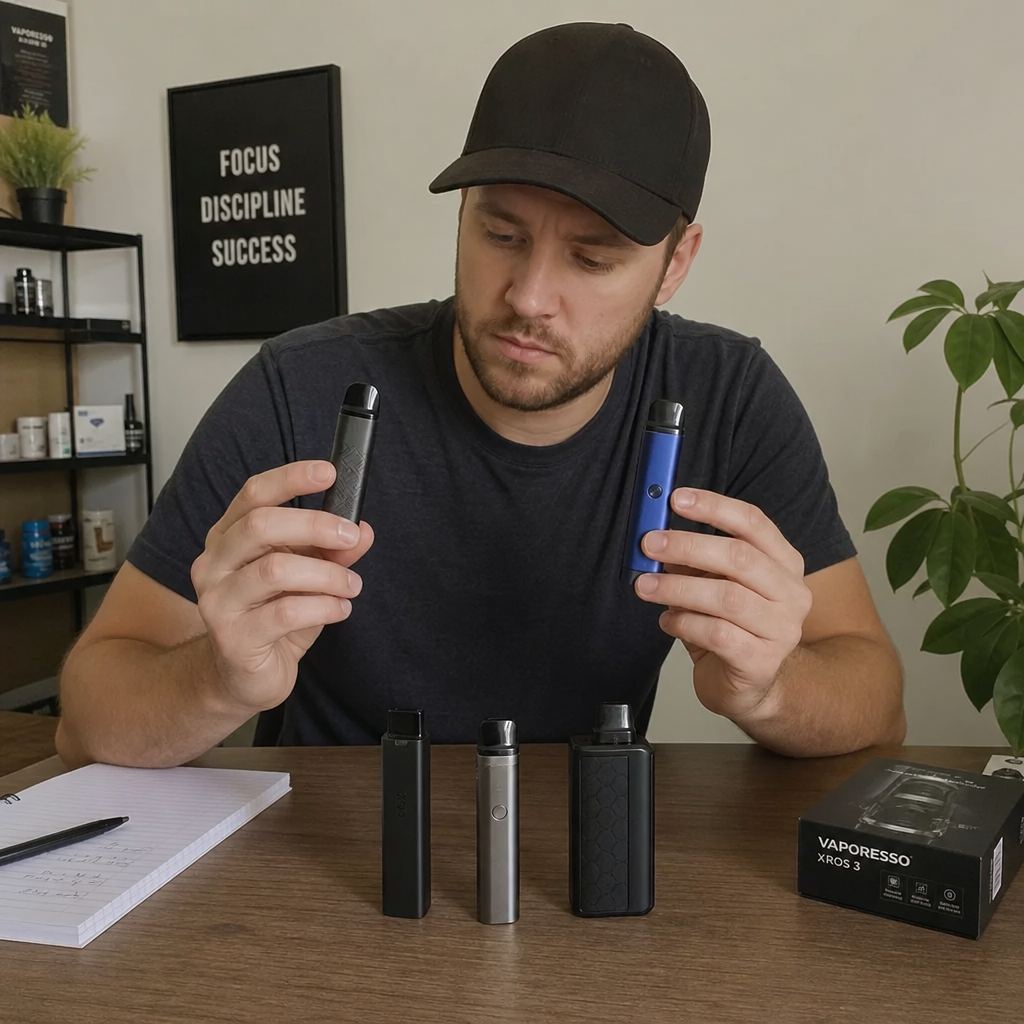

Every vaper has at least one question they are too embarrassed to ask out loud. The dentist question is the classic. Then come the religious one, the calorie one, and the one you only think of the day after a tooth comes out. This guide answers all four, honestly, with no clickbait and no lectures.
These are also questions that are surprisingly hard to Google well. The dentist answers are mostly thin pages from dental practices chasing local SEO. The religious answers are scattered across forums where everyone is certain and nobody agrees. The calorie answers quote numbers without explaining why they do not matter. And the extraction answers either terrify you or shrug. So here is one page that does all four properly.
| Question | Short answer |
|---|---|
| Can dentists tell if you vape? | Usually, yes, they can see the signs. But the signs are suggestive, not proof, and your dentist is not there to catch you out. |
| Can Muslims vape? | Opinions differ, from forbidden to disliked, and vaping during Ramadan fasting hours breaks the fast. Ask your imam for your own situation. |
| How many calories in a vape? | About 4 to 5 calories per ml on paper, effectively zero that your body can use. Vaping will not affect your weight through calories. |
| Can you vape after tooth extraction? | No, not for at least 72 hours. Suction can dislodge the blood clot and cause dry socket, one of the most painful dental complications there is. |
Can dentists tell if you vape?
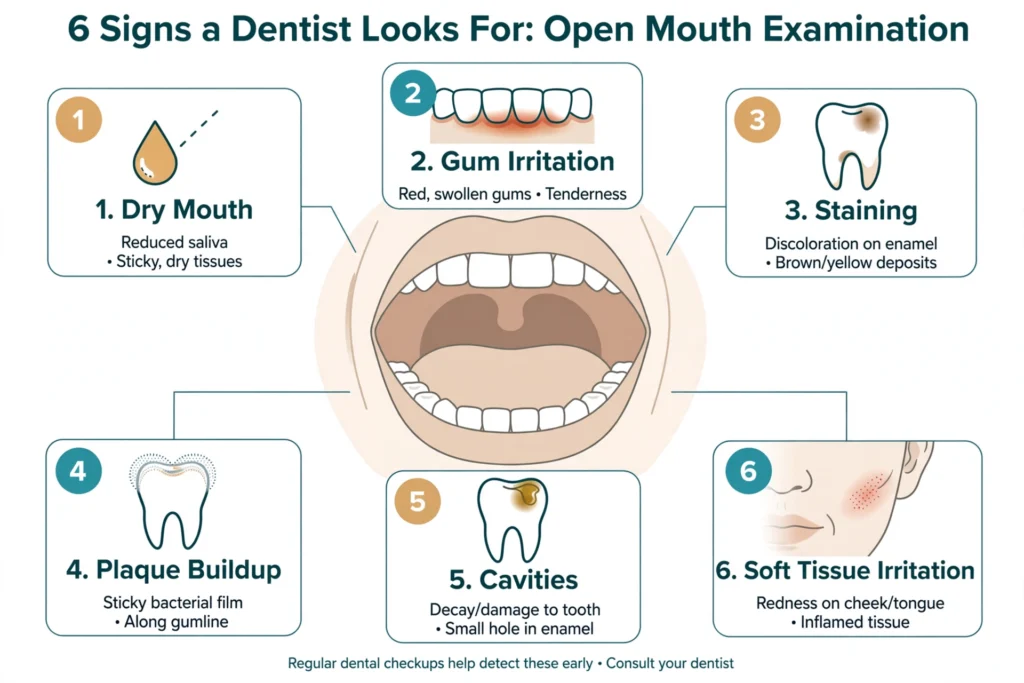
Probably, yes. Not because there is a vaping test, but because dentists spend all day looking inside mouths, and vaping leaves a pattern of small changes that a trained eye recognises. Here is what they look for.
Dry mouth. This is the biggest giveaway. The PG and VG in e-liquid draw moisture out of the mouth, and reduced saliva is one of the first things a dentist checks. A young, otherwise healthy patient with a chronically dry mouth raises questions.
Gum irritation and recession. Nicotine restricts blood flow to the gums, which can leave them pale, slightly receded, and inflamed, sometimes with less bleeding than the level of inflammation would suggest.
Staining. Vaping does not stain like smoking, but nicotine can still cause light yellow or brownish discolouration, especially along the gum line, and some flavoured liquids add their own tint.
Faster plaque and more cavities. Dry mouth means less saliva washing the teeth, so plaque accumulates faster and cavity risk rises, especially along the gum line.
Soft tissue irritation. The inside of the cheeks, tongue and gums can show irritation from vapour chemicals, including small sores or patches that do not heal quickly.
Bad breath and altered taste. Thickened saliva and bacteria buildup cause persistent bad breath, and some vapers report a dulled sense of taste.
Slower healing. Dentists notice when extraction sites or gum treatments heal more slowly than expected, and vaping is one of the causes they check for.
Now the part the thin articles skip: none of this proves you vape. Every sign has other causes. Dry mouth comes from medication, mouth breathing and caffeine. Gum recession comes from aggressive brushing. Staining comes from coffee and tea. Cavities come from diet and hygiene. A dentist sees a pattern and asks about it. They do not see a label that says vaper.
So what should you do about it? Tell them. Dentists are bound by confidentiality, and they ask about habits so they can tailor your care, not so they can lecture you. If your dentist knows you vape, they might recommend more frequent cleanings, a fluoride rinse for dry mouth, or closer gum monitoring. If they do not know, they are working with half the picture.
One more honest note: switching to a 0mg vape does not remove the dry mouth problem, because PG and VG, not nicotine, do most of the drying. Our nicotine-free vape guide explains what 0mg does and does not change.
Can Muslims vape?
This is a religious question, not a health question, so the honest answer starts with a disclaimer: this guide is general information, not a fatwa. Scholars differ, and for your own situation you should ask a trusted imam. Here is what the range of views looks like.
Outside Ramadan: the scholarly range. Many scholars consider vaping haram, forbidden, or makruh tahrimi, prohibitively disliked, on the principle that Islam forbids harming oneself. The verse most often cited is do not throw yourselves into destruction with your own hands (Quran 2:195). The argument is that a habit known to harm the body, cost money, and create addiction falls under that principle, just as smoking does.
A smaller group of scholars takes a more permissive view, but with a strict condition: vaping is allowed only as a bridge off cigarettes, for someone trying to quit tobacco, and not continued for pleasure once the cigarettes are gone. In this view, vaping is a harm-reduction tool, not a hobby. No mainstream view treats vaping as simply fine with no conditions attached.
During Ramadan: does vaping break the fast? The prevalent view across schools of thought is yes. Fasting requires abstaining from anything that intentionally enters the body, and inhaling vapour, which carries nicotine, flavouring and other substances into the lungs and bloodstream, counts as intake. Vaping is treated the same as smoking for this purpose. A few minority technical arguments exist, but they are not the mainstream position, and the safe, widely accepted stance is that vaping breaks the fast.
If you vape by accident during fasting hours, truly by mistake, the general teaching is that your fast remains valid, provided you stop the moment you realise and do not continue. An intentional puff breaks the fast and requires a makeup day, qadha, after Ramadan.
After iftar: is it allowed? Once the sun sets and you have broken your fast, the fasting rule lifts. But permitted and advisable are different things. Ramadan is a month of self-discipline, and many scholars argue that continuing a harmful habit at night works against its spirit. Ramadan is also when many smokers and vapers decide to quit entirely.
Nicotine alternatives during the fast. Nicotine patches are debated, because nothing enters through the mouth, and some scholars treat them as not breaking the fast. Nicotine gum is generally held to break the fast, because it involves the mouth and swallowed saliva. Nicotine pouches are also generally held to break the fast. Opinions differ on the details, so if you are considering an alternative during Ramadan, ask your imam before the month starts rather than improvising mid-fast.
What to do about it. If you are Muslim and you vape, the practical steps are simple. First, do not vape during fasting hours in Ramadan. Second, decide where you stand on the wider question by talking to your imam, not by reading a vape blog, this one included. Third, if Ramadan makes you want to quit nicotine altogether, that is the month working as intended. Our nicotine pouches vs vapes comparison lays out how the main quit routes compare, though remember that pouches also break the fast, so timing matters.
How many calories in a vape?
Almost none that your body can use. This is one of the most overcomplicated questions in vaping, so here is the simple version with the real numbers.
The on-paper number. E-liquid is mostly propylene glycol (PG) and vegetable glycerin (VG), both of which have caloric value if you eat them. VG carries about 4.3 calories per gram, PG about 4 calories per gram. A typical e-liquid works out to roughly 4 to 5 calories per ml. That means a 2ml disposable holds about 8 to 10 calories of liquid, a 10ml bottle about 40 to 50, and a 30ml bottle about 120 to 150. For comparison, a single apple is about 95 calories.
Why those calories do not count. Calories only matter if they pass through your digestive system. When you eat or drink, your gut breaks food down and extracts the energy. When you vape, the liquid is heated into vapour and inhaled into your lungs. Lungs exchange oxygen and carbon dioxide. They do not metabolise energy. Most of the vapour is exhaled, and the tiny amount of condensed liquid that gets swallowed is so small that even heavy vapers absorb well under a calorie per session from it. So the honest answer is: a vape contains about 4 to 5 calories per ml on paper, and effectively zero usable calories for your body.
What about sweet flavours? Dessert flavours taste sweet, but the sweetness comes from food-safe flavour molecules and sweeteners such as sucralose or ethyl maltol, not sugar. A custard vape does not deliver custard calories. The flavourings contribute only trace calories, and again, they are inhaled, not eaten.
Does vaping affect weight at all? Not through calories. But nicotine itself can suppress appetite and slightly raise metabolism, which is a separate effect. That is part of why some people gain weight when they quit nicotine: appetite returns and metabolism settles. If you are tracking calories because you are quitting smoking and worried about weight gain, that is a real concern worth planning for, and it is the nicotine change doing it, not the vape calories. Plan for it the way you would plan for any quit attempt: stock healthy snacks, expect the appetite shift, and remember that a few kilos gained while quitting smoking is still a far better trade than continuing to smoke. Our best vape for heavy smoker guide covers the quitting side of that equation in full.
What about intermittent fasting? For most people doing intermittent fasting, vaping does not break the fast: the calories are negligible, nothing is digested, and vaping does not trigger an insulin response. Religious fasting is different, as the previous section explains.
Can you vape after tooth extraction?
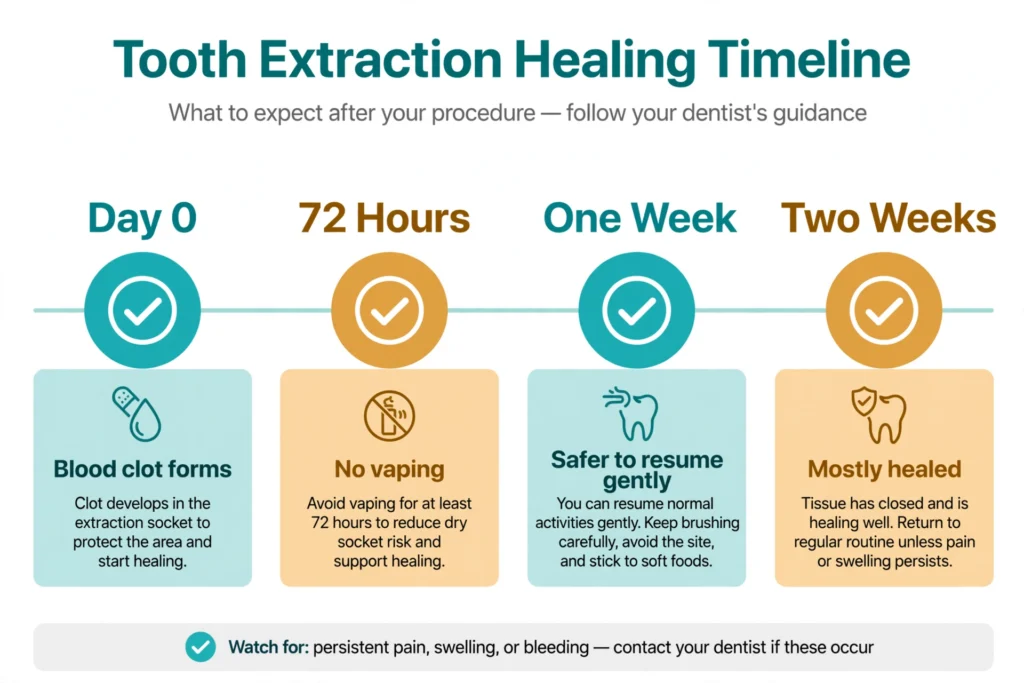
No. Wait at least 72 hours, and a full week is better. This is the one answer on this page where there is no nuance worth debating, because the mechanism is brutally simple.
When a tooth comes out, a blood clot forms in the socket. That clot is the foundation of your healing. Everything else, new tissue, new bone, a closed socket, builds on top of it. Vaping attacks that clot in two ways.
Suction. Drawing vapour through a device creates negative pressure in the mouth. That suction can pull the clot loose. Straws, spitting hard, and vigorous rinsing do the same thing, which is why dentists ban all of them in the first days.
Nicotine. Nicotine constricts blood vessels and reduces oxygen delivery to the healing tissue. Less oxygen means slower healing and higher infection risk, on top of the clot risk.
Lose the clot and you get dry socket, alveolar osteitis, one of the most painful dental complications there is. The bone and nerves in the socket are left exposed. Symptoms start 2 to 4 days after the extraction: severe, throbbing pain that does not respond well to normal painkillers, pain spreading to the ear, a bad taste or bad breath, and sometimes visible bone in the socket. Dry socket affects roughly 1 to 5 in 100 extractions, and the rate is higher for wisdom teeth.
What to do instead. If nicotine cravings are strong during the healing window, use a product that bypasses the mouth entirely. Nicotine patches deliver nicotine through the skin with no suction and no mouth involvement. Nicotine gum is an option too, but chew gently on the opposite side and do not create strong suction. Ask your dentist which they prefer for your case. The rest of aftercare matters too: rinse gently with warm salt water after the first 24 hours, stick to cool soft foods for a few days, avoid straws for a week, and sleep with your head raised on the first night to reduce bleeding and swelling.
When you do resume. Wait the full 72 hours at minimum, longer if the extraction was surgical or a wisdom tooth. When you start again, take gentle draws with minimal force, avoid a tight seal around the device, and stop immediately if the site throbs. Our how to vape guide covers gentle draw technique in detail.
Warning signs to call about. Severe throbbing pain starting a few days after extraction, pain spreading to your ear, persistent bad taste or breath, or a socket that looks empty. Do not try to treat dry socket yourself. Your dentist can dress the socket and get the pain under control quickly.
The one rule behind all four answers
Four different questions, one shared lesson: the person who knows your situation beats the internet. Your dentist knows your mouth. Your imam knows your school of thought. Your own dentist, not a blog, knows your extraction. The answers above are the honest general position on each question. But the moment your situation has a wrinkle, a medical condition, a surgical extraction, a specific religious ruling, that is when the professional in front of you matters more than any article.
That applies beyond these four questions too. Our can you vape when pregnant guide makes the same point for pregnancy. And our UK vaping age rules guide covers the legal side, where there is no ask your professional escape hatch: the law is the law.
Awkward vaping questions FAQ
Can a dentist tell if you vape 0mg?
The nicotine-specific signs, like gum changes from restricted blood flow, are weaker with 0mg, but the dry mouth, plaque buildup and tissue irritation from PG and VG are still there. A dentist may still suspect vaping, and should still be told.
Can a dentist tell your parents that you vape?
Dentists keep patient records confidential. For adults, what you tell your dentist stays with your dentist. For under-18s, a dentist may involve a parent or guardian in treatment decisions. If you are under 18, remember that buying vapes is illegal for you in the UK in the first place.
Does vaping break the fast if you only take one puff?
Yes, if it is intentional. The amount does not matter. An accidental puff, truly by mistake and stopped immediately, is generally held not to break the fast.
Does a 0mg vape break the fast?
Yes, under the prevalent view. The fast is broken by intentionally inhaling vapour into the body, not by the nicotine in it. A nicotine-free vape still delivers vapour, flavouring and other substances, so it is treated the same as a nicotine vape for fasting purposes.
Can you use nicotine patches while fasting in Ramadan?
Opinions differ. Patches deliver nicotine through the skin with nothing entering through the mouth, and some scholars treat them as not breaking the fast. Others disagree. Ask your imam before Ramadan rather than guessing mid-fast.
Do vapes have sugar in them?
No. The sweetness comes from flavour molecules and sweeteners such as sucralose or ethyl maltol, not sugar. Vaping does not deliver sugar calories.
Can you vape after wisdom tooth removal specifically?
Same rule, more reason to follow it: wait at least 72 hours, ideally a full week. Wisdom teeth leave larger sockets and carry a higher dry socket risk than ordinary extractions.
Will vaping stain your teeth like smoking?
Less, but not never. Smoking stains heavily from tar and combustion. Vaping has no tar, but nicotine and some flavoured liquids can still cause light yellow or brownish discolouration over time, especially along the gum line.
Can your dentist tell if you vape cannabis?
A dentist sees mouth signs, not substances. Cannabis vaping can leave similar signs to nicotine vaping, plus its own smell and dry-mouth effects. A dentist cannot identify what you vaped from an exam alone, but they can see that something is affecting your mouth, and they will ask.
Verdict: ask the question, then ask the professional
Can dentists tell if you vape? Yes, they can usually see the signs, and you should tell them anyway, because they are on your side and they keep it confidential. Can Muslims vape? Scholars differ, vaping breaks the Ramadan fast, and your imam is the authority for your situation. How many calories in a vape? About 4 to 5 per ml on paper, effectively zero your body can use. Can you vape after tooth extraction? No, not for 72 hours, and a week is better.
Four awkward questions, four honest answers. The only embarrassing move is not asking.
If you are rethinking vaping altogether after reading this, our best vape guide is the right place to start the next decision, whether that decision is quitting, switching, or simply vaping more carefully.