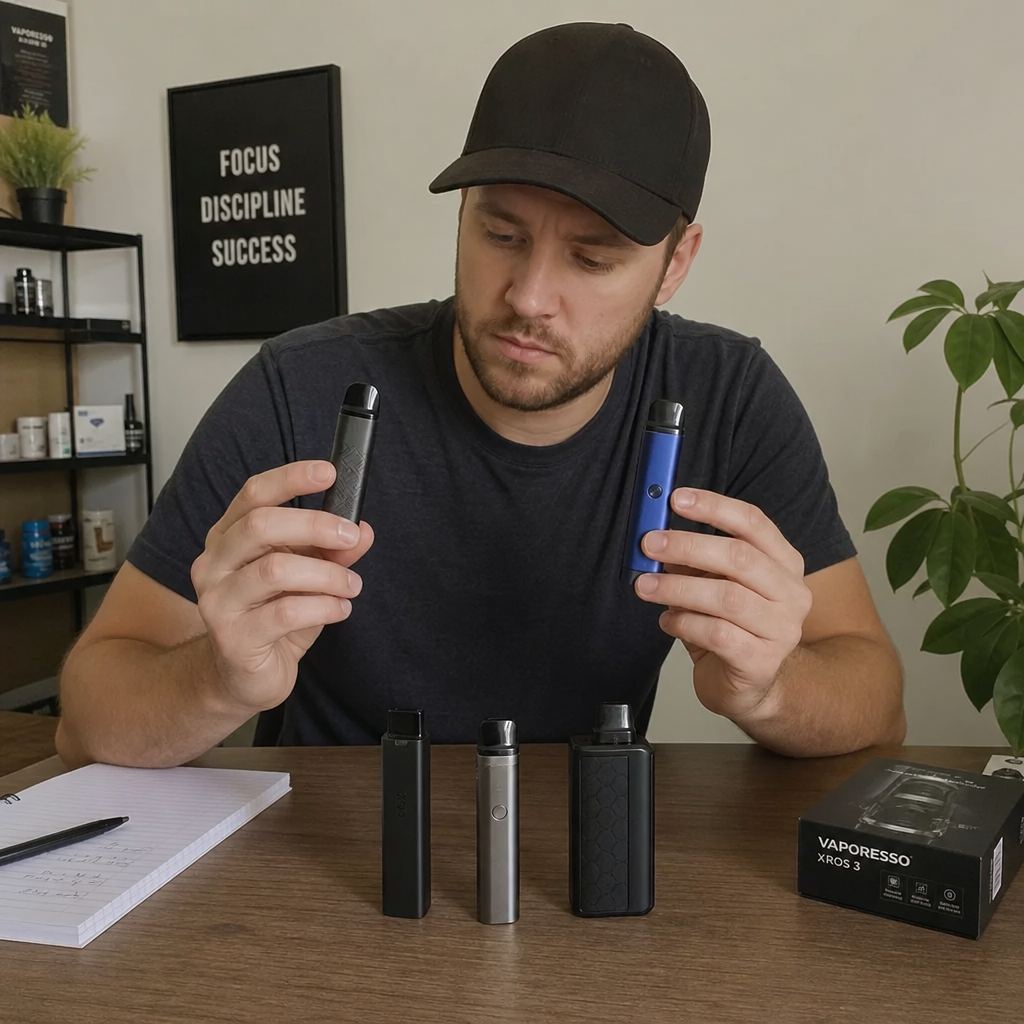

There is a vape ban sweeping America that almost nobody calls a ban. No governor signed a flavor prohibition. No legislature debated menthol. Instead, states built lists. If your vape is not on the list, selling it is a crime. A September 2026 peer-reviewed study by CDC Foundation researchers found that 16 states had already enacted these e-cigarette product directory laws as of June 2026, with start dates stretching from 2022 through 2027, and similar bills proposed in nearly every other state. Roughly 1.44 million middle and high school students vape in the US, and about two-thirds of them use disposables, so the stakes are high. But for adult vapers, the practical question is simpler: can you still buy the device you like where you live?
This guide walks through every state with a directory or registry law we could verify, explains what these laws actually do to store shelves, looks at what happened when researchers measured the results, and shows you how to check whether your product is legal in your state.
The whitelist trick: how a directory law actually works
Forget everything you know about flavor bans. A directory law does not name a single flavor, brand, or device. It works in three moves.
First, the state publishes an official list of vaping products that are legal to sell. Anything not on that list is illegal to sell, advertise, or distribute. Possession by an adult is generally not the target; the sale is.
Second, the gate for getting on the list is federal paperwork. A product qualifies only if it holds an FDA marketing order, or if it was on the market by August 8, 2016 with a premarket tobacco product application (PMTA) submitted by September 9, 2020, or if an appeal of a marketing denial is still pending. As of June 2026 the FDA had authorized only 45 e-cigarette products, mostly tobacco and menthol flavored, while more than 6,000 products are sold without authorization. That math is the whole game.
Third, enforcement lands on sellers. Alabama charges manufacturers a $2,000 initial certification fee plus $500 a year to renew, and Louisiana charges $100 per product per year, with both states imposing potential $1,000 daily fines for sales of unlisted products. Oklahoma took the opposite approach: a simple sworn statement, no fees, no penalties. The details vary wildly, which is why a state-by-state table matters.
Do these laws even work? The surprise in the data
Here is the part most coverage skips. The September 2026 study actually measured what happened to sales and product availability in the first three states to implement directory laws, using retail scanner data from 2021 through April 2025.
In Alabama, which published its directory in May 2022, there was no significant association with overall nicotine sales or product availability. Sales descriptively rose, disposables grew from about three-quarters to over 90 percent of sales, and by April 2025 unlisted products still accounted for 92.1 percent of per-capita e-cigarette nicotine sales.
In Oklahoma, which implemented its directory in October 2023, the researchers likewise found no significant overall effect. Unlisted products made up 53.6 percent of sales by April 2025.
Louisiana was the exception, briefly. After its November 2023 directory publication, per-capita sales fell hard, bottoming out in mid-2024 with product availability down more than half. Then sales rebounded within about eight months and ended up exceeding pre-directory levels, while availability stayed lower. The product mix also shifted: sales of nontobacco-flavored disposables collapsed 71.55 percent on average while menthol prefilled cartridges, driven largely by Vuse Alto, surged before disposables recovered.
Why do the laws leak? The study points to a structural problem: there is no public record of when individual products entered the market, and the FDA does not publish complete details on pending PMTAs, marketing denial orders, or appeals. States are forced to rely on manufacturers' own sworn statements. Enforcement is only as good as the paperwork it can verify.
The state-by-state directory: who has a law, what it restricts, when it bites
Directory laws are moving fast, and the roster keeps shifting as courts rule and new laws are signed. What follows is every state we could verify from published legal and industry reporting, with its current status. Before you buy, always confirm against your state's official directory, since enforcement dates and court orders change.
| State | Law | Status | What it restricts | Key dates and details |
|---|---|---|---|---|
| Alabama | Vapor products directory | Enforcing since May 2022 | Only directory-listed products may be sold; FDA marketing order or qualifying PMTA status required | $2,000 initial certification fee, $500 annual renewal; potential $1,000 daily fines |
| Oklahoma | E-cigarette registry | Enforcing since October 2023 | Products need an attestation of FDA authorization or timely PMTA filing | No fees or penalties imposed |
| Louisiana | Vapor products directory | Enforcing since November 2023 | Directory-listed products only | Suspended January to March 2024 during litigation; $100 per product per year; potential $1,000 daily fines |
| Florida | Nicotine Dispensing Device directory | Enforcing | Reverse model: the state lists prohibited products rather than approved ones | Refillable devices explicitly exempt; enforcement focused on disposables |
| Kentucky | Registry | Enforcing | Lists retailers selling authorized products | A repeal bill was filed in 2025 |
| North Carolina | Vapor Products Directory | Enforcing since 2025 | Directory-listed products only; roughly 7,000 products were removed from shelves at rollout | Under court challenge in the Fourth Circuit, with oral argument scheduled for January 2026; a repeal bill was filed in 2025 |
| Wisconsin | Electronic Vaping Device Directory | Enforcing | Only about 284 products on the approved list; heavy retailer fines | Directory upheld in court in April 2026 |
| Virginia | Directory | Enforcement blocked by federal court | Phase-in completed mid-2026 | A federal judge barred enforcement pending a Fourth Circuit ruling |
| Nebraska | Vape registry | Enforcing since January 1, 2026 | Only registered products may be sold or stocked by any retailer; manufacturers must register | Law passed April 2024; grace period ended December 31, 2025 |
| Pennsylvania | Act 57 of 2025, ENDS directory | Enforcement begins October 19, 2026 | Only directory-listed products legal; unlisted products subject to seizure | Graduated penalties; facing a federal court challenge; a separate 40% wholesale e-cigarette tax applies |
| Tennessee | Directory | Enforcement starts January 1, 2027 | Enacted in 2025 | Details of the directory still being finalized |
| South Carolina | Directory | Joined in 2026 | Manufacturers must establish federal eligibility before products can be sold | One of the newest additions to the registry movement |
| West Virginia | Vape Safety Act | September 1, 2026 | Products not on the state directory cannot be sold | Civil penalties for sellers; adds licensing and operating requirements for vape and smoke shops |
| Arkansas | Directory | Enacted in 2025 | Part of the 2025 wave of new directory laws | Implementation timeline still developing |
| Hawaii | Directory | Enacted in 2026 | Strictest gate in the country: manufacturers must certify they hold an FDA marketing order | Pending PMTA status alone is not enough |
| Iowa | Directory | Enacted in 2024; implementation blocked | Sales restricted to listed products in principle | Court challenge has kept enforcement on hold |
| Utah | Directory | Enacted in 2024; implementation blocked | Overlaps with the state's flavor restrictions | Court has not ruled; amendments to the law were introduced in 2025 |
A few patterns stand out. First, the early adopters went first and learned the hard way: Alabama, Oklahoma, and Louisiana are the only states with years of enforcement data, and the data says shelves mostly adapted rather than emptied. Second, the 2025 and 2026 wave (Tennessee, South Carolina, West Virginia, Arkansas, Hawaii) shows the idea is accelerating even as courts push back. Third, litigation is the shadow over the whole map: North Carolina, Virginia, Iowa, and Utah are all fighting their laws in court, and in September 2026 a group of 28 state attorneys general led by Iowa filed a brief defending North Carolina's law, saying 15 states have enacted similar statutes and 25 more are considering them. Expect the map to keep changing.
Pennsylvania: the enforcement date everyone is watching
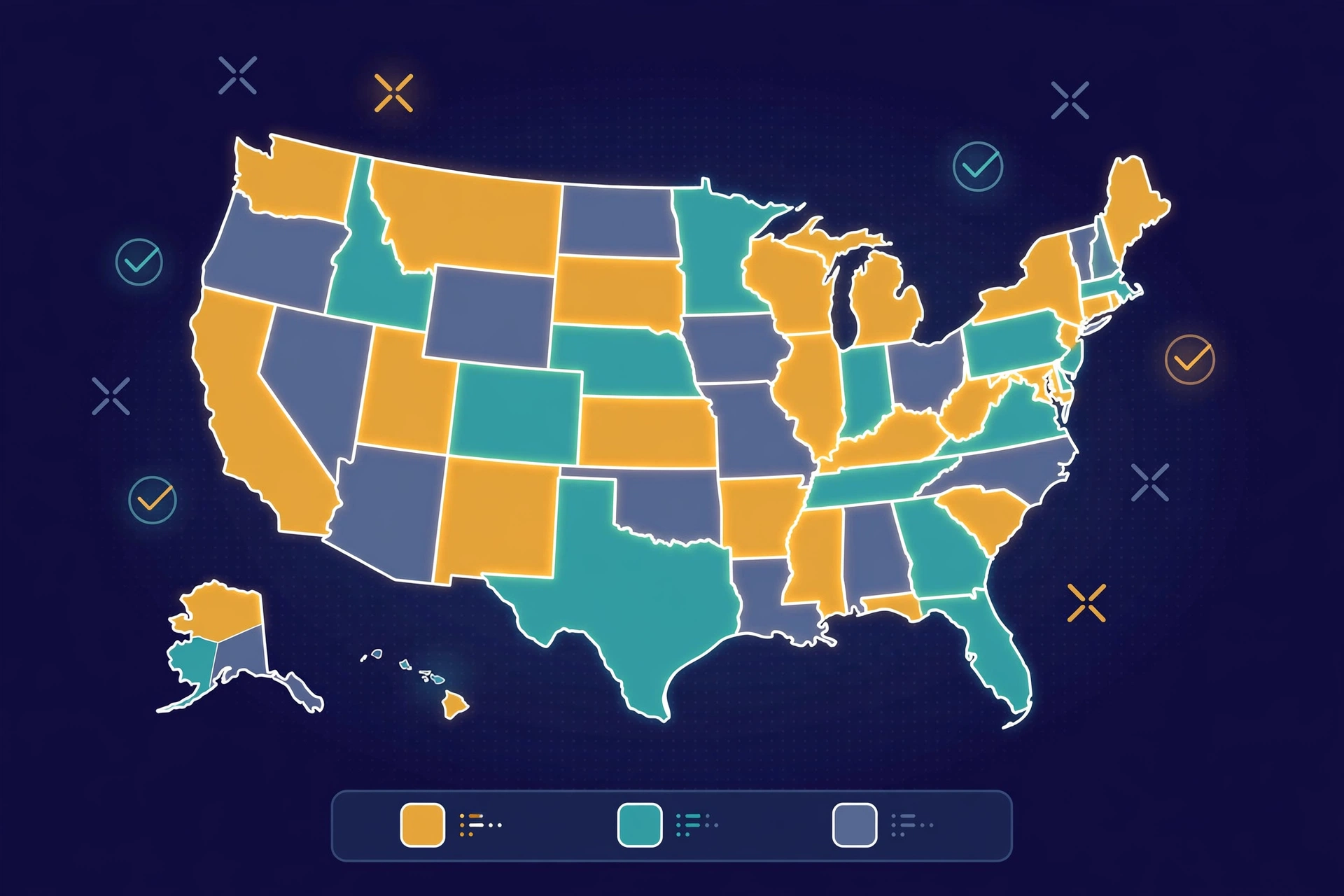
Pennsylvania deserves its own section because it is the biggest test coming up. Act 57 of 2025 created the state's Electronic Nicotine Delivery System (ENDS) directory, and enforcement begins October 19, 2026. From that date, retailers may sell only products on the directory, unlisted products become subject to state seizure, and sellers face graduated penalties. The law is already facing a federal court challenge from retail and distribution operators, and the state separately keeps a 40 percent wholesale tax on e-cigarettes. If you live in Pennsylvania, the weeks around mid-October are when your local shop's shelves will change. For the full breakdown of what the law covers and the timeline, see our coverage of the Pennsylvania enforcement rules.
So what can you actually buy in a directory state?
This is the question the table raises. Here is the honest answer.
What stays legal: products with FDA marketing authorization. That is a short list, dominated by tobacco and menthol flavored pod systems and a handful of disposables, and you can compare it against our rundown of FDA authorized vapes before you shop. In Louisiana's data, menthol prefilled cartridges actually surged after the directory took effect, which shows how fast the market reroutes around a whitelist.
What disappears: the popular flavored disposables most vapers actually buy. Brands like Elf Bar, Lost Mary, Geek Bar, and RAZ generally lack FDA authorization, so they cannot make these lists. That is why shelves in directory states look so different from shelves across the state line, even when no flavor ban was ever passed.
What is murky: refillables, open-system devices, and e-liquids. Florida explicitly exempts refillable devices. Other states define their covered products differently; Alabama's law originally covered only tobacco-derived nicotine, while Louisiana's applies to all e-cigarettes. If you mix your own or use a refillable, check your state's exact product definitions, not just the directory headline.
Two states worth contrasting. Texas took a completely different path: its 2025 law bans vapes based on where they are made, prohibiting China-manufactured disposables regardless of flavor, so legality there turns on country of origin rather than a list. Read our explainer on the Texas vape law for the details. California went further still, passing a law that phases in a full ban on disposable nicotine vapes starting in 2027. Directories, origin rules, and outright bans are three different machines producing a similar outcome for shoppers: fewer flavored disposables.
How to check whether your vape is legal in your state
If you live in one of the states above, do this before your next purchase.
- Find the official directory. It usually lives on your state revenue department, attorney general, or tobacco control website. Search "[your state] vapor product directory" and use the .gov result, not a shop's blog.
- Search the exact product. Directories are SKU-level lists. The same brand in a different flavor, size, or nicotine strength may or may not be listed, so match your exact variant.
- Read the listing date and status. Some directories show pending, certified, and removed products separately. A product certified last year may have been dropped.
- Understand what the law punishes. These laws target sales and distribution, not possession. If a shop sells you an unlisted product, the shop is the one breaking the law, but you are still out the money when it gets seized.
- Do not assume online is a loophole. Online retailers are supposed to verify your destination state's laws before shipping, and shipping tobacco products into a jurisdiction where they are banned carries federal penalties under the PACT Act. Our guide to buying vapes online explains how that federal layer works.
A word of caution from the research: directories are only as reliable as the attestations behind them. The study found states struggle to verify manufacturers' claims independently because the FDA does not publish pending applications or denial appeals. Treat the directory as the legal truth for what can be sold, not as proof a product is safe or federally authorized.
If you own or work in a shop
Certification is the manufacturer's job, not yours, but the liability for stocking unlisted products is yours. Keep invoices and distributor certifications for everything on your shelves, check the directory monthly (products get added and removed), and know your state's penalty schedule before an inspector does. In states with per-day fines, a single noncompliant SKU left on the shelf compounds fast.
Quick answers
Is it illegal to own a vape that is not on the directory? Directory laws restrict sales, not possession. Owning one is generally not the crime; selling it is.
Why did my favorite flavor vanish from shelves? Its manufacturer likely never secured FDA authorization or a qualifying PMTA, so it cannot get listed. This hits flavored disposables hardest.
Will my state get one of these laws? Possibly soon. Twenty-eight state attorneys general recently told a federal court that 15 states have enacted similar laws and 25 more are considering them, and nearly every state has seen a directory bill introduced. Check your legislature's current session.
Are directories the same as flavor bans? No, but the shelf looks similar. A flavor ban names flavors; a directory names products. In practice both remove most flavored disposables, which is why directories are sometimes called the hidden ban.
The directory era is still young. The first states to try it learned that lists alone do not reliably shrink sales, that courts will test every statute, and that the market reroutes around whitelists within months. What is certain is the direction of travel: more states, stricter gates, and fewer products on the legal shelf. Bookmark your state's directory. You will be checking it more than you think.