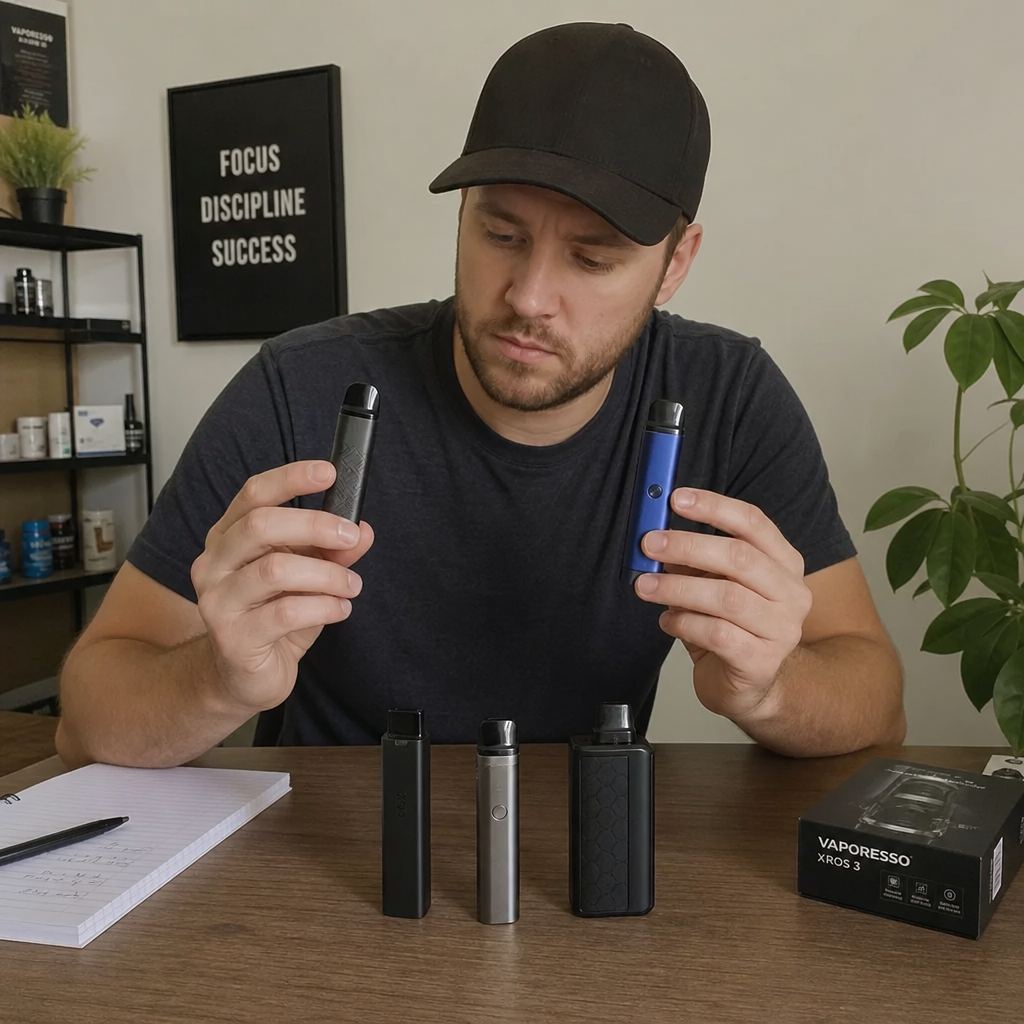

Picture two smokers standing outside the same office. One slides a slim white stick into a pocket-sized device, presses a button, and gets six minutes that taste like a cigarette. The other takes a pull from a small metal pod that tastes like blue raspberry. Neither of them is smoking. They are using two completely different machines, and most people mix them up.
That mix-up is the whole problem. IQOS is constantly called a vape, and it is not one. This guide settles it: how heated tobacco actually works, how vaping actually works, what each one costs in the UK and the US, how the rules treat them, and which one suits which smoker.
The 30-second version
Heated tobacco warms real tobacco without burning it. Vaping turns a flavored liquid into vapor without any tobacco at all. IQOS tastes much closer to a cigarette. Vaping is cheaper to run, comes in hundreds of flavors, and lets you step nicotine down to zero. Neither is risk-free, and both are meant only for adult smokers, never for non-smokers or teens. Short answer: pick heated tobacco if the tobacco taste is the thing you cannot give up, pick vaping if you want the cheaper habit with the most control.
Two machines, two different kinds of physics
The confusion starts at the hardware. Both devices are battery powered and both produce an inhalable aerosol, but what happens inside them could not be more different.
IQOS: a tiny oven for tobacco
A heated tobacco device is built around one idea: tobacco only becomes truly nasty when it burns. So the device heats the tobacco to around 350 degrees Celsius, well below combustion, and releases nicotine and flavor as a vapor without smoke, ash, or a lit tip.
The tobacco comes in short sticks that look like small cigarettes. You push one into the device, wait for it to heat, and draw on it for about 14 puffs or roughly six minutes, which is deliberately close to the rhythm of a cigarette. When the session ends you pull out the used stick and throw it away.
Two generations of the hardware matter here. Older IQOS devices use a thin heating blade that slides into the tobacco. The current ILUMA range heats from within using induction, with a metal element built into the stick itself. The practical difference: blade models need the blade cleaned now and then, while ILUMA needs none. Both need the holder recharged in a pocket charger between sessions.
A vape: a tiny kettle for liquid
An e-cigarette skips tobacco entirely. Inside every vape sits a coil, a small heating element that warms a liquid made of propylene glycol, vegetable glycerin, food-grade flavorings, and usually nicotine. The liquid turns into vapor, you inhale it, done. No stick to insert, no ash, no six-minute timer. You take a puff whenever you like and put the device down.
That liquid is the whole product. It comes in bottles for refillable kits, prefilled pods that click into a device, or sealed inside disposables. If you are starting from zero, our how to vape walkthrough covers the basics first.
The real difference: what goes in
This is the line that separates the two categories forever. A heated tobacco stick contains real tobacco leaf, processed and compressed. An e-liquid contains no tobacco at any point in its life. Everything else flows from that one fact.
Because heated tobacco starts with tobacco, nicotine is always present. There is no zero-nicotine version of a tobacco stick, since the nicotine comes from the leaf itself. Vaping is the opposite. You choose your nicotine strength at the shop, from zero all the way up to the legal limit in your market, and many vapers step it down over time.
IQOS delivers an actual tobacco note because the flavor comes from the leaf, while even the best tobacco-flavored e-liquid is an approximation built from flavorings. Smokers who find that approximation unconvincing are exactly the people heated tobacco was built for.
The head-to-head table
| Heated tobacco (IQOS) | Vaping (e-cigarettes) | |
|---|---|---|
| What you consume | Tobacco sticks | E-liquid, pods, or disposables |
| What gets heated | Real processed tobacco | PG/VG liquid with flavorings |
| Heating method | Warming to around 350 C, no burning | Coil vaporizes liquid, no burning |
| Contains tobacco? | Yes, always | No, never |
| Nicotine options | Fixed, set by the tobacco | Your choice, zero up to the legal limit |
| Flavor range | Tobacco, menthol, a few aromatic blends | Hundreds, from fruit to dessert |
| Closeness to a cigarette | Very close | Noticeably different |
| UK daily cost (estimate) | Close to cheap cigarettes | A fraction of that with refillables |
| Upfront device cost | Higher | Lower for basic pod kits |
| Daily maintenance | Dispose of sticks, occasional cleaning on blade models | Refills, pod or coil changes, charging |
| Smell | Light tobacco note | Varies with flavor, fades fast |
| Session style | One stick, about 14 puffs, six minutes | Puff whenever you like |
| Evidence base | Growing, shorter track record | Studied for far longer, especially in the UK |
Cost figures are clearly-labelled estimates, since prices move by retailer and market. The direction of the comparison holds regardless: heated tobacco runs near cigarette money per day, vaping with refillables runs far below it.
Nicotine and the throat-hit question
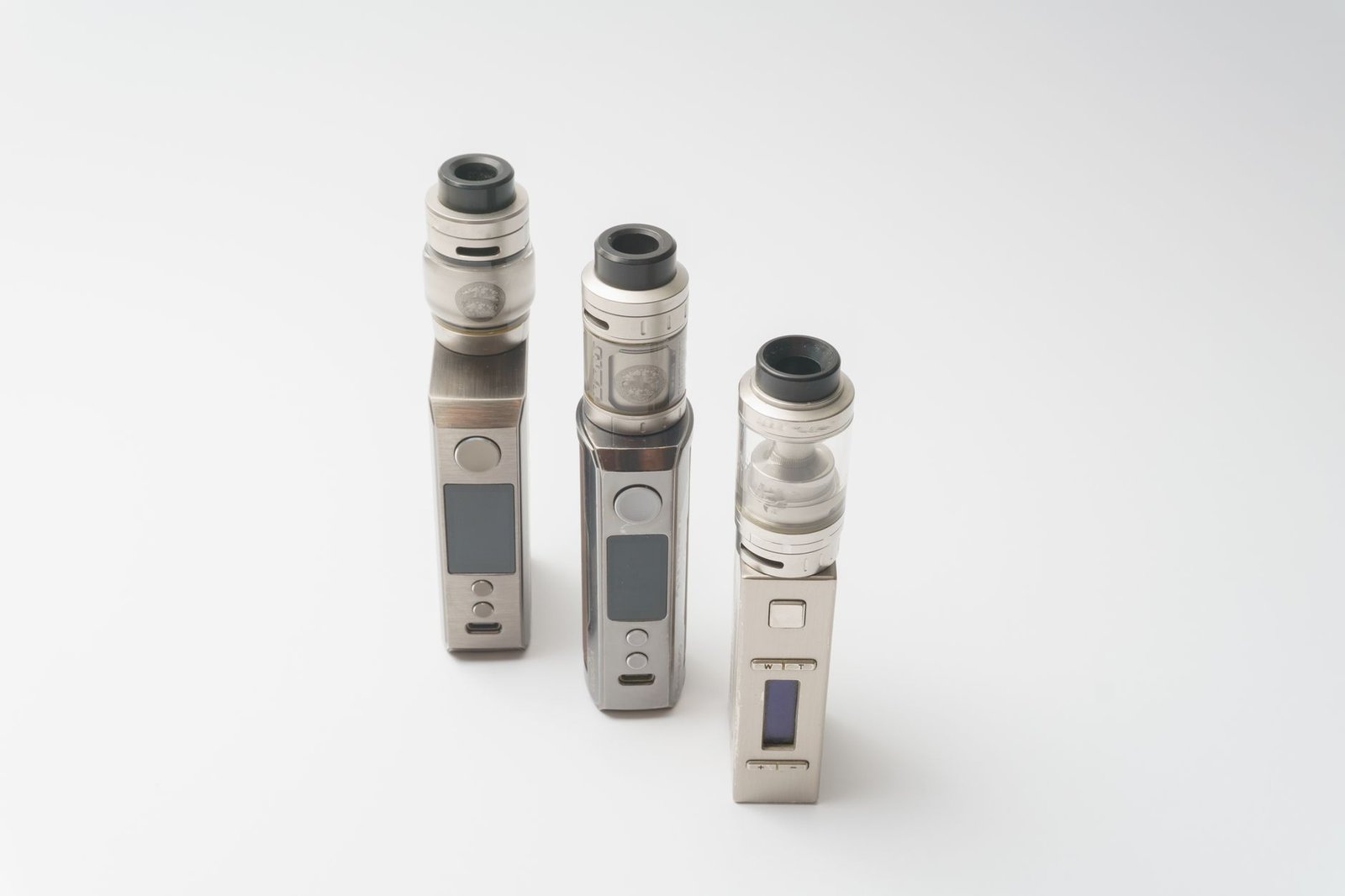
Nicotine delivery is where the two feel most different in the hand. A heated tobacco stick hits the way a cigarette does: a warm, familiar draw with the throat sensation smokers know. For long-term smokers that familiarity is often the entire point, because it removes the feeling of switching to something alien.
Vaping offers a different kind of satisfaction. Nicotine salt liquids deliver nicotine quickly and smoothly, which is why they became the default for smokers switching to pod kits. Freebase nicotine in bigger devices gives a stronger throat hit at the cost of some smoothness. The big advantage is adjustability. You can start at a strength that matches your smoking and taper down over months, something a tobacco stick cannot offer. Our nic salt guide breaks down which type suits which smoker.
One caveat: that freedom cuts both ways. High-strength disposables make it easy to take in more nicotine than cigarettes ever delivered, while a stick’s fixed format puts a natural ceiling on each session.
The flavor menu is not even close
This round goes to vaping and it is not close. E-liquid comes in hundreds of flavors across every fruit, dessert, mint, and drink profile you can name, and new ones arrive constantly. If taste variety is what keeps you off cigarettes, vaping is the richest menu in the nicotine world.
Heated tobacco keeps it deliberately narrow: tobacco blends, menthols, and a small set of aromatic variants. That is the point. The product is selling familiarity, not exploration. To see how the two main vape formats differ, read our pod kits compared breakdown.
What it costs: UK and US
Money decides more purchases than any spec sheet, so here is the honest picture. Prices below are clearly-labelled estimates and vary by retailer, brand, and promotions.
In the UK, a pack of 20 heated tobacco sticks typically runs roughly 5 to 7 pounds. That puts a pack-a-day heated tobacco habit uncomfortably close to what cheap cigarettes cost, which is the product’s biggest weakness as a money saver. Compare that with vaping: a 10 ml bottle of nic salt at around 4 to 5 pounds usually lasts a typical vaper several days, and a basic refillable pod kit costs less upfront than a heated tobacco device. Over a month, a refillable vape setup commonly costs a fraction of the equivalent heated tobacco habit.
In the US the picture is mostly about availability. Heated tobacco has far less shelf space in America than in the UK, Europe, or Japan, and the stick range is narrower.
Upfront, expect the heated tobacco device to be the pricier purchase. A heated tobacco kit generally costs meaningfully more than a starter pod kit, which is part of why vaping wins on value for most budgets.
The daily ritual: charging, cleaning, refilling
Living with a device is different from buying it, so consider the routine.
With IQOS, the ritual is: charge the pocket charger, slide a stick in, wait for the heat-up, enjoy six minutes, remove and bin the stick. ILUMA owners get the easy version, since the bladeless design means nothing to clean. Older blade models need the blade and chamber cleaned periodically, and broken blades were the classic complaint about the early generations. The stick waste is the ongoing chore: every session leaves a small used stick behind.
With a vape, the ritual depends on the format. A pod kit asks you to charge it, top up or swap the pod, and replace the pod every week or two. A tank-and-mod setup adds coil changes. Disposables ask nothing at all until you buy the next one. The maintenance that catches people out is battery care, and our battery safety guide covers charging and storage for every device type.
Vaping feels more like using a gadget.
Smell, people around you, and indoor rules
Socially, the two behave differently. Heated tobacco produces a light but unmistakable tobacco note. It is far milder than cigarette smoke and fades quickly, but nobody will mistake it for fresh air. Vape vapor carries the scent of the flavor in use, often sweet, and dissipates within seconds.
On indoor use, assume the strictest reading wins. Most workplaces, pubs, restaurants, and transport systems treat both heated tobacco and vaping the same way they treat smoking: not allowed. The exact legal status varies by country and even by venue, and vaping rules and tobacco rules are written separately, so check before you assume either is fine. On flights, carry devices in hand luggage, never in checked bags, and never use either on board. Some destinations restrict or ban heated tobacco devices outright, so check the rules of the country you are flying to as well as the airline.
The law: where each one stands
This is where the two categories genuinely diverge, and the details matter.
In the US, IQOS holds a rare distinction. The FDA renewed modified-risk orders for the IQOS 2.4 and 3.0 systems and three HeatStick variants in April 2026, letting them be marketed with a reduced-exposure claim. That is an exposure modification order, not a finding that the products are safe, and the FDA is explicit that they are not risk-free. Vaping in the US sits in a stranger position: e-cigarettes need premarket authorization to be sold legally, only a small list of products have it, and much of what fills vape shops exists in a grey zone. Only products on the FDA authorized list can be marketed legally in the US.
In the UK, heated tobacco sticks are regulated as tobacco products, which means tobacco excise duty applies to every stick and the same age restrictions as cigarettes. Vapes fall under separate rules: tanks capped at 2 ml, nicotine strength capped at 20 mg/ml, every product notified to the medicines regulator, and a new duty of 2.20 pounds per 10 ml on vaping liquid. The UK’s public health establishment backs vaping as a stop-smoking tool far more explicitly than it backs heated tobacco, which has no equivalent endorsement.
The takeaway: heated tobacco currently carries the stronger US regulatory position through its FDA orders, while vaping carries the stronger UK public-health position. Neither is endorsed as safe by any authority.
Who should pick which
Be honest about which smoker you are.
Heated tobacco suits you if you have tried vaping and bounced off it, the tobacco taste is the thing you miss most, you want a session that starts and ends like a cigarette, and you can stomach near-cigarette running costs.
Vaping suits you if you want the cheapest long-term option, you like the idea of choosing flavors, you want to step your nicotine strength down over time, or you simply do not want tobacco anywhere in the equation.
Neither suits you if you do not already smoke or use nicotine. Both products are addictive, both cost money every week, and there is no reason to start either from a standing start. This is general information, not medical advice: if you want to quit nicotine entirely, talk to a doctor, pharmacist, or stop-smoking service.
The honest verdict
There is no universal winner here, and any article that crowns one is selling something. The two products answer different questions. Heated tobacco answers: how do I keep the cigarette experience with less smoke? Vaping answers: how do I get nicotine as cheaply and flexibly as possible?
On the criteria most smokers actually care about, the scorecard looks like this. Taste closest to cigarettes: heated tobacco. Cheapest to run: vaping. Most flavors: vaping. Most control over nicotine: vaping. Strongest US regulatory paperwork: heated tobacco. Strongest UK public-health backing: vaping.
For the average smoker, vaping wins on cost, choice, and control. But averages hide the smokers who tried vaping, hated the taste gap, and went back to cigarettes. For them, heated tobacco is not a worse vape. It is a different product, and it might be the one that sticks. For the full evidence-led argument on relative risk, see our cigarettes versus vaping comparison. Smokers weighing every nicotine route should also read our pouches vs vapes comparison.
Whichever you choose, the goal is the same: stop burning tobacco. Both of these do that. Everything else is preference.
Quick answers
Is IQOS a vape? No. IQOS heats real tobacco sticks. Vapes heat e-liquid with no tobacco in it. Different input, different device, different category.
Which is cheaper, IQOS or vaping? Vaping, by a clear margin. A pack of 20 heated tobacco sticks costs roughly what cheap cigarettes cost in the UK, while a bottle of e-liquid lasting several days costs a few pounds. Prices are estimates and vary by retailer.
Does heated tobacco contain nicotine? Yes, always. The nicotine comes naturally from the tobacco leaf, so there is no nicotine-free version. Vapes offer zero-nicotine liquids as standard.
Is heated tobacco safer than vaping? No authority says either is safe. Vaping has been studied for far longer and the evidence base is stronger, especially in the UK, but long-term data on heated tobacco is still being built. Neither is risk-free and both deliver addictive nicotine. This is general information, not medical advice.
Can you use heated tobacco or vapes indoors? Most indoor venues treat both like smoking: not permitted. Rules differ by place and country, so check the venue rather than assuming.
Is IQOS available in the US? Availability is far more limited in the US than in the UK, Europe, or Japan, though the FDA has authorized certain IQOS products for sale and renewed their reduced-exposure marketing orders in 2026.