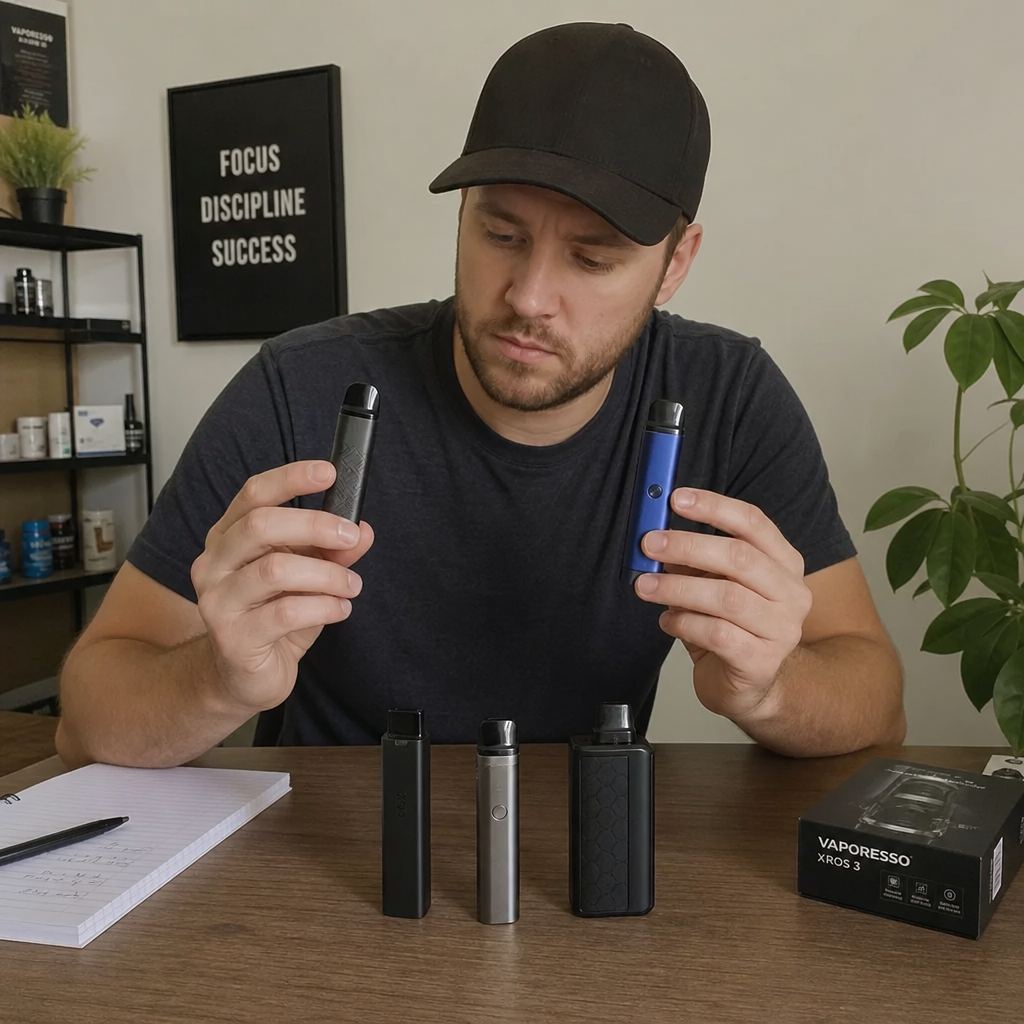

A new randomised trial has found that giving smokers an e-cigarette starter pack helped more of them quit than automated stop-smoking emails alone, even when no counselling was provided. The result separates the effect of the device itself from the effect of personal support, and it suggests that a simple starter pack can still make a real difference.
The trial was run by Queen Mary University of London and funded by the National Institute for Health and Care Research. It was published in NEJM Evidence and reported on October 27, 2026. Quitting was verified with carbon monoxide breath tests, not self-report alone.
What the trial tested
A total of 1,170 adults were randomly assigned to three groups: automated NHS stop-smoking emails, an e-cigarette starter pack alone, or an e-cigarette starter pack plus telephone counselling of five sessions over four weeks.
The results at six and twelve months
At six months, 11.3% of the e-cigarette-alone group had quit, compared with 6.4% of the automated-messages group. Smokers given a starter pack alone were therefore 76% more likely to quit than those who received automated messages only. The group that received a starter pack plus counselling did better still, reaching 21.1%.
The advantage held at twelve months. Sustained quit rates were 16.8% for e-cigarettes plus counselling, 9% for e-cigarettes alone, and 5.4% for automated messages.
| Group | Quit at six months | Quit at twelve months |
|---|---|---|
| Automated NHS stop-smoking emails | 6.4% | 5.4% |
| E-cigarette starter pack alone | 11.3% | 9% |
| E-cigarette starter pack plus counselling | 21.1% | 16.8% |
Why the messages group needs a closer look
More than two-thirds of successful quitters in the automated-messages arm were using e-cigarettes at six months, suggesting they obtained vaping products outside their allocated treatment. Excluding those who used treatments outside their group, the messages-arm quit rate fell to 2.7%.
What this means for smokers trying to quit
Most participants who quit with e-cigarettes were still vaping a year later. The researchers note that vaping is not completely risk-free but poses only a small fraction of the risks of smoking. See how vaping compared with smoking is assessed in more detail.
The findings support the UK Swap and Stop initiative, which provides free vaping starter packs to help smokers quit. The lead author was Dr Katie Myers Smith, Senior Lecturer in Health Psychology at Queen Mary, with senior author Professor Peter Hajek and collaborator Professor Hayden McRobbie.
This article is general information about a study, not medical advice. Readers trying to quit should speak to a stop-smoking service or clinician about the option that suits them best.
Source: Queen Mary University of London, October 27, 2026