Vape Pens are compact, battery-powered devices that heat a liquid or oil into an inhalable aerosol. This guide explains the parts, common formats, flavor choices, safety considerations, and shopping questions adults usually have before comparing options. It is written for practical understanding, not as medical or legal advice, and it treats vaping as an adult-only category that deserves careful decision-making.
What do vape pens look like?
Vape pens usually look like slim electronic devices, but their appearance can vary widely. Some resemble a simple pen or small metal tube, some look like a USB-style pod device, and others use a thicker battery with a detachable cartridge or tank. Public health agencies often group these products under names such as e-cigarettes, vapes, tank systems, mods, and electronic nicotine delivery systems, because the device shape changes while the basic idea stays similar.
Table of Contents
A typical pen-style device has a mouthpiece at one end, a chamber or cartridge in the middle, and a battery section at the other end. Disposable models may hide most of these parts inside a sealed shell. Refillable models usually make the components easier to see and replace.
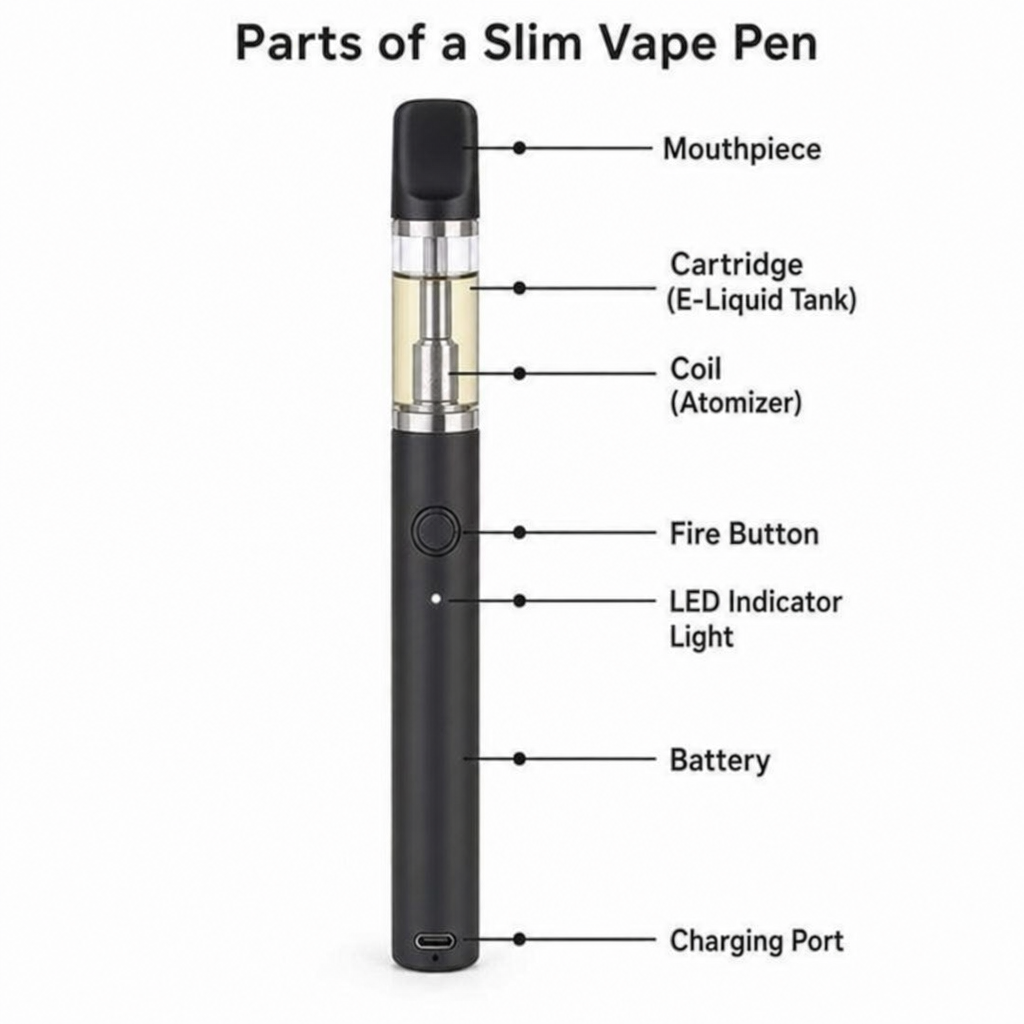
Color and finish also vary. Black, silver, and white devices are common, while pink vape pens and other bright designs appeal to adults who want something more personal or easy to spot in a bag. The outside style, however, tells you far less than the label, ingredients, battery quality, and source.
How vape pens work
A vape pen works by sending power from a battery to a heating element, often called a coil or atomizer. That heat turns e-liquid, distillate, or another compatible material into aerosol that the user inhales. Germany’s public health information describes e-cigarettes as devices with a vaporizer and a battery-operated heating element, which is the core mechanism behind most pen-style devices.
The process is simple from the outside, but small design differences matter. Some pens activate when you inhale. Others require a button press. Some allow voltage or temperature adjustments, while many disposables and beginner pens are fixed for convenience.
The main components are:
- Battery: Powers the heating element. Rechargeable pens usually use USB charging, while disposables are discarded when the liquid or battery is finished.
- Cartridge, pod, or tank: Holds the liquid or oil. Cartridges are often prefilled, pods may be brand-specific, and tanks are often refillable.
- Coil or atomizer: Heats the material. A worn coil can create harsh flavor, weak vapor, or a burnt taste.
- Mouthpiece: The part used for inhalation. It should be kept clean and protected from lint or debris.
- Airflow path: Controls draw resistance. A tighter draw may feel cigarette-like, while a more open draw can feel airier.
Good performance is not only about vapor size. A well-matched device heats evenly, fits the material it is designed for, and gives clear labeling so the user knows what is being consumed.
Main types of vape pens
Not all vape pens are designed for the same material. Understanding the category helps you avoid buying the wrong device or using a cartridge with an incompatible battery.
Disposable vape pens
Disposable pens are sealed, prefilled, and designed for short-term use. They are popular because there is little setup: no refilling, no coil changes, and usually no separate cartridge purchase. The tradeoff is less control, more waste, and limited ability to inspect or replace internal parts.
For adults who prioritize simplicity, disposables can feel convenient. Still, the source and labeling matter. A low-quality disposable may have poor battery reliability, unclear ingredients, or inconsistent heating. For a closer look at where to actually source one responsibly, see our guide on where to buy disposable vapes.
Cartridge-based vape pens
Cartridge pens use a rechargeable battery with a removable cartridge. Many cannabis and hemp-style oil pens use this format, including products people may search for under terms such as muha vape pens, rythm vape pens, mood vape pens, or best delta 9 vape pens. These brand-related searches should be treated as starting points for research, not automatic proof that a product is suitable, authentic, legal, or safe.
A common benefit is flexibility. If the battery still works, the cartridge can be replaced. A common risk is compatibility: thread type, voltage range, and oil thickness can affect performance.
Refillable e-liquid pens
Refillable pens use bottled e-liquid and a refillable pod or tank. They may appeal to experienced adult users who want more control over flavor, nicotine strength, and replacement parts. In Germany, official health information notes that e-liquids may contain a maximum of 20 milligrams of nicotine per milliliter, and e-cigarette purchasing and use are restricted to adults 18 and older.
Refillable devices require more care. Users need to fill correctly, avoid over-tightening parts, replace coils when needed, and store liquid safely away from children and pets.
Vape pen flavors and what they change
Vape pen flavors can range from tobacco and mint to fruit, dessert, herbal, and beverage-inspired profiles. Flavor affects the experience, but it should not be the only factor in choosing a device. Ingredients, nicotine or cannabinoid content, device quality, and legal availability matter more than taste alone.
Flavored products can also make vaping feel more approachable, which is one reason adult-only access is important. Nicotine products are not harmless, and CDC information emphasizes that e-cigarette aerosol generally contains fewer harmful chemicals than cigarette smoke but is not safe.
When comparing flavors, adults should look for:
- Clear labeling: The package should identify the product type, strength, and basic contents.
- Consistent source: Buy only from legitimate, regulated channels where age checks and product information are provided.
- Material compatibility: Thick oils, nicotine salts, and freebase e-liquids may require different devices.
- Moderate expectations: A flavor may sound appealing but still feel too sweet, too strong, or too harsh.
- Storage instructions: Heat, sunlight, and loose caps can affect quality.
A practical approach is to start with simple profiles and avoid mixing too many variables at once. If the device, strength, and flavor all change together, it becomes harder to know what caused a harsh draw or unpleasant experience.
How should adults compare the best vape pens?
The best vape pens are the ones that match the user’s intended material, budget, maintenance comfort, and local rules while coming from a trustworthy source. There is no universal “best” device, because a simple disposable, a refillable nicotine pen, and a cartridge battery serve different needs. A better question is whether the device is appropriate, clearly labeled, legal for the buyer, and easy to use responsibly.
Use this checklist before buying:
- Purpose: Decide whether you are comparing nicotine e-liquid devices, non-nicotine devices, CBD-style products, or THC-related cartridges. Do not treat these as interchangeable.
- Legality: Check current rules where you live or travel. Laws vary by country and region, especially for THC and delta-9 products.
- Age restriction: Confirm adult-only compliance. In Germany, e-cigarettes are restricted to people aged 18 and over.
- Authenticity: Be cautious with trendy brand searches. Counterfeit or informal-market products can be especially risky our guide on can you buy vapes on Amazon covers why marketplace listings specifically carry this risk and how to avoid it.
- Battery safety: Choose devices with proper charging instructions and avoid damaged batteries.
- Label clarity: Look for strength, ingredients, warnings, batch or product details, and manufacturer information where applicable.
- Ease of maintenance: If you do not want to refill or replace coils, a refillable device may frustrate you.
- Draw style: Some devices are tight and cigarette-like; others are looser and produce more vapor.
- Replacement availability: A cartridge system is only convenient if compatible cartridges are reliably available.
Search phrases such as “best vape pens 2026 in germany” can be useful for finding current discussions, but they should not replace a legal and safety check. For Germany specifically, nicotine e-cigarette rules, cannabis rules, and cross-border online sales rules are not the same thing.
Nicotine, THC, delta-9, and CBD are different categories
One of the most common mistakes is using “vape pen” as if it describes the substance inside. It only describes the device format. The contents may be nicotine e-liquid, non-nicotine flavored liquid, CBD liquid or oil, or a THC-related extract depending on the product and local market.
Nicotine vape pens are typically discussed as e-cigarettes. They may be used by some adults as an alternative to smoking, but they still involve nicotine exposure when nicotine is present. CDC guidance states that nicotine can be harmful to developing brains and that e-cigarette use is not safe during pregnancy.
THC and delta-9 products sit in a separate legal and safety category. In Germany, the Cannabis Act created rules for adult possession, cultivation, and non-commercial cultivation associations, and the federal health ministry notes limits and restrictions for adults and young adults.That does not mean every delta-9 cartridge, online listing, or imported product is legal to buy or possess. If you are looking at best delta 9 vape pens, verify the product category and local law before considering anything else.
CBD products can also be confusing because rules often depend on THC content, product type, claims, and local regulations. Avoid assuming that “hemp,” “CBD,” or “natural” automatically means risk-free or legal everywhere.
Safety and responsible use basics
No vape pen is completely risk-free. The most practical safety mindset is to reduce uncertainty: know what the product is, where it came from, how it should be used, and when not to use it. CDC and FDA recommendations have specifically warned against THC-containing vaping products from informal sources such as friends, family, online dealers, or in-person dealers, especially in the context of lung injury concerns.
Basic precautions include:
- Buy from legitimate channels that provide age verification and product information.
- Avoid products with missing labels, damaged seals, or unclear strength.
- Do not modify cartridges, dilute liquids, or add unapproved substances.
- Stop using a device if it tastes burnt, leaks heavily, overheats, or causes unusual symptoms.
- Keep vape pens, cartridges, and liquids away from children and pets.
- Follow charging instructions and avoid leaving batteries charging unattended.
- Do not use nicotine or vaping products during pregnancy.
- Do not drive or operate machinery after using impairing substances such as THC.
Battery handling deserves extra attention. A vape pen is a small electronic device, and poor charging habits can damage it. Use the recommended charger, keep metal objects away from exposed battery contacts, and replace damaged devices rather than trying to force them to work.
Common beginner mistakes
Many problems come from mismatch rather than device failure. A cartridge may be too thick for a low-power battery. A high-strength liquid may feel harsh in a device that produces more aerosol. A user may mistake a disposable’s blinking light for a defect when it simply means the battery or liquid is finished.
Beginners also tend to over-focus on appearance. Pink vape pens, metallic finishes, and sleek shapes can be attractive, but design should come after source, labeling, compatibility, and intended use. A plain device from a reliable channel is a better choice than a stylish device with vague contents.
Another mistake is chasing brand names without checking authenticity. Searches for muha vape pens, rythm vape pens, and mood vape pens may lead to a mix of official pages, retailers, reviews, and unrelated sellers. Treat packaging, QR codes, lab claims, and online listings with healthy skepticism, especially for cannabinoid products.
A practical buying framework
If you are an adult comparing options, slow the process down. A vape pen is easier to choose when you separate needs from marketing.
Start with these steps:
- Define the material. Are you looking at nicotine e-liquid, non-nicotine liquid, CBD, or a THC-related product? If it’s specifically non-nicotine you’re after, our guide on where to buy nicotine-free vape covers how to verify that claim before buying.
- Check the law. Confirm age rules, possession rules, shipping rules, and travel restrictions in your location.
- Choose the format. Disposable for simplicity, cartridge-based for easy replacement, or refillable for more control.
- Review the label. Look for strength, ingredients, warnings, manufacturer details, and usage instructions.
- Match the device to the material. Do not use a cartridge or liquid in a device that was not designed for it.
- Plan maintenance. Know how to charge it, store it, clean the mouthpiece, and replace parts if needed.
- Start cautiously. If using a legal adult product, begin with modest use and pay attention to how you feel.
This framework works better than ranking lists because it adapts to different markets. The “best” option in one country, store, or product category may be irrelevant somewhere else.
Final takeaway
Vape pens are simple in concept but varied in practice. They combine a battery, heating element, mouthpiece, and liquid or oil container, yet the experience changes depending on the material, strength, flavor, device design, and legal setting. If you are comparing Vape Pens, focus less on hype and more on clear labeling, adult-only compliance, product compatibility, and responsible use.
For adults researching vape pen flavors, pink vape pens, brand-specific searches, or the best vape pens for a particular market, the safest path is informed caution. Understand what the device contains, confirm whether it is legal where you are, avoid informal sources, and choose products with transparent information over flashy promises.

