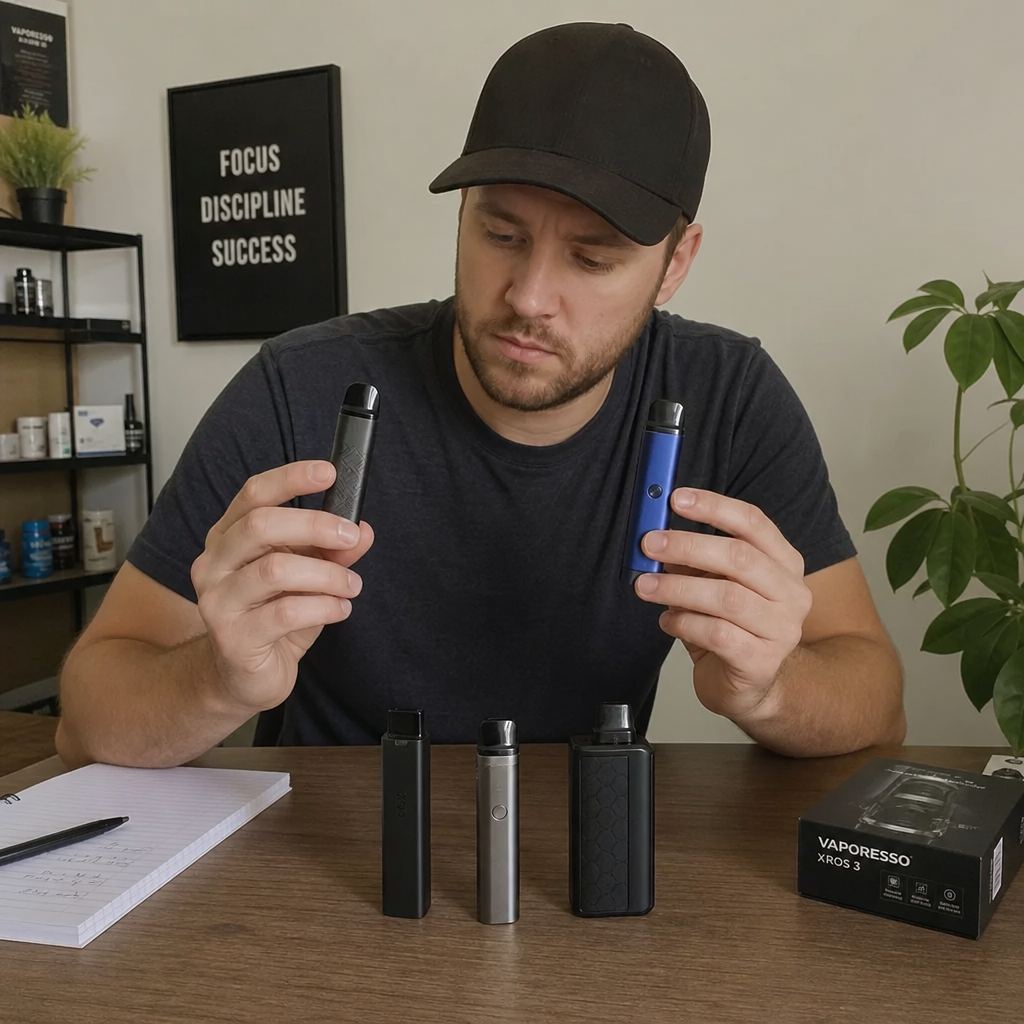

Walk down almost any British high street and you will pass a shop selling vapes. Some are proper specialist retailers with trained staff and clean compliance records. Others are the rogue shops trading standards officers keep shutting down: corner stores flogging illegal disposables next to the sweets, barbers offering vapes alongside haircuts. Parliament’s answer is a permission slip to trade at all. If you sell vapes in the UK, there is a strong chance you will soon need a licence to keep doing it.
Here is everything that is actually confirmed about the scheme, what is still undecided, and what retailers should be doing while they wait.
Where the scheme comes from
The Tobacco and Vapes Act 2026 (citation 2026 c. 18) received Royal Assent on 29 April 2026. Buried inside it is a power that matters more to retailers than the headline smoke-free generation rule: ministers in England, Wales and Northern Ireland can introduce a licensing scheme for the retail sale of tobacco, vapes and other nicotine products. As ministers told Parliament in January 2026, no UK business currently needs a licence to sell these products, a striking contrast with alcohol, which cannot be sold without one.
The important legal detail: the Act creates the power to license, not the licence itself. Fees, conditions, who applies to whom and how long licences last all come later in secondary legislation, and ministers must formally consult on the specifics first. The scheme is real law, but not yet operating anywhere.

Two licences, not one
The scheme copies the structure of alcohol licensing. When the regulations arrive, expect two separate permissions:
The personal licence. An individual must not sell, expose for sale, or possess for sale the covered products except under a personal licence: the person behind the till, or the individual responsible for a store.
The premises licence. A premises must not be used for storing, displaying or supplying the covered products to retail customers except under a premises licence, including dispatching products to customers from the premises.
So a single vape shop would likely end up with both. The regulations can also create exceptions, so edge cases like market stalls may be carved out.
What products are actually covered
The Act casts the net wider than vapes. The products caught by the licensing power are:
- tobacco products
- herbal smoking products
- cigarette papers
- vaping products
- nicotine products
That last category matters. “Nicotine products” reaches beyond devices and e-liquid to things like nicotine pouches, and retailers should watch how it is defined in the regulations rather than assuming a narrow reading. The single-use vapes ban of June 2025 and the new UK vape tax already reshaped the market; licensing is the third layer of control landing on the same shelves.
Who needs one: the practical answer
Until the consultation documents land, “everyone who sells these products” is the working assumption. Here is how that maps to common retail formats, based on what the Act says and what the government has indicated.
| Business type | Likely position | What to watch |
|---|---|---|
| Specialist vape shop | Definitely in scope | Personal licence holder per store, plus premises licence |
| Convenience store / newsagent selling vapes or tobacco | Definitely in scope | Likely two licences, as with alcohol; tobacco already sold under similar proposals |
| Supermarket | In scope | Existing alcohol premises licence does not automatically cover it; separate scheme expected |
| Online-only vape retailer | Probably in scope | Act covers supply and dispatch; ministers have said e-commerce falls under the scheme |
| Pub or hospitality venue selling vapes | Probably in scope | Any premises selling the products would need the premises licence |
| Market stall / pop-up | Uncertain | Regulations may create exceptions; temporary premises excluded in Ireland’s scheme |
| Distributor or wholesaler | Not currently in scope | Industry wants distributors included too, but the Act targets retail |
Ministers have confirmed the scheme covers e-commerce too, not just physical shops, and enforcement powers reach sellers operating through social media, messaging apps and marketplaces. An online-only retailer would likely need licences tied to the premises products are dispatched from.
What we know versus what we don’t
Plenty of articles present guesses as fact. Here is the honest split.
| Confirmed | Not confirmed |
|---|---|
| The Act gives ministers licensing powers for England, Wales and NI | The fee: no official figure exists |
| Two licence types: personal and premises | Licence duration and renewal terms |
| Products covered (above) | Whether a personal licence needs an exam, as with alcohol |
| Ministers must consult before making regulations | Licence conditions (display of licence, sale hours, signage) |
| No licence is currently required anywhere in the UK | Whether online sellers need separate licences per website |
| Call for evidence ran Oct-Dec 2025; formal consultation still to come | The launch date of the scheme |
On fees, the one public figure is a reported proposal of a £750 annual licence fee, mentioned in trade press in early 2025, with industry estimating it could raise around £50 million a year for enforcement. The government has said only that fees will be set in secondary legislation after consultation.
The four-nation split
Licensing is not UK-wide in the way it first sounds.
England. The government has confirmed no consultation on the licensing scheme will take place until 2027. That pushes any launch well into 2027 at the earliest, with analysis suggesting 2027-2029 for the full regulations. England is where most UK vape shops sit, so this delay defines the timeline.
Wales. Covered by the same licensing powers as England. Devolved ministers will make their own regulations, so the details could differ, but the personal-plus-premises model is expected to carry over.
Northern Ireland. NI is moving first. Its Commencement No. 1 Order brought the Act’s first measures into force, with age-of-sale and youth-protection provisions effective from 29 October 2026. The Act extends NI’s existing tobacco retailer register to vaping and nicotine retailers and inserts licensing provisions into the Tobacco Retailers Act (Northern Ireland) 2014, with later orders expected in mid-2027.
Scotland. Scotland is not getting the licence model. It already runs the Scottish Tobacco and Nicotine Vapour Product Retailer Register, and the Act strengthens that register instead of creating licences. Notably, specialist retailer VPZ wrote to the Scottish health secretary in October 2025 urging Scotland to adopt the UK licensing scheme anyway, arguing alignment would work better than divergence.
The timeline, as it stands
| Date | What happens |
|---|---|
| 1 June 2025 | Single-use vapes banned across the UK |
| 29 April 2026 | Tobacco and Vapes Act receives Royal Assent |
| 1 October 2026 | Vaping Products Duty takes effect |
| Oct-Dec 2025 | Government call for evidence on licensing and product registration |
| 29 October 2026 | Age of sale 18 for all consumer nicotine products including non-nicotine vapes; ban on free distribution and discounting; vape vending machines banned; £200 fixed penalty notices for underage sales |
| 1 January 2027 | Smoke-free generation: no tobacco sales to anyone born on or after 1 January 2009 |
| During 2027 | Formal consultation on the retail licensing scheme expected in England |
| June 2027 | Vape and nicotine product advertising and sponsorship ban |
| 2027-2029 | Licensing regulations expected to be made |
Every step of that licensing row depends on the consultation, so treat the whole bottom half of the table as “scheduled, not certain”.
What happens if you trade without one
Selling without a licence, once the scheme is in force, will be an offence. The enforcement picture so far:
- £200 fixed penalty notices in England and Wales for underage sales and related offences, coming into force from October 2026.
- Restricted Premises Orders, available on conviction for repeated underage sales, shutting a named premises out of tobacco sales.
- Restricted Sale Orders, prohibiting an individual from selling tobacco or vape products anywhere.
- Reported proposals (not confirmed): unlimited fines on prosecution, and on-the-spot penalties of up to £2,500.
Enforcement muscle is being built in parallel: £30 million of new funding for enforcement agencies in 2025/26, and up to £10 million a year into Trading Standards through 2028/29, including 94 new apprentices. Licensing gives all of that a lever: a rogue shop loses its licence, and with it the legal right to sell.
How this differs from the rules you already follow
It is easy to file this under “more age-check rules”. It is not that. Today’s position is that anyone can sell vapes as long as they do not sell to under-18s, do not sell illegal products, and meet product standards. Enforcement is reactive: officers catch you doing something wrong, then act.
Licensing flips that to a permission model. You need approval before you can trade, the licence can carry conditions (staff training, displayed signage, sourcing records), and breaches can cost you the licence itself, not just a fine.
What retailers should do right now
No one can apply yet, because applications do not exist. But the smart shops are already preparing:
- Tighten age verification now. £200 fixed penalty notices arrive in October 2026 regardless of licensing.
- Audit your product compliance. Only stock MHRA-notified, TRPR-compliant products. A product registration scheme is coming too, and illicit stock is exactly what licensing targets.
- Keep clean records. Sourcing paperwork, staff training logs and refusal records are what an application (and any inspection) will ask for.
- Watch the consultation. The 2027 consultation decides fees, conditions and exceptions. Trade bodies will push for specialist retailer recognition; individual retailers can respond too.
- Budget for the fee. Nothing is confirmed, but the reported £750 figure gives you a number to stress-test against. Expect costs per premises, not per business.
- If you sell online, check your dispatch setup. Online sales are expected to be in scope. The best disposable vapes are overwhelmingly bought online, so e-commerce retailers cannot assume exemption.
What the industry says
The vaping industry, unusually, wants this to happen. The UK Vaping Industry Association has campaigned for a retail licensing scheme for years, and its consumer research found roughly two-thirds of respondents support one, with three-quarters saying it would make them feel more confident buying vaping products. Nine in ten said the scheme must not make it harder for adult smokers and vapers to access products, a line the industry repeats at every opportunity: licensing should punish rogues, not restrict the legitimate market that helps smokers switch from cigarettes, a comparison our vaping versus smoking breakdown covers in detail.
UKVIA’s conditions are specific. Giving evidence to the Commons communities committee in October 2026, its director Dr Marina Murphy backed the scheme but argued specialist nicotine retailers should be recognised as a distinct category, with status conditional on staff training, consistent age verification and responsible sourcing. The association also wants higher penalties with fines ring-fenced to fund Trading Standards, and its earlier proposals put the enforcement funding potential of licensing at around £50 million a year.
Others have gone further. Distributor Phoenix 2 Retail argued licensing should extend up the supply chain to distributors, not just point of sale. The Local Government Association wants the scheme introduced promptly alongside tighter display restrictions. Retail groups, meanwhile, are urging ministers not to panic the trade: the law is real, but nothing changes for shops until the regulations are made.
The bottom line
Here is the honest summary. If you sell vapes in England, Wales or Northern Ireland, you will very likely need a personal licence and a premises licence at some point from 2027-2029. In Scotland you will instead be on a strengthened retailer register. No one knows the fee, the conditions, or the exact launch date, because the consultation that decides all of it has not happened yet.
The direction of travel is certain. The days of anyone selling vapes from anywhere with no permission are numbered. The shops that will thrive are the ones already behaving as though the scheme is here: checking IDs properly, stocking compliant products, and keeping records that prove it. With vape juice prices already rising under the new duty, compliant shops cannot afford to be caught out by licensing too.
Quick answers
Do I need a vape shop licence in the UK right now? No. There is currently no requirement for any UK business to hold a licence to sell tobacco, vapes or nicotine products. The Act only creates the power to introduce one.
Will the licence cover online sales? The scheme is expected to cover e-commerce, including dispatch from premises, and ministers have said online retailers fall within it. Exact treatment awaits the consultation.
How much will it cost? Unconfirmed. A reported proposal mentioned a £750 annual fee, but the government has said fees will be set in secondary legislation after consultation.
What if I only sell vapes, not tobacco? You are still in scope. The licensing power covers vaping products and nicotine products alongside tobacco, herbal smoking products and cigarette papers.
I am in Scotland. Do I need a licence? No personal or premises licence is planned. Scotland is strengthening its existing retailer register instead, though some in the industry want Scotland to adopt licensing too.