

‘Vape battery’ names three different products, and this page is the map of all three. There is the 510 cart battery, where the battery is the whole device and a cartridge screws onto it. There are removable cells, the 18650s and 21700s that power box mods and come out to charge. And there is everything built in, the sealed batteries inside pods and disposables, which you cannot replace and can only treat well or badly. Each world has its own grammar, its own charger logic and its own ways to die early. Start with the one you own.
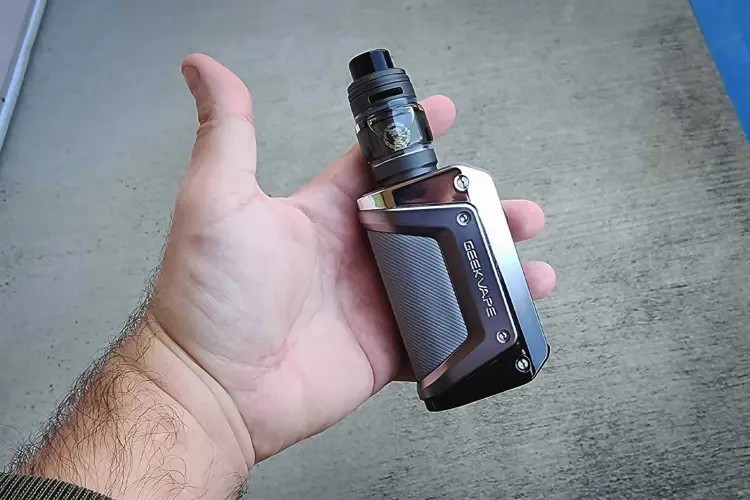
Table of Contents
World One: 510 Cart Batteries
A cart battery is a power unit with the universal 510 thread (ten threads at half-millimeter spacing, the standard the pens guide decodes). Any 510 battery runs any 510 cartridge; brand-pairing searches, for a specific cart brand’s battery, are answered by that sentence, because the thread does not care about logos. What varies is the control grammar, and it is remarkably consistent:
| Input | What it does (the near-universal grammar) |
|---|---|
| 5 clicks | On / off (the pocket-firing lock) |
| 3 clicks | Cycle the voltage setting; the LED color changes |
| 2 clicks | Preheat: about 1.8 to 2.0V for 10 to 15 seconds, for thick oils and cold weather; do not inhale during it |
| Hold (button models) | Fire. Draw-activated models skip the button entirely |
- Voltage lives between about 2.4 and 4.8V: preset models offer three steps, twist-dial models sweep the range from the base. Start at the lowest setting with any new cartridge; you can always turn up, and you cannot un-burn a hit.
- LED colors are NOT a standard, whatever any single brand’s chart says. Three real manuals: one maker codes blue 2.8V, yellow 3.2V, green 3.6V; another codes blue 2.5V, green 3.0V, red 3.5V; a third codes green 2.4V, blue 2.8V, red 3.2V. The same color means three different voltages across three brands. Your battery’s manual is the only decoder ring that exists.
- Capacities: slim pens run a few hundred mAh; box and novelty formats reach 650 to 900 mAh. Charging is migrating from proprietary screw-on USB sticks to USB-C, slowly.
One boundary, kept from the pens guide: this page covers the battery as hardware. What is inside a cartridge is a different subject and a different site section.
World Two: Removable Cells (18650, 21700)
Sizes, resistances and mod matching live in the mods guide; this section owns buying and feeding the cells themselves.
- Buy genuine cells from battery specialists, and treat printed ratings as claims until tested: the community’s reference tester is Mooch, whose independent bench results are published freely. A wrap claiming 40 amps no test confirms is the classic rewrap tell. A real benchmark to calibrate against: the Molicel P28A, 2,800 mAh with a tested 25A continuous rating.
- CDR is the safety number: the continuous discharge rating is the current a cell can deliver sustained. High wattage draws high current, and a low-drain cell in a high-drain job overheats. Match the cell to the mod’s demands, not to its price.
- Cells are consumables: expect roughly 300 to 500 charge cycles before capacity fades noticeably, and retire cells that dent, leak, corrode or lose their wrap. A torn wrap is an out-of-service event, never a tape repair (the full rules are in the mods guide).
- Pairs stay married in dual-cell devices: bought together, charged together, used together, retired together.
Chargers: External First, USB in a Pinch
- A dedicated external charger is the better default for removable cells: it charges each cell on its own channel, balances married pairs properly, shows you real per-cell information, and is consistently credited with longer cell life than in-mod charging. The mod’s USB port is the travel and emergency option.
- Charge rate is a gentleness dial. Chargers offering 0.5A, 1A and 2A per bay are common; the slow end is the kind one for daily use, the fast end is for need, and heat during charging is the signal to slow down.
- Storage charge is the forgotten setting: cells resting more than a few weeks keep best at partial charge, around 3.6 to 3.8 volts (roughly 40 to 60 percent), not brimmed and not empty.
- Built-in devices follow their own rule, this site’s standing line from the rechargeable disposables guide : a plain 5V/1A supply is ideal for disposables, never push more than 10W into one, and modern pod and mod devices follow the wattage their manuals specify. The FDA’s own battery guidance makes the same family of points.
- Universal heat rules: never charge on a bed or couch, never in a hot car, never leave charging batteries wholly unattended for hours, and stop using any device or cell that gets hot rather than warm.
When Charging Fails
A device that will not charge is a diagnosis problem, not a battery-knowledge problem, and it has its own page: the light-first ladder in the vape not charging guide covers disposables, pods and pens, including the no-light cases and the point at which a device is honestly dead. Pod systems’ own battery landscape is in the pod systems guide.
End of Life
Every lithium cell on this page retires the same way: when it swells, vents, leaks, dents or stops holding a sane charge, it is done, immediately and permanently. Tape the terminals, put it in a battery recycling stream (electronics retailers run them), and never put a loose cell in household trash, where a crushed cell in a truck is a fire with a route map. Built-in devices retire whole, through e-waste, for the same reason.
FAQ
What voltage should a cart battery be set to?
Start at its lowest setting and climb only if the draw is weak. Most cartridges live happily in the 2.5 to 3.5V neighborhood; thick oils may want the top of your battery’s range. The number matters more than the LED color, which means something different on every brand.
Can I use any 18650 in my mod?
No. The size fitting is necessary and nowhere near sufficient: the cell’s tested discharge rating has to cover your wattage’s current draw, the wrap has to be intact, and flashlight-grade low-drain cells do not belong in mods. Genuine, tested, high-drain cells only.
Is it bad to charge my mod through USB?
Not dangerous on a modern regulated mod, and fine in a pinch. An external charger remains the better habit for cell life, balanced pairs and information. For built-in devices, USB is the only way, and the rule is the manufacturer’s wattage, or 5V/1A for disposables.
How long do vape batteries last?
Removable cells: about 300 to 500 cycles before fade. Built-in pod devices: months to a year or so of daily charging before the battery, not the device, ends the relationship. Heat and brim-full storage are the two habits that shorten both.
What is preheat for?
Thick oil and cold weather. Ten to fifteen seconds at about 2 volts warms the cartridge’s contents so the first real draw flows instead of clogging. Two clicks on most button batteries, and never inhale during the cycle.