

This search means three different things, so here is the routing up front. If you bought a vape and want to know whether it is counterfeit, this page’s five checks are your answer, in descending order of how much they prove. If you are looking for a fake vape as a prop, for a production, a costume or the hand-to-mouth ritual without the drug, the props section near the end covers what actually exists. And if you are asking whether ‘fake nicotine’ is a thing, the short answer sits just above the FAQ: synthetic nicotine is real nicotine. Everyone else, start with the distinction that organizes everything below.
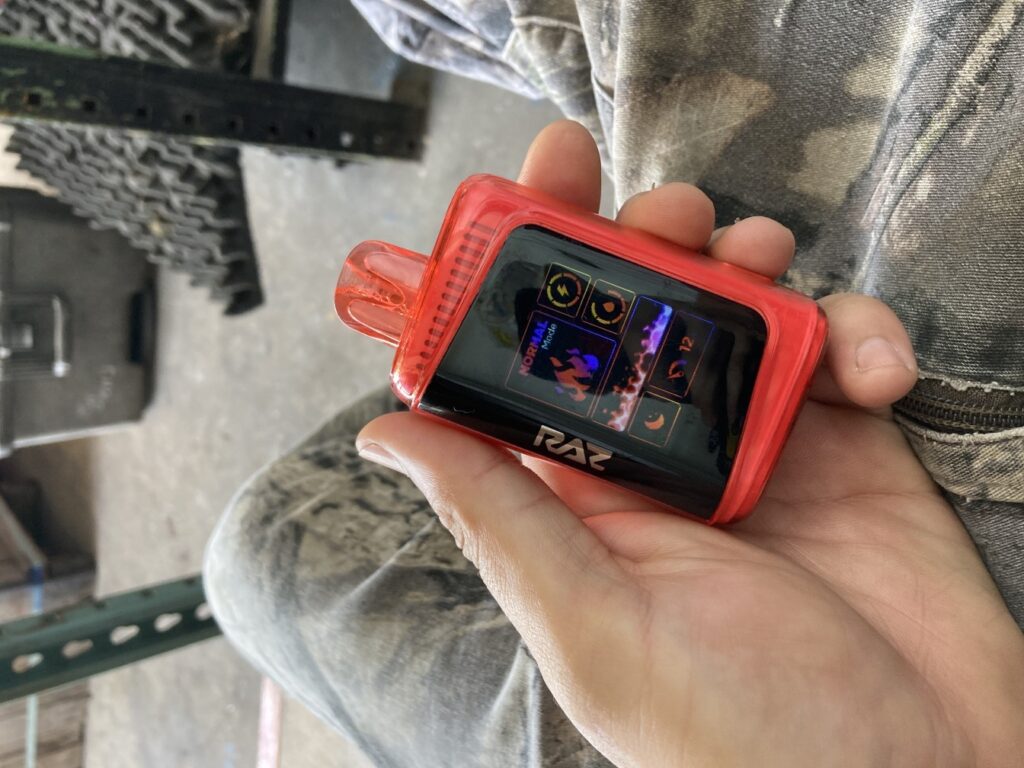
Table of Contents
Counterfeit Is Not Unauthorized
A counterfeit is a fake of a real brand, built to be mistaken for it. An unauthorized product is a genuine brand sold without FDA marketing authorization, which describes most of the US disposable market (the authorization record is laid out in the disposable brands guide). Every counterfeit is illegal; not every unauthorized product is a counterfeit. The scale of the fake trade is not small: in September 2025, US federal agencies seized 4.7 million unauthorized e-cigarette units worth $86.5 million in the largest such seizure in American history, and the 2024 to 2025 cumulative count passed 6 million units and $100 million. The most counterfeited brands are Elf Bar, Lost Mary and Geek Bar, which is precisely why those brands run the strongest verification systems.
Why a Fake Is Worse Than a Knockoff Handbag
- The liquid is unknown. Nothing about a counterfeit is tested or accountable, and independent tests of fakes have found nicotine content ranging from none at all to over 80 mg in devices labeled 50 mg.
- The coil is the cheapest available. Even genuine disposables showed measurable metal release in a 2025 ACS Central Science study; counterfeit heating elements are built to a lower standard than the genuine article, and metals like lead, nickel and antimony are the known cost of cheap coils.
- The battery is where the savings hide. Protection circuits are a cost line, and the FDA’s battery safety guidance exists because cells without them vent and burn.
The standing warning from history, stated precisely: the 2019 EVALI outbreak, 2,807 hospitalizations and 68 deaths in the CDC’s count, was caused by illicit THC cartridges cut with vitamin E acetate, not by nicotine disposables. It belongs in this article for one reason only: it is the demonstrated proof of what an unregulated liquid supply chain can put in a lung. A counterfeit nicotine vape is the same category of unknown, at a smaller scale.
The Five Checks
1. The code, checked on the brand’s own site (strongest)
Scratch the panel, read the code, and verify it on the brand’s official website, whose address you type yourself. Never trust a QR code straight to a verification page: counterfeiters clone those pages, and a fake ‘authentic’ result is their best trick. Brands with working verification, from this site’s brand research: Geek Bar, Lost Mary, DOJO, NEXA (through VOOPOO) and Fifty Bar. Brands where no official verification was found: RAZ, Foger, FLUM, Off-Stamp, Tyson and VIHO, for which the remaining checks are all you have. A code that returns ‘already verified many times’ is a copied code, and a failed code on the real site ends the inquiry: it is fake.
2. Packaging forensics
- Spelling and grammar errors anywhere on the box; counterfeiters copy artwork, not proofreading.
- A flavor name that does not exist in the brand’s real range. Brand websites list their flavors, and invented flavors (or last year’s names on this year’s model) are a classic tell.
- The FDA warning, ‘WARNING: This product contains nicotine. Nicotine is an addictive chemical.’, present, exact and legible. Missing, garbled or stickered-over warnings are disqualifying.
- Print registration and batch codes: genuine packaging prints crisply with batch codes that look manufactured, not applied. Blurry art and codes that rub off are evidence.
3. Channel and price
Authorized retailers and brand sites are the safe channels. Social-media sellers, marketplace listings from unknown stores, and gas-station stock from secondary wholesalers are where seizures keep originating. Price is a signal, not a detail: the verified mainstream band for current disposables runs about $14 to $20 (the disposable guide tracks it), and a current model at half that is not a deal, it is a disclosure.
4. The device in hand (weak evidence, labeled as such)
Weight that feels hollow, seams that flex, a screen with wrong fonts, a draw that rasps, flavor that burns harsh from the first puff: all suggestive, none conclusive. A competent fake passes every in-hand test, which is why this check ranks fourth. Use it to decide whether to run checks one to three, never to overrule them.
5. When in doubt, the seller test
Ask the seller where the stock comes from. Legitimate retailers answer with a distributor name and an invoice trail; the gray market changes the subject. Combined with a failed or missing code, a vague answer is the decision.
If It Is Fake
- Stop using it. The risk was never the branding, it is the unknown liquid and the unprotected battery.
- Take it back to the retailer for a refund and say the word counterfeit; legitimate shops pull stock when a fake surfaces, and your report is how they find out.
- Report it to the brand, whose anti-counterfeit team is the one actor with both the motive and the lawyers.
- Report it to the FDA through its Safety Reporting Portal, with the brand, model, seller and a photo of the packaging and the failed code if there is one.
The Other Kind of Fake: Props and Ritual Devices
Fake vapes also exist on purpose. Electronic stage props are a small professional industry: ePuffer’s SNAPS prop cigarettes, recommended by Actors’ Equity for stage work, produce visible water vapor on cue with nicotine-free cartridges, no flame, no ash and no smell in the wings.
Herbal prop cigarettes (Honeyrose is the film industry’s standard) look perfect on camera and come with a warning that matters: they burn, and burning herbs produces tar and carbon monoxide in the same family as tobacco smoke, so a prop cigarette is a film tool, not a health product. For the personal ritual without any vapor at all, plastic air inhalers (the QuitGo and Achieve class) are simple tubes you draw air through, sometimes lightly flavored. And readers whose actual goal is the ritual with real vapor and no nicotine are served by the zero-nicotine shelf, which is a real product category covered in the nicotine free vapes guide, not by anything calling itself fake.
‘Fake Nicotine’ Is Not a Thing
Synthetic nicotine, sometimes marketed as tobacco-free nicotine, is nicotine: the same molecule, made in a lab instead of extracted from the plant, with the same effects and the same addictiveness, as the pillar explains in the nicotine pouches guide. What is fake is any suggestion that the synthetic version is a loophole in biology. (One boundary for completeness: a ‘dazed vape real or fake’ search concerns a cannabis brand this nicotine site does not cover; the five checks above are the method there too, applied through that brand’s own channels.)
FAQ
How can I tell if my vape is fake?
Run the checks in order: verify the code on the brand’s own typed-in website if the brand offers one, read the packaging forensically (spelling, real flavor names, exact FDA warning, crisp batch codes), and weigh the channel and price you bought it through. A failed code on the genuine site is conclusive.
Are fake vapes dangerous?
They are untested products from an unaccountable supply chain: nicotine content measured from zero to far above the label in tested fakes, cheap coils, and batteries without proper protection. The honest summary is that nobody knows what is in one, and nobody is responsible when it goes wrong.
My brand has no verification code. Is it fake?
Not necessarily. Several major brands (RAZ, Foger, FLUM and others in this site’s research) run no verification portal at all. For those, packaging and channel carry the whole weight, which is a genuine argument for buying them only from authorized retailers.
Can a fake vape explode?
Any lithium device can fail, and counterfeits cut exactly the protection circuits that prevent it. The risk is higher with a fake, which is one more reason a confirmed fake goes in the bin (through proper battery disposal), not in a drawer.
Are prop vapes safe?
Electronic props produce water vapor and are built for stage conditions. Herbal prop cigarettes burn and carry combustion’s risks despite containing no tobacco. ‘Prop’ describes a purpose, not a safety rating.