

Anyone shopping for a new device quickly runs into the same wall: there isn’t just one kind of vape pen, there are several, and they work in genuinely different ways. This guide breaks down every major type of vape pen on the market, how each one actually functions, and which style fits different vaping habits. By the end, picking the right device should come down to a quick checklist instead of a guessing game.
What Counts as a Vape Pen?
A vape pen is generally any slim, cylindrical vaping device that’s larger than a disposable but smaller and simpler than a full box mod. The category covers a wide range of devices though, from basic cig-a-like sticks to sub-ohm pens capable of serious vapor production. That range is exactly why “types of vape pens” is such a common search, since the label gets used loosely across very different devices.
Most vape pens share a few core parts: a rechargeable battery, a tank or cartridge, and a coil that heats the e-liquid. What changes between types is how that liquid gets into the coil, how much power the battery delivers, and whether the parts are replaceable or sealed for good.
Table of Contents
The Main Types of Vape Pens
Here’s where the real differences show up. These are the categories that cover the vast majority of vape pens sold today.
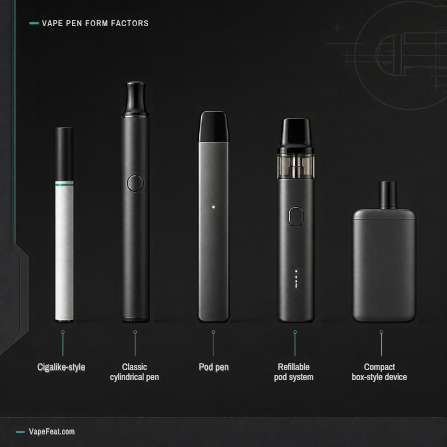
Cig-a-Like Style Pens
Cig-a-likes were some of the earliest vape pens, shaped to resemble a traditional cigarette in both size and weight. They typically use small, low-capacity cartridges and a basic battery with no adjustable settings.
- Very low vapor output compared to other types
- Short battery life, often under a full day of moderate use
- Minimal setup, usually just click in a cartridge and vape
- Mostly aimed at smokers transitioning away from cigarettes
They’ve largely been overtaken by pod-style pens, but they still show up in some starter kits aimed specifically at people quitting smoking.
Standard Vape Pens (Tank-Based)
This is what most people picture when they hear “vape pen.” It’s a mid-sized device with a refillable tank on top and a battery section below, usually with a single fire button and sometimes a basic wattage display.
- Tanks typically hold 2ml to 5ml of e-liquid
- Coils are swappable, so users aren’t locked into one resistance
- Battery capacity usually ranges from 900mAh to 2000mAh
- A reasonable middle ground between simplicity and control
These pens strike a real balance. There’s more to manage than a sealed pod system, but nowhere near the complexity of a full mod setup with adjustable wattage curves and rebuildable decks.
Pod-Style Vape Pens
Pod-style pens have become the dominant type of vape pen for a lot of casual and semi-casual vapers. Instead of a traditional tank, they use a pod that either pops in pre-filled or gets manually refilled through a small opening.
- Closed pods are pre-filled and disposed of once empty
- Open pods are refillable and reusable, offering more flexibility
- Often paired with nicotine salt e-liquids for a smoother throat hit
- Compact size makes them easy to carry and quick to use
The convenience factor is the main draw here, especially for anyone who doesn’t want to deal with coil building or manual dripping.
Sub-Ohm Vape Pens
Sub-ohm pens are the more powerful end of the vape pen category, built around coils with resistance below 1 ohm. Lower resistance allows more current to flow, which produces significantly more vapor and a warmer draw.
- Requires higher-VG e-liquid to handle the increased heat and vapor
- Battery drains faster due to higher power draw
- Airflow is usually more open compared to standard pens
- Best suited for direct-lung inhale rather than mouth-to-lung
Sub-ohm pens sit close to entry-level box mods in terms of output, just packed into a slimmer pen-shaped body.
Refillable vs Pre-Filled Vape Pens
This distinction cuts across almost every type of vape pen listed above, and it’s often the deciding factor for a lot of buyers. Refillable vapes use an open tank or pod that gets manually topped up with bottled e-liquid, giving full control over flavor selection and nicotine strength.
Pre-filled pens use sealed cartridges or pods that arrive already loaded with a set flavor and nicotine level. There’s no mess and no guesswork, but the flavor and nicotine options are limited to whatever the manufacturer sells, and the ongoing cost per ml is almost always higher than refilling with bottled liquid.
Nicotine Salt Pens vs Freebase Pens
Most competitor guides skip this angle entirely, but it genuinely changes which vape pen makes sense for someone. Nicotine salt pens are built to run smoothly at higher nicotine concentrations, often 20mg to 50mg, without the harsh throat hit that freebase nicotine causes at those levels. This makes them a common pick for people replacing a pack-a-day smoking habit.
Freebase pens run standard e-liquid nicotine, typically in the 0mg to 12mg range, and are generally paired with higher wattage devices since the vapor is smoother at lower nicotine strengths. Someone using a freebase pen at 50mg nicotine would likely find the throat hit unpleasant, which is exactly why matching pen type to nicotine type matters more than most buying guides mention where to buy nicotine free vape.
What Kind of Vapes Are There by Battery Type?
Battery format is another practical factor that gets overlooked, but it directly affects cost and convenience over time.
Fixed Battery Pens
Fixed battery pens have a built-in, non-removable battery charged through a USB port on the device itself. They’re simpler to use day to day since there’s nothing to swap, but once the battery degrades after a year or two of regular charging, the whole device typically needs replacing.
Removable Battery Pens
Removable battery pens use standard cells, most often 18650 or 21700 batteries, that pop out for charging or swapping. This setup costs more upfront but pays off over time, since a worn-out battery can just be replaced instead of tossing the entire pen. It’s also worth checking manufacturer guidance on battery handling, since the CDC has published information on lithium-ion battery risks tied to improper storage and charging of removable vape batteries.
How to Choose the Right Type of Vape Pen
With all these types of vaping devices on the market, narrowing it down usually comes down to answering a few honest questions about actual usage habits.
- New to vaping and want simplicity? A pod-style pen with nicotine salt liquid is the easiest entry point.
- Coming off cigarettes specifically? Cig-a-like or pod pens tend to match the hand-to-mouth habit and nicotine hit most closely.
- Want more flavor control and refill flexibility? A standard tank-based vape pen offers the best middle ground.
- Chasing bigger clouds and warmer vapor? A sub-ohm pen delivers that without jumping straight to a full box mod.
- Vaping heavily throughout the day? A removable battery pen avoids the hassle of a dead device with no backup power.
There’s no universally “best” type, just a best fit for how someone actually vapes.
Common Mistakes When Picking a Vape Pen
A recurring mistake is buying a sub-ohm pen without adjusting e-liquid VG ratio, which leads to a harsh, dry-feeling hit since standard 50/50 liquid can’t keep up with the wicking demands of low-resistance coils. Another frequent issue is picking a high nicotine salt strength on a pen built for direct-lung sub-ohm draws, which delivers way more nicotine per hit than intended and often causes dizziness or nausea for new users.
Buying a fixed battery pen without checking charge cycles is another one worth flagging, since heavy daily use can wear down a built-in battery within a year, at which point the entire device needs replacing rather than just a battery. Matching the pen type to actual nicotine tolerance and vaping frequency upfront avoids most of these issues entirely.
Frequently Asked Questions
What are the main types of vape pens?
The main types include cig-a-like pens, standard tank-based pens, pod-style pens, and sub-ohm pens. Each differs in vapor output, battery power, and how e-liquid gets loaded into the device.
What kind of vapes are there for beginners?
Pod-style vape pens are generally the easiest entry point, especially when paired with nicotine salt e-liquid for a smoother hit. They require minimal setup and little maintenance compared to tank-based or sub-ohm pens.
What’s the difference between a vape pen and a pod system?
A vape pen is a broader category that includes pod systems as one type among several. Pod systems specifically use small refillable or pre-filled pods, while other vape pens use larger tanks or cig-a-like cartridges.
Do all types of vape pens use the same e-liquid?
No, e-liquid needs to match the device type. Sub-ohm pens need higher-VG liquid to handle increased vapor production, while pod-style pens often use nicotine salt liquid formulated for smoother hits at higher nicotine strengths.
Are removable battery vape pens better than fixed battery ones?
Removable battery pens tend to be more cost-effective long term since a degraded battery can simply be swapped out. Fixed battery pens are more convenient day to day but usually need full replacement once the battery wears down.