
Type a vape question into Google and half the results mention a “disposable vape.” Walk into a corner shop and the shelf is full of them. The word shows up everywhere, and it is worth asking: what does disposable actually mean in this context?
The short answer: a disposable vape is a single-use vaping device that arrives pre-filled with e-liquid and pre-charged, and you throw the whole device away once the liquid or the battery runs out. No refilling, no coil changes, no charging (at least in the original design), no maintenance of any kind.
That is the literal meaning. But the devices sold as “disposables” today are far more capable than the ones the word was invented for, and that gap is where most of the confusion comes from. Here is what disposable really means now, how the devices work, and whether one is right for you.
Inside the device: what makes it disposable
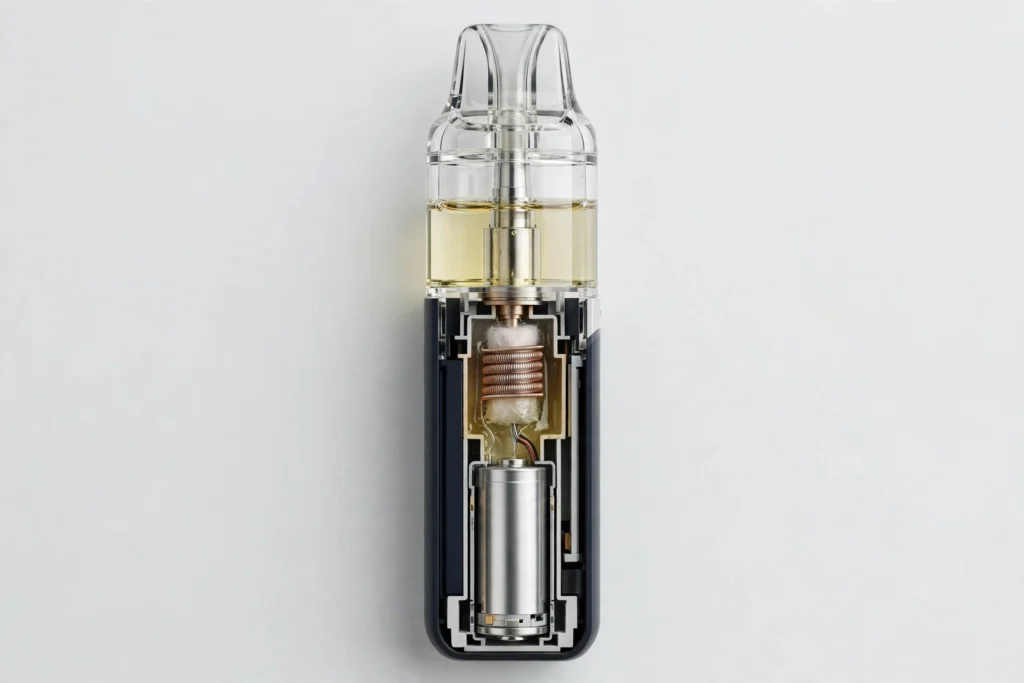
Open up (figuratively) any disposable vape and you will find the same five parts: a mouthpiece, a sealed tank of e-liquid, a heating coil, a battery, and a small sensor that fires the device when you inhale. There are no buttons, no screens on most models, and no way to open the tank.
“Disposable” refers to the device lifecycle, not the materials. A refillable vape keeps the battery and electronics for months while you replace pods or coils. A disposable bundles everything into one sealed unit with a planned end: when the e-liquid is gone, the device is done. The convenience is the point. You buy it, vape it, replace it.
The earliest disposables worked exactly like this: a small non-rechargeable battery that died around the same time the liquid ran out, a few hundred puffs, then straight into the bin. That was the whole product. Then demand for longer-lasting devices rewrote the design.
How disposables grew up: rechargeable batteries and puff counts
Modern disposables look like the old ones but behave very differently. Manufacturers started adding USB-C ports, and once the battery could be recharged, there was nothing stopping the tanks from getting bigger. Today a typical disposable holds far more e-liquid than early models did and advertises puff counts in the thousands: 5,000, 15,000, 25,000, sometimes more.
Puff counts deserve a short explanation, because the number on the box is the single most misunderstood figure in vaping. A puff count is the manufacturer’s estimate of how many draws the device will deliver. It is measured under lab conditions with short, gentle puffs. Real vapers take longer, harder draws, especially on devices with airflow you can adjust.
Real-world puffs almost always come in lower than the label. A device rated at 25,000 puffs might deliver noticeably fewer in everyday use, depending on how you vape. Treat the number as a rough comparison between devices, not a promise. If you are curious how much vaping style changes the numbers, our breakdown of SBX vape modes shows how one device can produce wildly different puff counts on different settings.
There is one more twist: some “disposable” devices now have adjustable power, multiple modes, and screens. At that point the only thing truly disposable about them is that you cannot refill them. For a concrete look at what a modern high-capacity disposable can do, read our Geek Bar Pulse X review.
Disposable vs everything else: the honest comparison
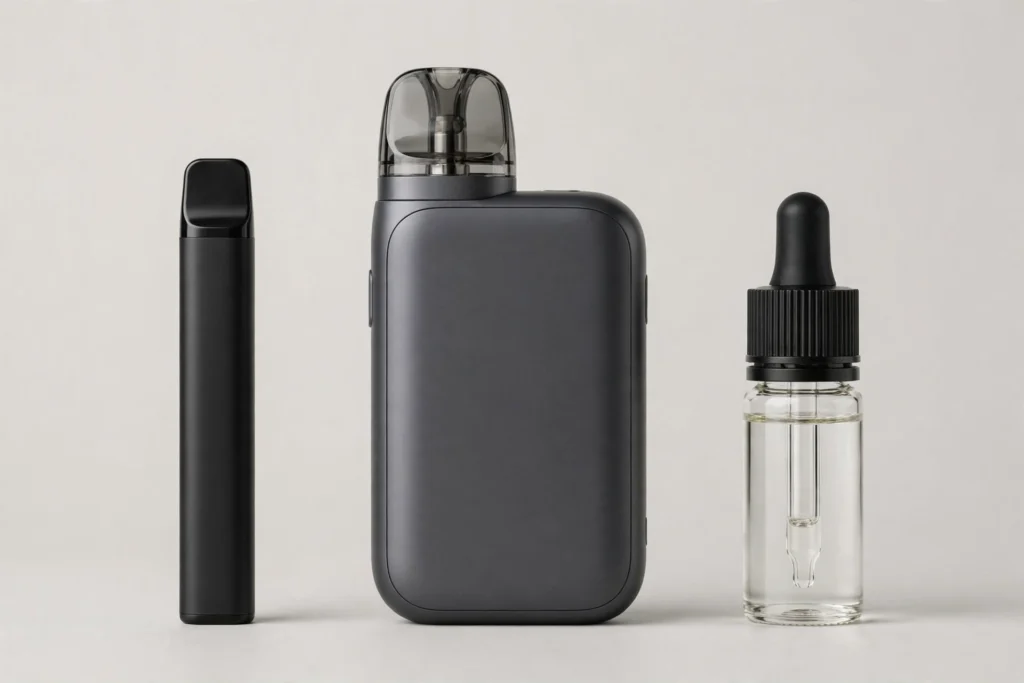
Disposable is one of four main ways to vape. Here is how they stack up on the things that actually matter day to day.
Disposable vapes. Buy once, vape until empty, discard. Highest convenience, zero setup. You pay per device, and each device is a fixed amount of e-liquid, so the cost per millilitre is the highest of any format.
Prefilled pod systems. A rechargeable battery device with snap-in pods that come pre-filled. You keep the battery and throw away the pod. A middle ground: cheaper per puff than disposables, still simple, but you are locked into one brand’s pod flavours.
Refillable pod kits. A rechargeable device you fill yourself from bottles of e-liquid. Pods last one to two weeks each before the flavour drops off. The cheapest way to vape after the initial purchase, with the widest flavour choice, but there is a learning curve around filling, leaking, and pod changes.
Vape mods and tanks. Larger, more powerful devices with replaceable coils and big refillable tanks. Maximum control over power, airflow, and flavour. Also the most expensive upfront, the bulkiest, and the most fiddly.
If you want help choosing between them, our roundup of the best disposable vapes covers the current standouts, and our guide to vape juice prices breaks down what refillable vaping actually costs.
The pros, straight up
No learning curve. Inhale to activate, done. There is nothing to assemble, fill, or set. For someone who has never vaped, this removes every point of friction.
Portability. Slim, pocketable, no bottles or chargers to carry around. A disposable is the easiest vape to take anywhere.
Predictable nicotine. Each device delivers a consistent strength and flavour from first puff to last, with no degradation as coils age, because there are no ageing coils.
Flavour variety without commitment. Want to try a flavour? Buy one device. A bad pick costs you one unit, not a whole bottle.
The cons, just as straight
Long-term cost. This is the big one. Convenience has a price, and it compounds. Buying device after device adds up fast compared with refilling a pod kit from bottles.
Environmental waste. Every disposable contains a lithium battery and plastic electronics. Tossing them in general rubbish sends heavy metals into landfill and wastes materials that could be recovered. See the recycling section below; this matters more than the marketing admits.
Flavour lock-in. One device, one flavour. If you like switching flavours through the day, disposables force you to carry several or accept one.
Limited control. No wattage adjustment on basic models, no airflow tuning, no way to tweak the experience. Fine for some, a dealbreaker for others.
The money question: disposables vs refillable over a month
Here is an illustrative comparison. Treat the numbers as rough and clearly not quotes from any shop.
A moderate vaper might go through one disposable lasting a few days. If a typical disposable costs around $15-20, that works out to roughly $100-200 per month.
A refillable pod kit costs around $25-40 for the device, plus roughly $15-20 for a bottle of e-liquid and a few dollars for replacement pods. After the first month, the ongoing cost often lands somewhere in the $30-60 per month range.
So a reasonable rule of thumb: disposables can cost two to four times as much per month as refillable vaping, once the device is paid off. The exact gap depends on how much you vape, local prices, and which products you buy, so treat this as a directional comparison, not a guarantee. The more you vape, the more the math favours refillables.
Who disposables are actually best for
Beginners. If you have never vaped, a disposable lets you learn whether vaping works for you before you invest in a kit, bottles, and coils.
Smokers switching. A disposable mimics the grab-and-go ritual of cigarettes better than any other format. No preparation, no waiting, just inhale.
Travellers. One slim device beats a kit plus bottles plus a charger in a carry-on. Just check airline and destination rules before you fly.
Backup owners. Even dedicated refillable users often keep a disposable around for the day a pod dies or a coil burns out at the worst moment.
If none of these sound like you and you already know you enjoy vaping, a refillable setup will almost certainly serve you better.
Recycling: do not just bin them
A disposable vape is an electronic device with a lithium battery inside. Throwing it in general rubbish is a problem: batteries get crushed in waste trucks, which can cause fires, and the lithium, copper, and other materials end up wasted in landfill.
The responsible route is an e-waste or battery recycling drop-off. Many vape shops in the UK run take-back schemes, and battery recycling points accept small lithium cells in the US. Rules vary by city and country, so check your local e-waste program. At minimum, keep used devices out of the general bin and in a battery recycling stream.
The bottom line
Disposable means one sealed device, pre-filled and ready to go, discarded when it runs out. The word has not changed; the devices have, growing from a few hundred non-rechargeable puffs into rechargeable multi-thousand-puff devices that are disposable only in the sense that you cannot refill them.
They are the simplest, most portable way to vape, and the most expensive and wasteful way to do it regularly. Know which side of that trade-off you are on, buy accordingly, and recycle what you finish.
Frequently asked questions
Are disposable vapes rechargeable?
Early ones were not; the battery died with the liquid. Most modern disposables recharge over USB-C, which lets them hold far more e-liquid and last much longer.
How long does a disposable vape last?
It depends on the tank size and how heavily you vape. A light vaper can stretch a large device for a week or more; a heavy vaper can finish one in a couple of days. Ignore the puff count on the box as a promise; real-world use usually delivers fewer puffs than the label claims.
Can you refill a disposable vape?
They are not designed for it. The tanks are sealed, and forcing one open usually breaks the device and can be unsafe. If you want refillable, buy a refillable pod kit instead.
Are disposable vapes worse than refillable vapes?
They are worse on two axes: cost per puff and environmental waste. They are better on convenience and simplicity. Neither format is “worse” in absolute terms; it depends on what you value.
Do disposables expire?
E-liquid degrades slowly over time, and batteries lose charge sitting on a shelf. An unopened disposable is generally fine for a year or so, but flavour quality can drop. Buy from reputable sellers and check packaging dates.
Why are some disposables banned in certain places?
Some regions have restricted single-use vapes over environmental concerns and youth appeal, while others restrict flavours, nicotine strength, or sales outright. Rules differ by country and state, so check local regulations where you live.