Hookah vs Vape: The Quick Answer
Hookah vs vape comes down to one major difference most people miss: traditional hookah involves burning charcoal and heating shisha tobacco, which means real combustion is happening, while a vape heats e-liquid without burning anything. That combustion difference means a typical hookah session actually exposes users to significantly more toxic compounds than a comparable vaping session, despite hookah often being perceived as the gentler, more social, less risky option.
This perception gap is a big part of why hookah vs vape searches are so common. A lot of people assume hookah is milder because the smoke feels smoother and sessions feel more casual, but the combustion involved changes the chemical picture substantially compared to vaping.
What Is a Hookah, Actually?
How Traditional Hookah Works (Charcoal and Shisha)
A traditional hookah is a water pipe used to smoke shisha, a flavored tobacco mixture, typically heated using burning charcoal placed above the tobacco bowl. The charcoal doesn’t directly burn the tobacco, but it does heat it to a high enough temperature that combustion-like reactions still occur, producing smoke that passes through water before being inhaled. This setup is fundamentally different from vaping, since both the charcoal and the heated tobacco contribute separate sources of toxic byproducts.
The World Health Organization has specifically flagged hookah smoking as a significant public health concern, noting that a typical one-hour hookah session can involve inhaling far more smoke volume than a single cigarette simply due to session length and puff volume. This is a big part of why the comparison to cigarettes gets complicated, and it’s worth breaking down properly rather than relying on vague headline claims.
What Is a Hookah Pen? Is a Hookah a Vape?
Is a hookah a vape is a fair question, and the honest answer is no, at least not in the traditional charcoal-and-shisha sense. A hookah pen, sometimes marketed as a “hookah vape” or flavored disposable vape styled after hookah flavors, is actually a battery-powered vape device, not a traditional hookah at all. These products borrow hookah’s flavor profiles and branding, things like double apple or mint, but function mechanically like any other vape, heating e-liquid rather than burning charcoal and tobacco.
What is a hookah vape, then, in practical terms? It’s essentially a flavored vape marketed to appeal to people who enjoy traditional hookah flavors, without any of the charcoal, tobacco combustion, or water filtration involved in an actual hookah setup. The naming is more about flavor marketing than an accurate description of how the device works.
Hookah Pen vs Vape: Key Differences
| Factor | Traditional Hookah | Hookah Pen / Vape |
| Heat source | Burning charcoal | Battery-powered coil |
| Combustion involved | Yes | No |
| Tobacco content | Yes, shisha tobacco | Varies, often nicotine e-liquid or nicotine-free |
| Typical session length | 45-60+ minutes | Varies, often shorter per session |
| Water filtration | Yes | No |
| Portability | Low, requires setup | High, pocket-sized |
This table makes the mechanical distinction clear: despite sharing flavor branding, a hookah pen is functionally a standard vape, while traditional hookah is a combustion-based tobacco product that happens to route smoke through water first.
1 Hookah, How Many Cigarettes? Breaking Down the Claim
1 hookah how many cigarettes is one of the most searched questions around this topic, largely thanks to widely circulated claims suggesting a single hookah session equals dozens or even 100 cigarettes worth of smoke. These claims aren’t fabricated, but they need real context to be useful rather than alarming without explanation.
The comparison typically comes from smoke volume, not nicotine or tar content specifically. A typical hookah session lasting 45 minutes to an hour, with users taking long, deep draws, can involve inhaling smoke volume comparable to what’s produced across many cigarettes smoked back to back. Research cited by the CDC has noted that hookah smokers may inhale as much smoke in a single session as a cigarette smoker would inhale from an entire pack, largely due to session length and draw volume rather than any single puff being more dangerous than a cigarette puff.
Chemical Exposure: Hookah Smoke vs Vape Aerosol
| Component | Hookah Smoke | Vape Aerosol |
| Carbon monoxide | Present, often significant due to charcoal combustion | Not present, no combustion |
| Tar | Present, from tobacco combustion | Not present |
| Heavy metals | Present, some studies link charcoal use to elevated levels | Minimal, trace levels possible |
| Nicotine | Present, from shisha tobacco | Present only if e-liquid contains nicotine |
| Session-based total exposure | High, due to long sessions and shared water pipe use | Lower per session, though frequency of vaping throughout the day varies |
Charcoal combustion is actually one of the more overlooked contributors to hookah’s chemical exposure profile. Burning charcoal itself produces carbon monoxide and other combustion byproducts independent of the tobacco, meaning hookah users are exposed to two separate combustion sources in a single session, something vape smoke vs weed smoke comparisons don’t need to account for since neither vaping nor most cannabis vaping involves an external heat source like charcoal.
Is Hookah Better Than Vape? What the Evidence Actually Shows
Is hookah better than vape is a common framing, but based on current evidence, the answer leans clearly toward vape carrying lower chemical exposure per session. The combination of charcoal combustion and tobacco combustion in hookah produces a genuinely different and generally higher toxic load compared to vape aerosol, which avoids combustion entirely.
That said, “better” doesn’t mean risk-free on the vape side. Vaping still carries its own considerations worth taking seriously, and the broader vaping vs smoking comparison covers this nuance in more depth, since neither vaping nor hookah should be treated as a completely safe activity, they simply carry different levels and types of risk.
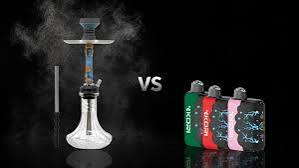
Hookah Equivalent to Cigarettes: Where That Number Comes From
Hookah equivalent to cigarettes claims, often citing numbers like “100 cigarettes per session,” come primarily from smoke volume studies rather than a direct toxin-for-toxin comparison. These figures generally measure total smoke inhaled across a full hookah session against the smoke inhaled from a single cigarette, which explains the dramatic-sounding multiplier.
A few factors that inflate this comparison beyond a simple apples-to-apples read:
- Session length: hookah sessions commonly run 45 minutes to over an hour, compared to a few minutes for a single cigarette
- Draw volume: hookah draws tend to be deeper and longer than typical cigarette puffs
- Shared use: hookah is frequently used in social settings with multiple people sharing the same session and mouthpiece, extending total exposure time per person
- Charcoal contribution: as covered earlier, charcoal adds its own combustion byproducts separate from the tobacco itself
None of this means the “100 cigarettes” framing is fabricated, but it reflects total session exposure rather than suggesting each individual puff carries 100 times the risk of a cigarette puff.
Session Length and Exposure: Why Duration Matters More Than People Think
Session duration is arguably the most underrated factor in the entire hookah vs vape comparison. A single vape puff and a single hookah draw aren’t directly comparable in isolation, but total session length changes the picture dramatically. Someone vaping intermittently throughout a day accumulates exposure differently than someone sitting through a continuous 45 to 60 minute hookah session with steady, deep draws.
This is part of why hookah’s health messaging has shifted over the past decade, moving away from the assumption that occasional or social hookah use carries minimal risk, toward messaging that treats session length and frequency as major factors in overall exposure, similar to how cigarette risk scales with how many are smoked per day.
How to Use Hookah Safely If You’re Going to Use It Anyway
Being direct here rather than pretending hookah use will simply stop happening. A few harm-reduction points worth knowing if hookah is going to be part of someone’s routine regardless:
- Avoid sharing mouthpieces without a personal, disposable tip, since shared hookah use also carries infection transmission risk beyond just smoke exposure
- Ensure adequate ventilation, since indoor hookah sessions in poorly ventilated spaces concentrate both tobacco smoke and carbon monoxide from the charcoal
- Be aware that “milder tasting” doesn’t mean lower exposure, the smooth taste from water filtration doesn’t meaningfully reduce toxic compound inhalation
- Limit session length, since exposure scales heavily with how long a session runs, not just how many sessions happen per week
Nicotine Content: Hookah vs Vape
Nicotine delivery is another area where hookah and vape diverge in ways worth understanding. Shisha tobacco used in hookah does contain nicotine, though the amount absorbed per session is harder to pin down precisely than a cigarette’s roughly 1 to 2mg absorbed per stick, since hookah sessions vary enormously in draw frequency, depth, and total duration. Some research has suggested nicotine absorption across a full hookah session can be substantial, given the sheer volume of smoke inhaled over 45 minutes or more compared to a few minutes spent on a single cigarette.
Vape nicotine content, by contrast, is far more precisely labeled and controllable, since e-liquid strength is listed in mg/ml and users can choose anywhere from nicotine-free options up to higher nicotine salt concentrations. This predictability is one practical advantage vaping holds over hookah for anyone specifically trying to track or manage nicotine intake, since hookah’s variable session length and shared-use patterns make consistent nicotine tracking much harder.
Where the Comparison Actually Lands
Stepping back, hookah vs vape isn’t a close call when it comes to per-session chemical exposure. Traditional hookah’s dual combustion sources, charcoal and tobacco, put it in a meaningfully higher exposure category than vaping, which avoids combustion entirely. Hookah pens marketed with hookah flavors are a separate category altogether, functioning like standard vapes rather than traditional hookah setups.
This pattern lines up with the broader logic seen across nicotine vs tobacco and vaping vs smoking comparisons generally, combustion is consistently the larger driver of toxic exposure compared to heating alone, regardless of whether the combustion source is a cigarette, charcoal, or a hookah bowl.
Frequently Asked Questions
Is hookah worse than vaping?
Yes, based on current evidence, hookah generally involves significantly higher toxic chemical exposure than vaping due to the combustion of both charcoal and tobacco. Vaping avoids combustion entirely, resulting in a much smaller chemical exposure profile per session.
How many cigarettes is one hookah session equal to?
Estimates vary, but research cited by health agencies suggests a single hookah session can involve inhaling smoke volume comparable to an entire pack of cigarettes, largely due to long session length and deep, frequent draws rather than any single puff being uniquely more toxic.
Is a hookah pen the same as a vape?
Yes, a hookah pen is functionally a standard vape, using a battery and coil to heat e-liquid, often flavored to resemble traditional hookah flavors. It does not involve charcoal, tobacco combustion, or water filtration like an actual hookah does.
Is a hookah considered a vape?
No, traditional hookah is a combustion-based tobacco product using burning charcoal to heat shisha tobacco. It’s mechanically very different from a vape, which heats e-liquid without any burning involved.
What is a hookah vape?
A hookah vape, or hookah pen, is a battery-powered vape device marketed with hookah-inspired flavors like double apple or mint. It works like a standard vape rather than an actual hookah, with no charcoal or tobacco combustion involved.

