

Vapers who have never smoked showed no clear evidence of higher overall illness than people who never used nicotine at all, according to a new population-based study of adults in England, although the researchers caution that the finding comes from a small and mostly young group.
The study, published in the Journal of Epidemiology and Population Health, analysed data from 7,625 adults aged 16 and over who took part in the 2022 Health Survey for England. Researchers compared the burden of long-standing health conditions across different patterns of smoking and vaping, importantly separating e-cigarette users who had never smoked from those with a smoking history.
Smoking history changed the picture
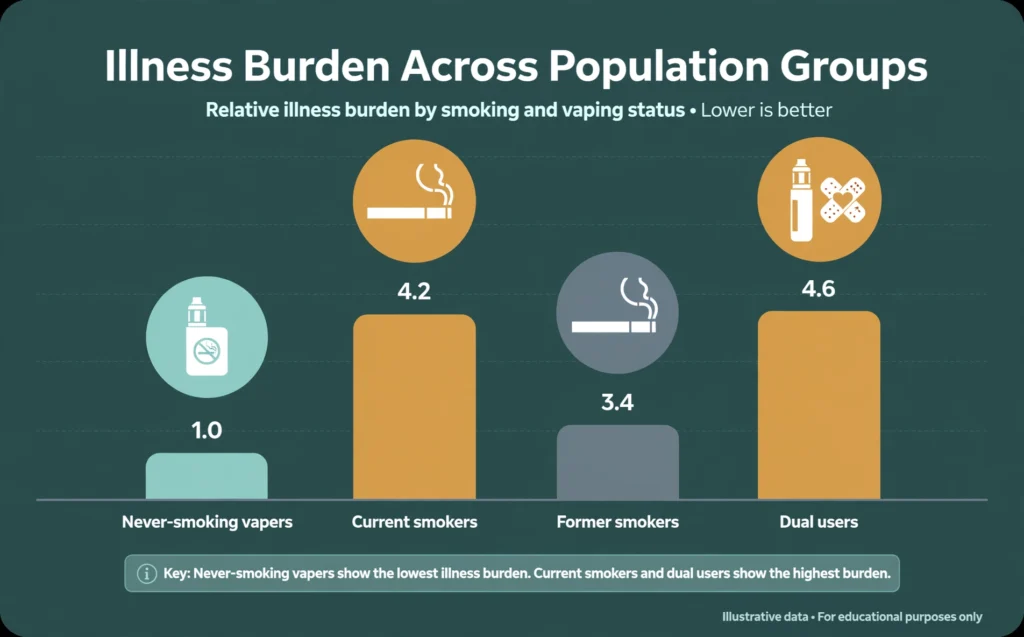
The headline distinction was sharp. Current smokers, former smokers, dual users, and vapers who had previously smoked all showed higher overall illness and multimorbidity. Vapers who had never smoked did not show a statistically significant increase in the adjusted odds of reporting at least one of seven groups of long-standing conditions, compared with people who had never used nicotine products.
But the never-smoking vaper group contained just 44 participants, most of them young, and the adjusted odds ratio of 1.24 was imprecise. That means the study could not rule out a meaningful difference in illness. The researchers said the absence of a significant finding should not be interpreted as evidence that vaping is harmless.
Why the split matters
Most adults who currently vape are former smokers, so their health profile reflects years of combustible cigarette exposure as well as the possibility that some people quit or switch products after developing health problems. Failing to separate that group from never-smoking vapers risks blaming vaping for damage done by smoking, the same measurement problem seen in research on how vapers process nicotine.
The study adds a cautious data point to the long-running comparison between smoking and vaping: quitters and never-smokers who vape remain different populations, and lumping them together obscures what the numbers really show. With only a few dozen never-smoking vapers old enough to show long-term illness, the authors say larger, longer studies are needed before anyone draws conclusions about safety.
Source: Journal of Epidemiology and Population Health, October 2026.