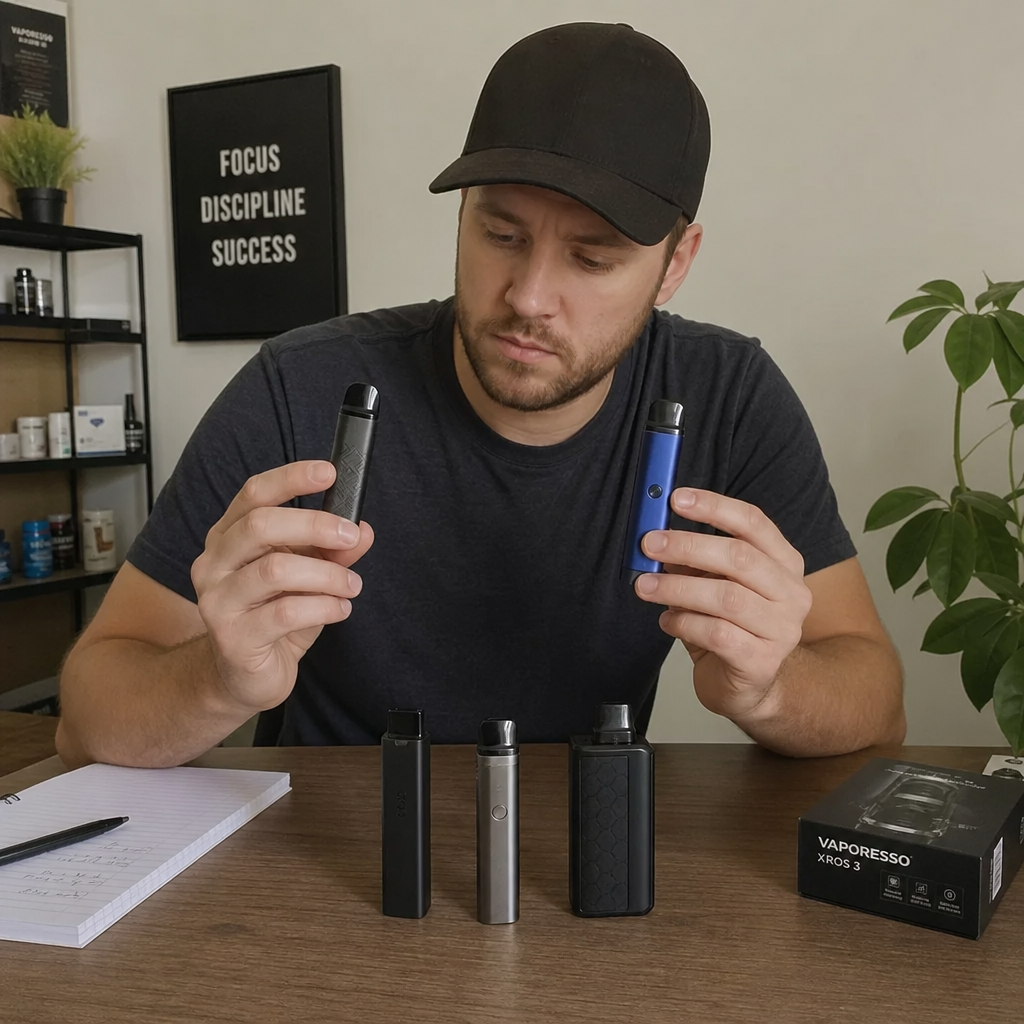

Walk into any vape shop or open any online store and you will see the same wall: two hundred devices with names like XROS, Caliburn, Wenax, Drag, and PockeX, prices from $15 to $150, and no obvious way to tell them apart. Most buyers do one of two things: grab the cheapest one, or grab the one the shop assistant pushes. Both are gambles.
Here is the good news. Every vape kit on the market answers the same three questions: how do you inhale, how much fuss will you tolerate, and how much do you want to spend per month? Answer those and the wall of two hundred shrinks to about five. This guide walks you through it, compares the real monthly costs, and ends with the beginner kits actually worth buying in 2026.
Your kit has five parts. That is the whole secret.
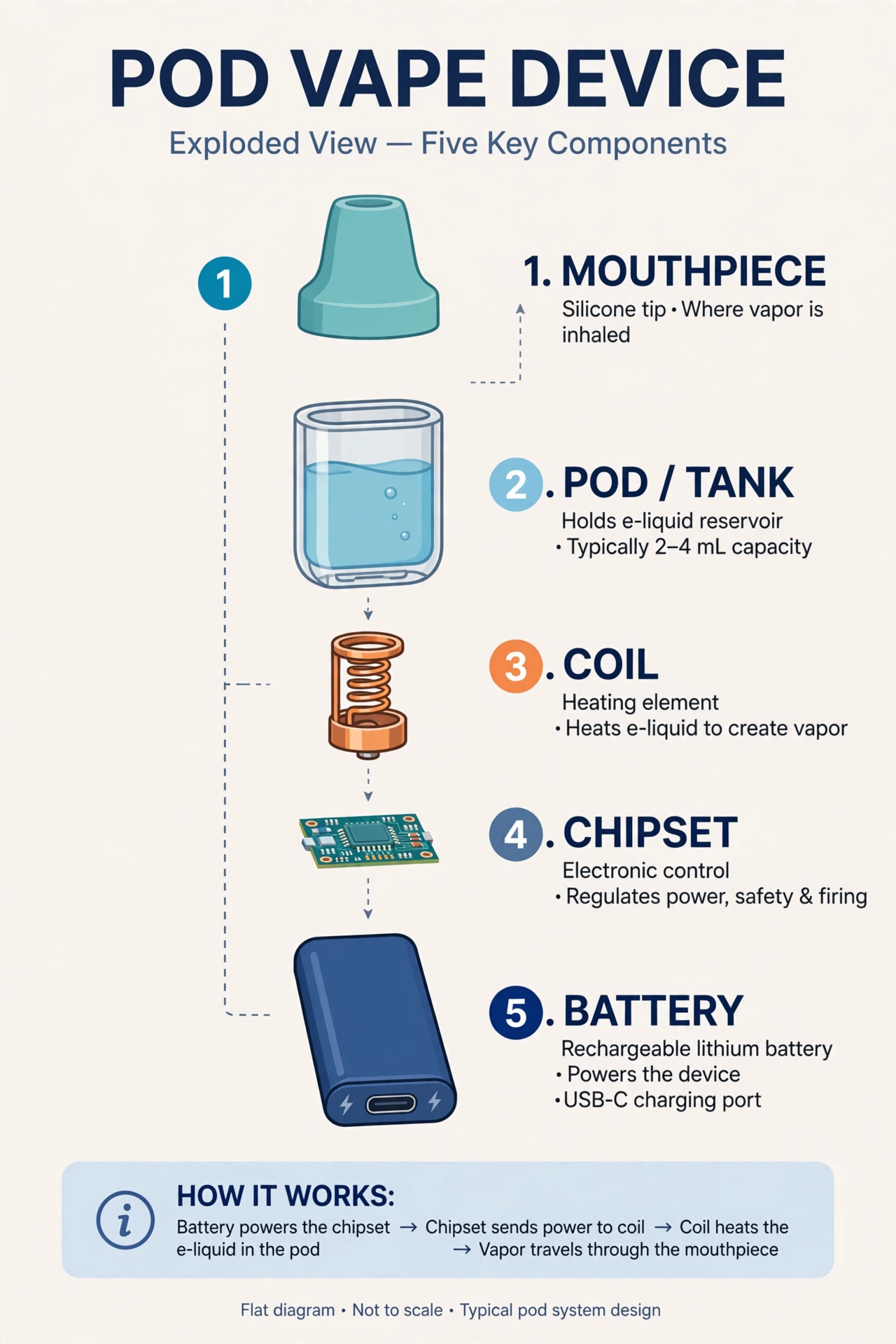
Strip away the branding and every vape kit, from a $20 pod to a $120 box mod, is the same five components doing the same job: a battery sends power to a coil, the coil heats e-liquid into vapor, and you inhale it through a mouthpiece. A tiny chipset sits in the middle managing power and safety cutoffs.
- Battery. The power source. Small kits use a built-in rechargeable cell (measured in mAh); bigger mods use removable 18650 or 21700 cells you charge separately.
- Coil. A small heating element, usually mesh wrapped in cotton, that soaks up e-liquid and vaporizes it. This is the one part you replace regularly, typically every one to two weeks.
- Pod or tank. The reservoir that holds your e-liquid. Refillable versions take any bottle; prefilled versions snap in full and get tossed when empty.
- Mouthpiece. Narrow tips give a tight, cigarette-like draw; wide tips give an airy lung hit.
- Chipset. Regulates wattage, prevents short circuits and overcharging. Even the simplest pod kits have one now.
Once you see the machine this way, the marketing melts off. A "revolutionary" new kit is usually the same five parts in a new shell with a bigger battery.
The four families of vape kits
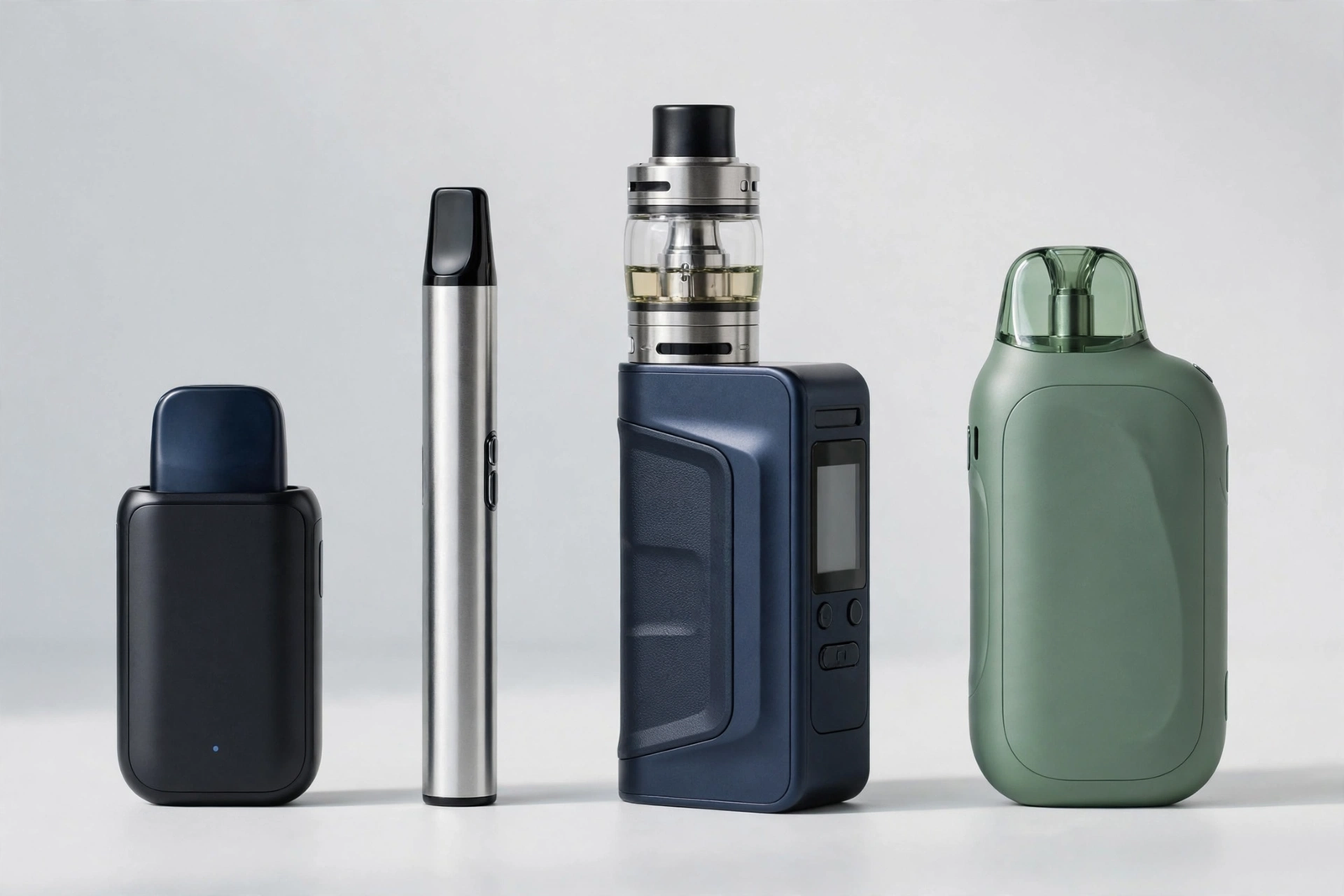
Retailers use overlapping names, but nearly every device belongs to one of four families. Learn the families and you can place any kit in seconds.
| Family | Inhale style | E-liquid | Battery | Fuss level | Best for |
|---|---|---|---|---|---|
| Pod kits | Mouth-to-lung | Nic salts, 50/50 | 500-1000mAh built-in | Low | Beginners, ex-smokers |
| Vape pens | Mouth-to-lung | 50/50, nic salts | 650-1500mAh built-in | Low | Beginners who want a familiar shape |
| Box mods | Any, adjustable | Depends on tank | Removable 18650/21700 | High | Experienced users, cloud chasers |
| All-in-one (AIO) | MTL or restricted lung | 50/50 or 60/40 | 1000-2000mAh built-in | Low-Medium | Anyone who found tanks fiddly |
Pod kits are the compact two-piece systems that now dominate the market: a small battery body plus a magnetic pod you fill yourself. Draw-activated, pocketable, and built for nicotine salts. This is where almost every beginner should start.
Vape pens are the slim, pen-shaped originals. One button (or none at all), a built-in tank, minimal settings. Less versatile than modern pods, but dead simple and still a fine first device.
Box mods are the big adjustable machines: a boxy battery unit paired with a separate tank, variable wattage, removable cells, sub-ohm coils for direct-lung vaping. Maximum control, maximum maintenance. Not a first kit.
All-in-one devices build the tank into the body so there is nothing to screw together, align, or lose. Slim, leak-resistant, and a good middle ground if pods feel too small and mods feel like homework.
The fork in the road: disposables or a refillable kit?
Before you pick a family, you face a bigger decision. Disposables are still the easiest on-ramp: no charging cables to remember, no liquid to buy, no coils to change. Our roundup of the best disposable vapes shows how far the category has come. The Pulse X review is a good look at the current high end.
But the math turns fast. A typical disposable habit, roughly one $15 device every three to four days, runs about $120 a month. A refillable pod kit costs $25-40 once, then about $30-40 a month in liquid and pods. The infographic below makes the gap visual.
| Disposable habit | Refillable pod kit | |
|---|---|---|
| Upfront | $0 (buy as you go) | $25-40 device |
| Monthly liquid/pods | ~$120 (8 disposables) | ~$35 (liquid + pods) |
| Year one total | ~$1,440 | ~$460-500 |
| Waste | 96+ batteries in landfill | A few pods a month |
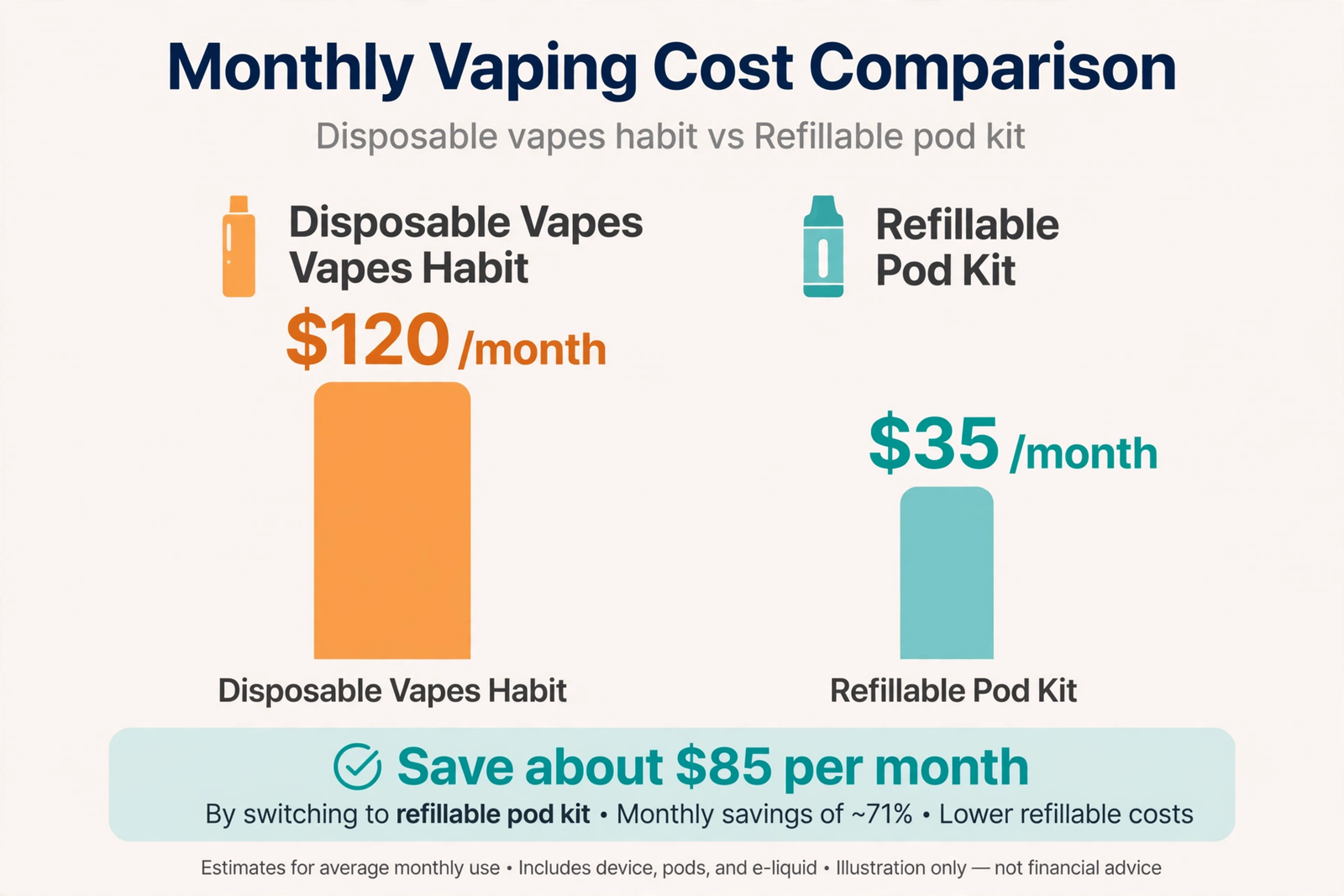
Estimates for average use; your numbers will vary. For a detailed liquid-price breakdown, see our guide to vape juice prices.
Regulations tilt the choice too, and they differ by country. In the UK, single-use vapes have been banned since June 2025, so ex-disposable users there have moved to prefilled pod kits. The UK vape tax of £2.20 per 10ml also rewards frugal setups. In the US, disposables remain legal at the federal level but face tightening state rules and FDA enforcement, so it pays to check the FDA authorized vapes list and your own state’s stance. Texas vape rules, for example, are stricter than many buyers expect.
How to choose: answer four questions
Forget "best kit" lists for a moment. Answer these four and the right family picks itself.
1. How do you inhale? If you smoked cigarettes, you are almost certainly a mouth-to-lung vaper: draw into the mouth first, then inhale. That means a pod kit, pen, or AIO with coils at 0.8 ohm or above, running nic salts at 10-20mg. Cloud-style direct-lung inhaling needs a box mod and low-nicotine liquid, and it is the wrong starting point for ex-smokers.
2. How much fuss will you tolerate? Be honest. If the idea of priming coils and tracking wattage makes you tired, stay in pod-kit territory. You can always graduate later; most vapers never need to.
3. What is the real monthly budget? Count running costs, not the box price. Pods or coils every one to two weeks plus liquid every few days will exceed the device cost within two months. A kit with cheap, widely available replacement pods beats a slightly cheaper device with expensive proprietary pods.
4. Where do you live? The legal shelf looks different in Manchester, Austin, and Toronto. Buy from authorized retailers, check local rules before ordering hardware online, and never buy a "too good to be true" device from a social media seller.
The 2026 shortlist: beginner kits worth your money
Editorial picks, no shop links. Each of these has survived multiple product generations, which in this industry is the strongest review there is.
Vaporesso XROS 4 Mini. The default recommendation for a reason: 1000mAh battery, 2ml pods, excellent leak resistance, and mesh pods that make nic salts taste far better than they should at this price. If you buy one kit blind, buy this shape.
Uwell Caliburn G3. Caliburn practically invented the modern pod kit, and the G3 keeps the formula: simple, flavorful, reliable. A great pick if the XROS feels too common and you want the other proven classic.
Geekvape Wenax Q. Slightly more adjustable than the others, with a small screen and airflow control, for the beginner who suspects they will want to tinker within a month. Still firmly a pod kit, not a project.
Innokin Endura S1. The pen-style option: inhale-activated, nothing to adjust, cigarette-like draw. Best for smokers who want the smallest possible learning curve and do not care about features.
Aspire PockeX. The veteran all-in-one: 1500mAh battery, built-in tank, one button, years of proven reliability. For buyers who find pod systems fiddly and want a single solid unit.
Pair any of these with a 10ml nic salt at 10mg or 20mg (match it to how much you smoked) and you have a complete starter setup for under $50 in most US shops.
Your first-kit shopping list
Buy these together and you will not be making a second trip in three days:
- The kit itself, plus one pack of spare pods or coils for it
- Two 10ml bottles of nic salt in different flavors (never commit to one flavor untried)
- A USB-C cable if the box does not include one
- Nothing else. Skip the fancy drip tips, the third battery, the "premium" coil building kit. Those are month-three purchases, if ever.
Five mistakes almost every beginner makes
Buying the wrong nicotine strength. The single most common failure. A heavy smoker who buys 3mg for a pod kit will find it useless and go back to cigarettes. Start at 10-20mg nic salt in a pod; you can step down later.
Putting thick liquid in a small coil. High-VG shortfills belong in sub-ohm tanks. In a pod they wick slowly, burn, and taste like regret. Pods want 50/50 or nic salts.
Chain-vaping a fresh pod. A new coil or pod needs five minutes after filling so the cotton fully soaks. Skip the wait and the first dry hit will haunt the pod forever.
Judging a kit on day one. Coils break in over a few hours, and your palate adjusts over a few days. Give any new setup 48 hours before declaring it bad.
Buying the cheapest liquid in bulk. Two small bottles of different flavors beats one big bottle of a flavor you end up hating. Taste first, stockpile later.
Quick answers
Are vape kits better than disposables?
For anyone vaping longer than a month, yes: roughly a third of the running cost, far less waste, and far more flavor choice. Disposables win only on zero-effort convenience.
How long does a vape kit last?
The device itself typically lasts one to two years. Pods last one to two weeks each; coils about the same. Batteries slowly lose capacity, which is the usual reason to replace the whole kit.
What is the easiest vape kit for a complete beginner?
A draw-activated refillable pod kit with pre-installed coil pods. Fill, wait five minutes, inhale. No buttons, no settings, no learning curve.
How much does a beginner vape kit cost?
$25-40 for the device, plus $30-40 a month in liquid and pods. Under $50 gets most US buyers fully set up on day one.
Do I need to understand ohms and wattage?
Not with a pod kit, pen, or AIO; the chipset handles it. You only need that vocabulary if you move to rebuildables or high-power box mods later.
Is vaping safer than smoking?
That is a bigger question than kits, and we have a full comparison of vaping vs smoking if you want the evidence laid out.