18650 vs 21700 Battery: The Quick Answer
18650 vs 21700 battery comes down to a straightforward tradeoff: 21700 batteries are physically larger, hold more capacity, and generally support higher continuous discharge, while 18650 batteries are smaller, lighter, and fit a wider range of existing devices. Neither is universally “better,” the right choice depends entirely on what device is being used and what kind of vaping style it needs to support.
Both battery types are rechargeable lithium-ion cells, and the numbers in their names refer to physical dimensions, not performance tiers. Understanding what those numbers mean and how they translate into real device performance makes the 18650 vs 21700 decision a lot easier than it looks at first glance.
What Do the Numbers 18650 and 21700 Actually Mean?
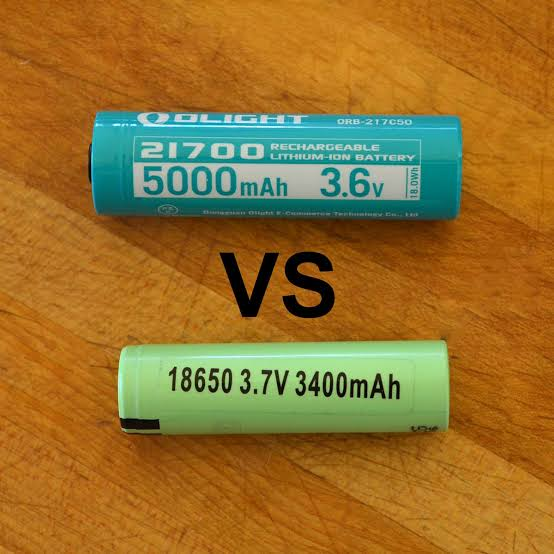
Both “18650” and “21700” are standardized battery size codes, not brand names or arbitrary labels. An 18650 battery measures approximately 18mm in diameter and 65mm in length, with the trailing “0” indicating a cylindrical cell shape. A 21700 battery measures approximately 21mm in diameter and 70mm in length, following the same naming convention, and this 21700 battery size is exactly where the format’s extra performance headroom comes from.
Table of Contents
This sizing standard is used across the entire lithium-ion battery industry, not just vaping, which is why the same 18650 and 21700 li ion battery cells show up in laptops, power tools, and electric vehicles as well as vape mods. Both formats are rechargeable, and most 21700 rechargeable battery cells sold for vaping use a flat top design, referred to as a 21700 flat top battery, rather than the button top style more common on some 18650 cells. The larger physical size of a 21700 isn’t just about fitting more battery into a bigger shell, it directly enables higher capacity and often better discharge characteristics, which is the whole reason the format exists.
18650 vs 21700 Battery: Size and Physical Differences
This 18650 vs 21700 size comparison is where the practical tradeoffs actually start, since every downstream difference in capacity and output traces back to these dimensions.
| Measurement | 18650 Battery | 21700 Battery |
| Diameter | ~18mm | ~21mm |
| Length | ~65mm | ~70mm |
| Approximate volume | ~16.5 cm³ | ~24.2 cm³ |
| Typical weight | 45-49g | 65-70g |
The size difference looks small on paper, just a few millimeters in each dimension, but the volume difference is substantial, a 21700 battery’s dimensions give it roughly 45 to 50 percent more internal volume than an 18650. That extra internal space is where the real practical differences come from, more room for active battery material generally translates into more capacity and often better discharge performance.
Capacity (mAh) Compared: 18650 vs 21700
Capacity, measured in milliamp hours (mAh), reflects how much energy a battery can store, which directly affects how long a device runs between charges. Typical 18650 vape batteries range from around 2000mAh to 3500mAh depending on the specific cell and its discharge rating. Typical 21700 vape batteries range from around 3000mAh to 5000mAh, with high-capacity cells reaching even higher in some specialty applications.
This higher capacity range is one of the main reasons 21700 batteries have become popular in higher-wattage mods and devices used for longer vaping sessions. More capacity means fewer recharges throughout the day, which matters a lot for anyone using a higher-wattage sub-ohm setup that draws through battery capacity faster than a lower-power device would.
Discharge Rate and Output: Which Handles Higher Wattage Better?
Discharge rate, usually listed as continuous discharge in amps (A), determines how much current a battery can safely deliver at once, which directly limits how much wattage a device can pull from it. This is closely tied to 21700 internal resistance, lower internal resistance generally allows a cell to sustain higher discharge with less heat buildup and voltage sag under load. High-drain 18650 cells commonly reach continuous discharge ratings around 20 to 30A, which is plenty for most single-battery or dual-battery mods running moderate to high wattage. High-drain 21700 lithium battery cells often reach similar or higher discharge ratings, sometimes 30A or more, while also carrying more total capacity, giving them a practical edge in high-wattage setups that need to sustain heavy discharge over longer sessions.
For most everyday sub-ohm vaping, both formats can comfortably handle typical wattage ranges when using a genuinely high-drain cell rated for vaping use specifically, not a low-drain cell pulled from unrelated electronics. This matters just as much for cannabis vape devices as it does for nicotine mods, a point worth keeping in mind alongside the broader vape smoke vs weed smoke comparison. One mistake worth flagging here: mismatched or unregulated devices paired with an underrated battery is a real safety concern, covered in more depth in the safety section further down.
Battery Life: How Long Does Each Actually Last Per Charge?
Battery life per charge comes down to a combination of capacity and how the device actually uses that capacity, which is why higher mAh doesn’t always translate to proportionally longer sessions. A device running at lower wattage on an 18650 with 2500mAh capacity might comfortably last a full day of moderate use, while the same device pushed to higher wattage will drain faster regardless of battery format. A 21700 with 4000mAh in the same device at the same wattage will generally last noticeably longer between charges, simply due to the higher available capacity.
Real-world battery life also depends on:
- Wattage setting: higher wattage draws more current per puff, draining capacity faster regardless of battery format
- Puff frequency and duration: frequent, longer puffs drain a battery faster than occasional short ones
- Coil resistance: lower resistance coils generally draw more current at a given wattage
- Battery age and cycle count: capacity gradually decreases as any lithium-ion battery goes through charge cycles over time
Device Compatibility: Can You Use Either Battery in Any Mod?
No, and this is one of the most important practical points in the entire 18650 vs 21700 comparison. Devices are physically built around one battery size or the other, and the battery compartment dimensions simply won’t accommodate the wrong size cell. A mod built for 18650 batteries has a compartment sized for the smaller cell, and a 21700 physically won’t fit. Some newer mods are designed with adjustable battery sleds or included adapters specifically to support both formats, but that’s a device-specific feature, not something that applies universally, and this same compatibility logic applies to concentrate devices too, covered separately in dab pen vs vape pen.
Before buying replacement batteries, checking the specific device’s battery compatibility is essential, since using the wrong size simply isn’t an option most of the time, rather than being a performance tradeoff.
18650 vs 21700: Full Spec Comparison
| Factor | 18650 Battery | 21700 Battery |
| Size | Smaller, ~18x65mm | Larger, ~21x70mm |
| Typical capacity | 2000-3500mAh | 3000-5000mAh |
| Typical discharge rating | 20-30A (high-drain cells) | 25-35A+ (high-drain cells) |
| Weight | 45-49g | 65-70g |
| Device compatibility | Wide range of existing mods | Newer, often higher-wattage mods |
| Best suited for | Compact devices, moderate wattage | High-wattage, longer session devices |
This table captures the core practical tradeoff clearly: 21700 generally offers more capacity and output at the cost of more size and weight, while 18650 stays more compact and compatible with a wider range of existing devices already on the market.
Where Else 21700 Batteries Show Up
The same 21700 battery specs relevant to vaping, capacity, discharge rating, and internal resistance, matter just as much outside of vape mods. High capacity 21700 battery cells are widely used in power tools, e-bikes, and increasingly in DIY power bank builds, where a 21700 battery power bank setup takes advantage of the format’s higher energy density compared to older 18650-based packs. Multi-cell configurations, like a 21700 1s1p battery pack, meaning one cell in series and one in parallel, the simplest possible pack configuration, show up in smaller devices needing just a single high-capacity cell rather than a more complex multi-cell arrangement.
Commercial 21700 battery packs built for tools or e-bikes typically combine multiple cells in series and parallel configurations to reach the voltage and capacity a given device needs, which is a different setup entirely from the single or dual-cell arrangement found in most vape mods. Worth knowing mainly for context, since it explains why 21700 cells are so widely available and continuing to drop in price as demand grows across multiple industries, not just vaping.
Safety Considerations for Both Battery Types
Battery safety matters equally for both formats, and a few core principles apply regardless of which size is being used. Always use batteries with a discharge rating that meets or exceeds what the device actually draws, using an underrated battery in a mechanical or poorly regulated device is a genuine safety risk that can lead to overheating or venting. The CPSC and various vaping safety organizations have published guidance around proper battery handling, and it’s worth reviewing device-specific manuals for exact discharge requirements rather than assuming any high-capacity cell is automatically safe for a given setup.
A few safety basics that apply across both 18650 and 21700 use:
- Never mix old and new batteries in a dual-battery device, since mismatched charge levels can cause imbalanced discharge
- Use a proper external charger rather than relying solely on device-based USB charging for regular use, since dedicated chargers generally offer better charge monitoring
- Inspect battery wraps regularly for tears or damage, since exposed metal can create short-circuit risk
- Store batteries in a case when not in use, rather than loose in a pocket or bag with metal objects
Cost Comparison: Is 21700 Worth the Extra Price?
21700 batteries generally cost somewhat more than comparable 18650 cells, reflecting the additional material and typically higher capacity involved. Pricing varies by brand and discharge rating, but as a rough guide, quality high-drain 18650 cells commonly run in the $8 to $15 range per battery, while comparable 21700 cells often run $12 to $20 depending on capacity and discharge rating.
Whether the extra cost is worth it comes down entirely to use case. For someone running a compact, moderate-wattage device with an existing collection of 18650 batteries, there’s little reason to switch formats just for a marginal capacity bump. For someone running a high-wattage sub-ohm setup with long vaping sessions, the extra capacity and often better discharge headroom of a 21700 can genuinely translate into a better day-to-day experience worth the modest price difference.
Which Battery Fits Your Vaping Style?
Matching battery format to actual vaping habits makes this decision a lot more practical than just picking whichever spec sheet looks more impressive:
- Compact, discreet vaping with moderate wattage: 18650 fits better, since devices built around this format tend to be smaller overall
- High-wattage sub-ohm setups with frequent, long sessions: 21700 generally handles this better due to higher capacity and discharge headroom
- Anyone already invested in an 18650 device collection: sticking with 18650 makes practical sense unless upgrading to a new device specifically built for 21700
- Anyone buying a new high-power device from scratch: worth checking whether it’s built around 21700, since a lot of newer high-wattage mods have shifted toward this format specifically for the extra capacity
This kind of practical device matching applies across a lot of vaping decisions generally, similar to how picking the right nicotine strength matters more than defaulting to whatever’s marketed as premium, a principle covered in more depth in comparisons like anxiety pen vs vape, where device and formulation matching matters just as much as raw specs.
Where This Fits Into the Bigger Picture
Battery choice is one of the more overlooked practical factors in overall vaping experience, right alongside device and e-liquid choices that get discussed a lot more often. Whether someone’s running a standard nicotine vape, exploring concentrate devices covered in the dab pen vs vape pen comparison, or comparing cannabis vaping setups discussed in vape smoke vs weed smoke, battery format and capacity ultimately determine how consistently any of these devices actually perform day to day.
Getting the battery choice right isn’t glamorous, but it’s genuinely one of the more practical decisions that affects daily vaping experience more than most people expect going in.
Frequently Asked Questions
Is 21700 better than 18650?
Not universally, 21700 offers higher capacity and often better discharge output due to its larger size, but 18650 remains more compact and compatible with a wider range of existing devices. The better choice depends on the specific device and vaping style involved.
Can I use a 21700 battery instead of 18650?
Only if the device is specifically designed to accommodate the larger size, either natively or through an adapter sled. Most devices built for 18650 physically cannot fit a 21700 battery due to the size difference.
What is the difference between 18650 and 21700 mAh?
18650 batteries typically range from about 2000mAh to 3500mAh, while 21700 batteries typically range from about 3000mAh to 5000mAh. The higher capacity in 21700 cells comes from their larger internal volume.
Which battery lasts longer, 18650 or 21700?
21700 batteries generally last longer per charge due to higher capacity, assuming similar wattage and usage patterns. Actual battery life still depends heavily on device wattage, puff frequency, and coil resistance regardless of which format is used.
Do 21700 batteries fit in 18650 devices?
No, 21700 batteries are physically larger than 18650 batteries and will not fit into a battery compartment sized for 18650 cells unless the device includes a specific adapter designed for that purpose.

